To save content items to your account,
please confirm that you agree to abide by our usage policies.
If this is the first time you use this feature, you will be asked to authorise Cambridge Core to connect with your account.
Find out more about saving content to .
To save content items to your Kindle, first ensure no-reply@cambridge.org
is added to your Approved Personal Document E-mail List under your Personal Document Settings
on the Manage Your Content and Devices page of your Amazon account. Then enter the ‘name’ part
of your Kindle email address below.
Find out more about saving to your Kindle.
Note you can select to save to either the @free.kindle.com or @kindle.com variations.
‘@free.kindle.com’ emails are free but can only be saved to your device when it is connected to wi-fi.
‘@kindle.com’ emails can be delivered even when you are not connected to wi-fi, but note that service fees apply.
This article scrutinizes the diachrony of relativizers and complement clause subordinators in Russian, Polish, and Czech. Historical morphology indicates a development from agreeing relative pronouns via noninflected relativizers to complement clause subordinators. This concurs with recent findings on Germanic (Axel-Tober 2017), but contradicts more traditional proposals that derive subordinators from demonstratives. The respective syntactic reanalyses are demonstrated on diachronic Slavic corpus data. Moreover, a quantitative comparison of sixteenth- to seventeenth- century East Slavic texts with and without West Slavic interference suggests that the use of kotoryj ‘which’ as a relative pronoun spread into Russian as an inner-Slavic contact-induced change.
We question the commonly accepted assumption that American Sign Language (ASL) has no overt copula. We present evidence that one of the functions of the sign Self in present-day ASL is as a copula. This sign evolved into its current function by way of a grammaticalization process called the ‘copula cycle’ (Katz 1996). The copula cycle consists of a deictic item transforming into a demonstrative pronoun and then into a copula by means of a series of syntactic reanalyses. We present corpus evidence from Old French Sign Language (LSF) in the 1850s, Old ASL in the 1910s, and present-day ASL dating to the 2000s and the late 2010s, and with these data analyze ASL examples of syntactic structures outlined by Li and Thompson (1977) that led to the increased use of Self as a copula. We also find that Self, which is not generally regarded as a pointing sign, follows the grammaticalization scheme for pointing signs outlined by Pfau and Steinbach (2006), indicating that the scheme may be used for signs that are derived from demonstratives. Ultimately, we conclude that ASL undergoes the same grammaticalization processes as spoken languages.
This study uses phylogenetic methods adopted from computational biology in order to reconstruct features of Proto-Indo-European morphosyntax. We estimate the probability of the presence of typological features in Proto-Indo-European on the assumption that these features change according to a stochastic process governed by evolutionary transition rates between them. We compare these probabilities to previous reconstructions of Proto-Indo-European morphosyntax, which use either the comparative-historical method or implicational typology. We find that our reconstruction yields strong support for a canonical model (synthetic, nominative-accusative, head-final) of the protolanguage and low support for any alternative model. Observing the evolutionary dynamics of features in our data set, we conclude that morphological features have slower rates of change, whereas syntactic traits change faster. Additionally, more frequent, unmarked traits in grammatical hierarchies have slower change rates when compared to less frequent, marked ones, which indicates that universal patterns of economy and frequency impact language change within the family
A widespread assumption in the language contact literature is that affixes are never borrowed directly, but only indirectly, that is, as part of complex loanwords. From such complex loanwords, affixes may eventually spread to native stems, creating hybrid formations, in a process of language-internal analogical extension. Direct borrowing is the extraction of an affix based on knowledge of the donor language, without the mediation of complex loanwords within the recipient language. This article suggests that direct borrowing can also be the only or primary process leading to productive loan affixes. Criteria are provided to assess instances of direct and indirect borrowing on the basis of the distribution of borrowed affixes across complex loanwords and hybrid formations. These are applied to corpora of various languages. A scale of directness of affix borrowing is proposed, based on the extent to which speakers of the recipient language rely (i) on their knowledge of the donor language (direct borrowing) and (ii) on complex loanwords within their native language (indirect borrowing).
The Uto-Aztecan language family is one of the largest language families in the Americas. However, there has been considerable debate about its origin and how it spread. Here we use Bayesian phylogenetic methods to analyze lexical data from thirty-four Uto-Aztecan varieties and two Kiowa-Tanoan languages. We infer the age of Proto-Uto-Aztecan to be around 4,100 years (3,258–5,025 years) and identify the most likely homeland to be near what is now Southern California. We reconstruct the most probable subsistence strategy in the ancestral Uto-Aztecan society and infer no casual or intensive cultivation, an absence of cereal crops, and a primary subsistence mode of gathering (rather than agriculture). Our results therefore support the timing, geography, and cultural practices of a northern origin and are inconsistent with alternative scenarios.
An automated sound correspondence-recognition program developed by the authors is applied to a data set consisting of standardized word lists for over half of the world's languages. Online appendices present the results in a compendium of 692 recurrent sound correspondences that contains information about the frequency of occurrence of each correspondence. Applications of the compendium to historical linguistics are proposed. For example, the catalog of correspondences and frequencies facilitates objective assessment of the commonness or rarity of shared phonological innovations cited as evidence for language-family subgrouping. In another analysis, correspondence frequency is used to measure the degree of similarity between different sounds, yielding models for classifying consonants and vowels that substantially agree with articulatory properties. Correspondence-based similarities are also compared with measurements of sound similarity involving factors such as perceptual confusions, speech errors, and cooccurrence patterns in synchronic phonological rules. Sound similarity discerned from both the perception and production of speech is found to correlate to about the same extent with correspondence-based similarities.
Using a very large lexical database and generalized additive modeling, this article reveals that labial-velar (LV) stops are marginal phonemes in many of the languages of Northern Sub-Saharan Africa that have them, and that the languages in which they are not marginal are grouped into three compact zones of high lexical LV frequency. The resulting picture allows us to formulate precise hypotheses about the spread of the Niger-Congo and Central Sudanic languages and about the origins of the linguistic area known as the Sudanic zone or Macro-Sudan belt. It shows that LV stops are a substrate feature that should not be reconstructed into the early stages of the languages that currently have them. We illustrate the implications of our findings for linguistic prehistory with a short discussion of the Bantu expansion. Our data also indirectly confirm the hypothesis that LV stops are more recurrent in expressive parts of the vocabulary, and we argue that this has a common explanation with the well-known fact that they tend to be restricted to stem-initial position in what we call C-emphasis prosody.
This article proposes that patterns of phonological contrast should be added to the list of factors that influence sound change. It adopts a hierarchically determined model of contrast that allows for a constrained degree of crosslinguistic variation in contrastive feature specifications. The predictions of this model are tested against a database comprising the set of vowel changes in the Al-gonquian languages. The model reveals striking commonalities in the underlying sources of these changes and straightforwardly predicts the previously unrecognized patterning of the languages into two groups: (i) those in which */ε/tends to merge with */i/and palatalization is triggered by */i/, and (ii) those in which */ε/tends to merge with */a/and palatalization is triggered by */ε/. In addition to providing a new argument for the relevance of contrast to phonology, the model also gives us a way to import traditional philological findings into a framework that brings them to bear on theoretical questions.
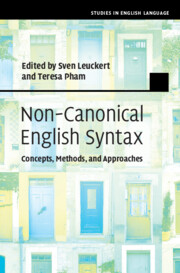
The term non-canonical syntax generally refers to deviations from 'typical' word order. These represent a fascinating phenomenon in natural language use. With contributions from a team of renowned scholars, this book presents a range of case-studies on non-canonical syntax across historical, register-based, and non-native varieties of English. Each chapter investigates a different non-canonical construction and assesses to what extent it can be called 'non-canonical' in a theory-based and frequency-based understanding of non-canonical syntax. A range of state-of-the-art methodologies are used, highlighting that an empirical approach to non-canonical syntactic constructions is particularly fruitful. An introduction, a synopsis, a terminological chapter, and three section introductions frame the case studies and present overviews of the theory behind non-canonical syntax and previous work, while also illustrating open questions and opportunities for future research. The volume is essential reading for advanced students of English grammar and researchers working on non-canonical syntax and syntactic variation. This title is also available as Open Access on Cambridge Core.
Historical Sociolinguistics is the study of the relationship between language and society in its historical dimension. This is the first textbook to introduce this vibrant field, based on examples and case studies taken from a variety of languages. Chapters begin with clear explanations of core concepts, which are then applied to historical contexts from different languages, such as English, French, Hindi and Mandarin. The volume uses several pedagogical methods, allowing readers to gain a deeper understanding of the theory and of examples. A list of key terms is provided, covering the main theoretical and methodological issues discussed. The book also includes a range of exercises and short further reading sections for students. It is ideal for students of sociolinguistics and historical linguistics, as well as providing a basic introduction to historical sociolinguistics for anyone with an interest in linguistics or social history.
In grammaticalization studies, reanalysis is understood as the assignment of new meaning to formally unchanged elements, supported by bridging contexts compatible with the old and the reanalyzed meaning. The source determination hypothesis (SDH) predicts that parallel grammaticalization trajectories occur crosslinguistically, as similar source meanings give rise to similar inferences. One such pattern is the development of recent past markers from FINISH constructions. While grammaticalization pathways are well-documented crosslinguistically, the SDH has never been tested experimentally. In this study, we examine whether modern English speakers are sensitive to inferences arising from a bridging context identified as relevant to the grammaticalization of Old Spanish FINISH into a recent past marker. In a temporal distance judgment task, we examined whether the bridging context identified for Old Spanish facilitates an inference of temporal immediacy in contemporary English, where the construction has not been grammaticalized. In line with the SDH, the bridging context enhanced an inference of immediacy in contemporary English (Exp. 1), with specific grammatical features of the source determining its strength (Exp. 2). These results not only demonstrate the viability of testing hypotheses about language change using experimental pragmatics but also call for empirically refining the concept of source determination.
This is an extended review of Jonathan Owens, Arabic and the Case against Linearity in Historical Linguistics (Oxford: Oxford University Press, 2023) that addresses several important issues in the methodology of historical Arabic linguistics.
This article provides a detailed description of an undocumented use of zaìshì 在勢 as a deontic adverb in Late Qing and Early Republican Chinese literature. This word commonly functions as a verb (“to hold power”) or a nominalized verb (“one who holds power”), but its use as a preposed deontic adverb, meaning “under these circumstances”, is not attested in earlier Chinese texts and has no cognates in other Sinitic languages. The author analyses the syntax and semantics of zaìshì in a large corpus of medieval Chinese texts and early Chinese translations of foreign literature. The article then suggests that the preposed deontic adverb zaìshì emerged as the result of the appropriation of linguistic elements present in classical literature but whose use had been restricted to classical forms of literary composition.
The study of the history of English has its roots in the work of English scholars who first concerned themselves with the nature of their language about four hundred years ago. Prior to the eighteenth century this work was pre-linguistic, positing a divine origin for language and comparing English (unfavourably) to Classical Greek and Latin. With the advent of modern linguistics in Indo-European research, the history of English became an object of academic interest and the first university positions for its study were established, mainly in Germany and Scandinavia. Simultaneously there arose a tradition of studying English dialects, first as an antiquarian occupation in the eighteenth and early nineteenth centuries, then later as an attempt to capture local history in the vocabulary of specific regions in the twentieth. This then led to the production of dialect dictionaries and surveys.
This article, the third in a series, focuses on the “living” preverbs used in the verbal system of contemporary Pashto. The verbs treated here belong to the “compound verbs with preverb” class or to the “mixed verbs with preverb” class: verbs that replace the wə́- of the simple verbs with another preverb. This class of verbs represents a closed set, and a complete list of these verbs can be investigated systematically and exhaustively. This subject is as yet unexamined and its implications for the interpretation of contemporary Pashto verbal morphology are particularly stimulating.
This paper proposes new origins for tense vowels in Tangut by integrating textual analysis of Tangut texts with comparative data from both Gyalrongic and other Sino-Tibetan languages. It uncovers two previously unreported sources of vowel tensing in compounding: the collective prefix (*S-) and the compound linker (*-S-). Both morphemes left only a few traces, indicating their antiquity and productivity in earlier stages. The collective *S- could be an inherited morpheme which finds parallels in Tibetan, whereas the compound linker *-S- emerged as a stage of morphological merging in West Gyalrongic with (an) obscure origin(s). These findings not only advance our understanding of the origins of Tangut tense vowels but also offer insights into Sino-Tibetan nominal morphology.
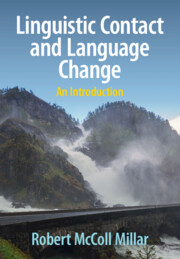
Linguistic contact is a reality of everyday life, as speakers of different languages come into contact with one another, often causing language change. This undergraduate textbook provides a means by which these processes, both modern and historical, can be analysed, based on cutting-edge theoretical and methodological practices. Chapters cover language death, the development of pidgins and creoles, linguistic convergence and language contact, and new variety formation. Each chapter is subdivided into key themes, which are supported by diverse and real-world case studies. Student learning is bolstered by illustrative maps, exercises, research tasks, further reading suggestions, and a glossary. Ancillary resources are available including extra content not covered in the book, links to recordings of some of the language varieties covered, and additional discussion, presentation and essay topics. Primarily for undergraduate students of linguistics, it provides a balanced, historically grounded, and up-to-date introduction to linguistic contact and language change.
This article addresses derivational issues related to palatalization in Khotanese, focusing on action nouns of the kīra- type (< *-i̯a-). It is argued that diachronic palatalization conforms to the rules of synchronic palatalization and that the origin of the hapax legomenon jsīna- “killing” (Z 13.124), which apparently violates these rules, needs to be interpreted differently. It is traced back to a reduplicated Indo-Iranian verbal stem *ǰa-ghn- (cf. Young Avestan jaɣn-) < Proto-Indo-European *gwhé-gwhn- “to strike repeatedly” → “to kill”. This stem is also reflected in the Khotanese gerundive jsīñaa- “to be killed” < *dzai̯n-i̯a- ← *dzaɣn- < Iranian *ǰa-gn-. The article contributes additional evidence supporting the development of the preconsonantal voiced velar fricative *ɣ into *i̯ in pre-Khotanese.
Recent research shows that, even under direct insertion, loan verbs are subject to constraints: for instance, they enter non-finite categories more readily than finite categories. To deepen our understanding of such loan word accommodation biases we investigate two contact situations to test whether biases hold in contact between closely related languages. A corpus study on Norse and French loan verbs entering Middle English compares the proportions of their finite and non-finite usage to gauge the impact of etymology and temporal distance to direct contact on loan integration. We identify significant bias towards non-finite use for both etymologies, but it is stronger for French than for Norse loan verbs. This suggests that biases are stronger in some contexts than in others: they are more prominent at a smaller temporal distance to direct contact and in contact between languages that are less closely related.
Several scholars noted that the pronunciations of 天 “sky” tiān and 風 “wind” fēng in Bai appear to be akin to the western variants of the words attested in the paronomastic gloss dictionary Shìmíng 釋名. I will demonstrate in the current study that there are additional commonalities shared by both Bai and the ancient western dialect, termed Old Western Chinese (OWC) in this study. In both languages, one can identify words with zy- in Middle Chinese (MC) that are pronounced j-. Bai and Old Western Chinese use the same word (椹 shèn) for “fungus”. Furthermore, Old Chinese (OC) cluster *-p/t-s yields -t in both languages in lieu of yielding -j as observed in Middle Chinese. Last but not least, it appears that in both languages, words with *lˤ- (whence MC d-) and -ʔ (whence MC rising tone) are distinct from other words with d- in Middle Chinese. Hence, this paper puts the claim that Bai is akin to Old Western Chinese on a stronger footing. As a side note, judging from the fact that 四 “four” sì contains -t in Old Western Chinese and early Bai, its Old Chinese form most likely ends in *-[t]-s.