To save content items to your account,
please confirm that you agree to abide by our usage policies.
If this is the first time you use this feature, you will be asked to authorise Cambridge Core to connect with your account.
Find out more about saving content to .
To save content items to your Kindle, first ensure no-reply@cambridge.org
is added to your Approved Personal Document E-mail List under your Personal Document Settings
on the Manage Your Content and Devices page of your Amazon account. Then enter the ‘name’ part
of your Kindle email address below.
Find out more about saving to your Kindle.
Note you can select to save to either the @free.kindle.com or @kindle.com variations.
‘@free.kindle.com’ emails are free but can only be saved to your device when it is connected to wi-fi.
‘@kindle.com’ emails can be delivered even when you are not connected to wi-fi, but note that service fees apply.
This chapter discusses corpus applications to language teaching and learning, focusing specifically on the use of corpora and corpus linguistics research for informing coursebook and assessment development. A number of studies undertaken by the authors are discussed with a view to highlighting both the affordances of corpus linguistics for supporting such indirect applications to language education, as well as the barriers of using corpus linguistics research to inform stakeholder practices. Focusing on the use of corpora by materials writers, the use of learner corpus research and spoken corpus research for assessment refinement and design, and the use of corpus research for materials design, this chapter reflects on engagement with stakeholders in this domain over the last fifteen years. Drawing together the lessons learned from these studies, this chapter offers a critical reflection on the relative impact achieved in each study, while also proposing guidelines for those interested in working with stakeholders to co-design research and produce relevant and appliable research.
When and why did English grammars first start to be written, and by whom? Who else were involved in the grammar-writing process apart from the grammarians? And what was the grammarians’ expertise based on to begin with? This chapter will address these questions by discussing the rise of the English grammar-writing tradition during the late sixteenth century down to the end of the eighteenth century. Focusing on the linguistic climate of the period, it will show how grammars were written at a time when only Latin grammar was available as a descriptive model, and that grammarians gradually developed an eye for features specific to the English language. Contextualising research on the subject by discussing traditional and state-of-the-art research tools, it will show that writing grammars for English was increasingly professionalised, and that female grammarians played an important role in the process.
The chapter explores the economics of translating Virgil, examining the role of patrons, printers, publishing houses and presses. I first explore the relationships of translators with their patrons, publishers and printers, in France, Italy and Britain during the first two centuries of the print era. I reveal the tension between the desire to satisfy the elite’s need for exclusive badges of culture and the impulse to extend the vernacularization of Virgil by producing accessible translations for less educated readers. I investigate the power relations involved in initiating or commissioning translations, with examples from Cinquecento Italy, and the funding of expensive folio editions in France and England. In Victorian England, translations published in low-priced series of books, including Everyman’s Library, flourish alongside ambitious luxury productions. The chapter concludes with a study of Virgil’s works in the Penguin Classics series in the twentieth and twenty-first centuries.
Publishing mattered to Shelley. But he knew that he was not a successful author certainly by comparison with Byron with whom he was regularly in proximity, especially in Italy. As a schoolboy and university student, Shelley arranged for the printing, advertising, and distribution of his verse and prose with boldness and ambition, sometimes putting those who printed, published, and sold it at risk on legal grounds. A significant proportion of what he published or intended to publish as a mature writer was also withdrawn or suppressed or did not appear because it was not publishable at the time. The gradual emergence of a significant amount of his writing hitherto unpublished, or not published in full, in editions curated by his widow from 1824 until her death established his reputation. However, it has taken until the early twenty-first century for his manuscript and print oeuvre to come into fuller view.
Chapter 4 is a detailed description of Neurath’s adaptation to British life and professional re-establishment, mainly in the field of visual education. The Isotype Institute was established in Oxford, and this method was rapidly taken up by documentarist Paul Rotha for use in films for the Ministry of Information. The Neuraths also collaborated in producing books of ‘soft propaganda’ about Britain and its allies, and made a pioneering visualization of the Beveridge Plan of social insurance. Neurath attempted to reconstruct a scholarly environment for himself, and was keen to embrace the English language. He was much in demand as a lecturer and consultant, speaking ‘broken English fluently’. He was supportive of fellow émigrés but wary of Austrian exile politics. Inadvertently, he came into contact with some people later revealed to have been Soviet spies.
Chile’s regulation of fake news dates back nearly a century. The initial instance occurred in 1925 during a constitutional crisis that resulted in the drafting of a new constitution. At that time, a de facto government issued a decree making it illegal to publish and distribute fake news. The second regulatory milestone occurred during the dictatorship of General Augusto Pinochet with the inclusion of provisions related to defamation in the 1980 constitution. Defamation involved spreading false information through mass media to unjustly tarnish someone’s reputation. Upon the restoration of democracy in Chile in 1990, these stipulations were permanently abolished from the legal system. Since 2001, the judicial pursuit of disinformation in Chile has been limited to exceptional means such as the State Security Law or, indirectly, through the right to rectification.
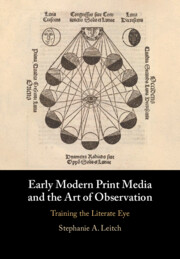
Early modern printmakers trained observers to scan the heavens above as well as faces in their midst. Peter Apian printed the Cosmographicus Liber (1524) to teach lay astronomers their place in the cosmos, while also printing practical manuals that translated principles of spherical astronomy into useful data for weather watchers, farmers, and astrologers. Physiognomy, a genre related to cosmography, taught observers how to scrutinize profiles in order to sum up peoples' characters. Neither Albrecht Dürer nor Leonardo escaped the tenacious grasp of such widely circulating manuals called practica. Few have heard of these genres today, but the kinship of their pictorial programs suggests that printers shaped these texts for readers who privileged knowledge retrieval. Cultivated by images to become visual learners, these readers were then taught to hone their skills as observers. This book unpacks these and other visual strategies that aimed to develop both the literate eye of the reader and the sovereignty of images in the early modern world.
When we think of US modernist presses, a series of images comes to mind: Horace Liveright, who issued T. S. Eliot’s The Waste Land alongside bestselling novels and popular theater plays; Alfred Knopf and his wife Blanche, who promoted the new African American literature and original crime fiction by Dashiell Hammett; B. W. Huebsch, who published Sherwood Anderson, James Joyce, and D. H. Lawrence, but also radical political texts. This chapter focuses on the diversity of American modernist presses – from avant-garde imprints to long-established houses, from limited editions to inexpensive reprints. The period between the wars has been mythologized as a “golden age.” This chapter scraps the gold to reveal a more nuanced picture of the publishing landscape. As Bennett Cerf (the owner of the Modern Library) declared, flamboyant but dysfunctional houses had no chance of surviving: publishing was a business, and the fun and excitement of discovering new authors would always compete with the necessity of making a profit.
By connecting seemingly scattered reforms and debates over the 1900s and 1910s, this paper outlines a longer process that eroded the institutional and ideological foundations of the imperial examination system (keju) that did not vanish immediately after the 1905 abolition. Under the title incentive program introduced in 1904, keju titles had been awarded to graduates of modern schools until the very end of the Qing dynasty. As the number of modern schools surged over the 1900s, the program led to an overexpansion of title holders, and ironically enhanced the scholar-official identity that was at odds with the discipline at the modern schools. To lobby for the abolition of the program, non-official reformers of education formulated a moralized critique against the keju titles, but no substantial reform had been undertaken before the 1911 Revolution ended the Qing dynasty. In the 1910s the same network of late Qing reformers launched an ideological war against traditional values that they saw as the ideological foundation of the keju. They constructed new concepts of education and vocation that spread through a powerful network connecting education, industry, and media. This “longer abolition” of the keju produced a prolonged effect on the visions of social order in twentieth century China.
This chapter explains the value of incorporting materialist analysis into studies of intellectual history and the history of science by examining the curious case of a tiny anonymous herbal that was one of the most popular English books of the sixteenth century. It shows that these works of natural history have been receiving increased attention from scholars and that this scholarship is unfortunately limited by too much attention upon herbals’ authors to the detriment of those figures who commissioned, marketed, made, and sold botanical books to an eager early modern public.
In her 1949 article ‘We Want Books – But Do We Encourage Our Writers?’, Jamaican writer Una Marson alludes to the lack of exposure of Caribbean writers to potential readers and bemoans the lack of interest in reading. She also implies that Caribbean writers might be scarce or unproductive because they lack financial support. As the second decade of the twenty-first century closes, it is clear that the cultivation of a Caribbean reading audience as well as a market for Caribbean literature has gathered momentum since 1949. This essay considers the role of literary prizes and festivals in stimulating new writing, in growing a global audience for Caribbean literature and in supporting the careers of Caribbean writers in the region and in the Caribbean diaspora.
Already at a young age, Strauss made initial contacts with well-known publishing houses. Eugen Spitzweg of the Munich publishing house Jos. Aibl became a paternal friend for the aspiring composer. At the beginning, when Strauss was barely known to a wide audience, Spitzweg expressed his friendship by including Strauss’s compositions in his catalog. But soon Strauss’s reputation grew – and with it his self-confidence in negotiations with his business partners. Unlike some other important composers in music history, Strauss developed into a capable businessman and secured high fees for his music. This chapter highlights the publishing context of Strauss’s work. It characterizes his relationships with his long-time main publishers, names the publishers with whom Strauss collaborated only briefly, and presents an overview of the great variety of sheet music editions (from historical publications to modern critical editions) in which Strauss’s music is available.