To save content items to your account,
please confirm that you agree to abide by our usage policies.
If this is the first time you use this feature, you will be asked to authorise Cambridge Core to connect with your account.
Find out more about saving content to .
To save content items to your Kindle, first ensure no-reply@cambridge.org
is added to your Approved Personal Document E-mail List under your Personal Document Settings
on the Manage Your Content and Devices page of your Amazon account. Then enter the ‘name’ part
of your Kindle email address below.
Find out more about saving to your Kindle.
Note you can select to save to either the @free.kindle.com or @kindle.com variations.
‘@free.kindle.com’ emails are free but can only be saved to your device when it is connected to wi-fi.
‘@kindle.com’ emails can be delivered even when you are not connected to wi-fi, but note that service fees apply.
Dexmedetomidine is frequently used in paediatric anaesthesia. This includes use in patients with CHD, but detailed analysis of haemodynamics after administration in these patients has not yet been published. We performed a systematic review and meta-analyses examining haemodynamic changes immediately after dexmedetomidine administration in patients with CHD.
Methods:
We conducted a systematic review of PubMed, Embase, and Medline from inception until May 31, 2024. Inclusion criteria were studies that contained children with CHD who received dexmedetomidine for a cardiac procedure and reported at least one haemodynamic variable before and after administration of dexmedetomidine. Exclusion criteria were studies of noncardiac procedures. We performed a meta-analysis on each haemodynamic variable that was reported by at least four studies.
Results:
We screened 5383 abstracts. We included 85 studies for review, and 16 studies were accepted for four meta-analyses (heart rate, 16 studies, n = 408; systolic blood pressure, 11 studies, n = 280; diastolic blood pressure, 10 studies, n = 276; mean arterial pressure, 5 studies, n = 130). Analysis of heart rate, systolic blood pressure, and diastolic blood pressure showed a statistically significant reduction (p < 0.001), while there was no significant change in mean arterial pressure. The clinical difference was minimal with a decrease in heart rate of 11.3 beats per minute, and a decrease in systolic blood pressure/diastolic blood pressure of 5.9 and 6.2 mmHg, respectively. Heterogeneity was high in all analyses.
Discussion:
Dexmedetomidine is associated with small changes in heart rate, systolic blood pressure, and diastolic blood pressure in children with CHD. Further study is warranted.
Tonsillectomy is a common paediatric procedure with potential morbidity, notably post-operative pain and bleeding. One proposed factor influencing these outcomes is the surgeon’s level of training.
Objective
To evaluate whether surgical training level affects short-term outcomes in paediatric tonsillectomy.
Methods
In a prospective randomised study (2019–2022), outcomes were compared in children undergoing cold dissection tonsillectomy performed by either an attending or a supervised resident. Measured outcomes included duration of analgesia use, time to resume oral intake, length of hospital stay and post-operative bleeding.
Results
A total of 115 children were included in the study, of which 60 (52.2 per cent) were operated on by residents and 55 (47.8 per cent) were operated on by attending surgeons. Baseline characteristics were similar. Operations by attending surgeons were shorter (20.4 vs 29.1 minutes), but no significant differences were found in post-operative pain, diet resumption, length of stay (1.1 days) or bleeding.
Conclusion
Supervised residents achieve comparable outcomes to attending surgeons. Surgical training level does not impact tonsillectomy outcomes under supervision.
The general hospital environment is one in which the needs for child and adolescent mental health provision are many and varied. These needs may link directly to underlying aspects of the condition itself, the impact of the illness or condition or the treatment proposed. Each of these may impact or be impacted upon by underlying or emerging mental health issues. The disorders discussed in this chapter include: those where somatic and psychological medicine services are intertwined and interdependent, such as for eating disorders; neuropsychiatric presentations including ASD; psychiatric emergencies and finally chronic health conditions. There are a number of models for the delivery of mental health services in hospitals, ranging from services that are mostly separate, usually entitled ‘liaison’ psychiatry services, to those where both mental and somatic health services work closely together, in the same team and sharing the same sets of notes – often referred to as Psychological Medicine.
A four-month-old infant with severe congenital aortic stenosis underwent successful percutaneous transcatheter balloon valvuloplasty. While initially stable, ventricular bigeminy was detected at six-week follow-up, likely due to post-procedural myocardial inflammation. The arrhythmia resolved spontaneously by 12 weeks. This case highlights the need for vigilant post-percutaneous transcatheter balloon valvuloplasty monitoring to detect and manage late-onset arrhythmic complications.
To determine the feasibility of developing and implementing a multidisciplinary bootcamp for early-career Paediatric Cardiac Critical Care practitioners.
Setting:
A one-day pre-conference bootcamp at the Pediatric Cardiac Intensive Care Society Annual Meeting in December 2022.
Subjects:
Physicians, fellows, nurses, advanced practice registered nurses, and respiratory therapists who work primarily in paediatric cardiac critical care units.
Methods:
A modified Delphi needs assessment with interprofessional content experts for the development of a mixed didactic and simulation-based bootcamp at the Pediatric Cardiac Intensive Care Society Annual Meeting in December 2022, with pre- and post-testing to evaluate knowledge gain and additional surveys to assess perceived value.
Results:
Eighty-three course participants came from a variety of professions and represented institutions nationally and internationally. Most participants (77%) had two or more years of professional experience, aligning with the bootcamp’s focus on advanced learners. The bootcamp received strong participant evaluations: 84.1% (37/44) strongly agreed that the bootcamp improved their clinical knowledge. Ninety-seven percent (43/44) reported increased confidence in the ability to care for paediatric cardiac critical care patients. The bootcamp demonstrated a significant improvement in participant knowledge, with pre-test scores averaging 54.9% (95% CI: 49.9–59.9) compared to post-test scores of 64.5% (95% CI: 59.7–69.2), achieving statistical significance (p < 0.05).
Conclusions:
Our pilot bootcamp has shown an improvement in immediate knowledge retention with valuable insights gathered to enhance future bootcamps. The results of this advanced interprofessional bootcamp evaluation will inform future iterations for providers in paediatric cardiac critical care.
The presence of children in eighteenth-century English voluntary hospitals is an area of increasing interest and attention. The Northampton Infirmary admission records detail inpatient and outpatient ages from 1744 to 1804, allowing for longitudinal investigations of children in the institution. The most common distempers affecting children were surgical infections, infectious diseases, and skin diseases; fifty-six per cent of the child patients were male and 43.3 per cent were female. Nearly seventy-five per cent of children left the hospital ‘cured’. This article outlines the Northampton Infirmary Eighteenth Century Child Admission Database, and demonstrates how the patterning of distempers within and among children provides insight into the health journeys of eighteenth-century children through the lens of their bodies, their parents, and their institutional recommenders.
Limited studies on the seasonality of pharyngitis and tonsillitis suggest subtle but unexplained fluctuations in case numbers that deviate from patterns seen in other respiratory diagnoses. Data on weekly acute respiratory infection diagnoses from 2010–2022, provided by the Polish National Healthcare Fund, included a total of 360 million visits. Daily mean temperature and relative humidity were sourced from the Copernicus Climate Data Store. Seasonal pattern was estimated using the STL model, while the impact of temperature was calculated with SARIMAX. A recurring early-summer wave of an unspecified pathogen causing pharyngitis and tonsillitis was identified. The strongest pattern was observed in children under 10, though other age groups also showed somewhat elevated case numbers. The reproductive number of the pathogen is modulated by warmer temperatures; however, summer holidays and pandemic restrictions interrupt its spread. The infection wave is relatively flat, suggesting either genuinely slow spread or multiple waves of related pathogens. Symptomatic data unambiguously demonstrate existence of pathogens of quite distinct characteristics. Given its consistent year-to-year pattern, identifying these potential pathogens could enhance respective treatment, including antibiotic therapy.
Multisystem inflammatory syndrome in children is a systemic disorder that involves incessant fever, extreme inflammation, and organ dysfunction, which is at first associated with exposure to COVID-19. This case, however, presents a unique twist. A 7-year-old paediatric patient, initially presenting with fever and rash, exhibited a polymorphous rash varying from macular to maculopapular, with a cutis marmorata-like appearance, particularly on the extremities. What followed was a rapid deterioration, with the patient developing tachypnoeic respiration and moderate hypotension (80/35 mm Hg). Elevated D-dimer levels, troponin, ferritin, a low platelet count, a low albumin level, and lymphopenia were detected, further complicating the case. This unique case challenges our understanding of multisystem inflammatory syndrome in children and prompts further investigation.
Despite the severity of the case, the patient’s condition improved significantly with treatment. The patient’s COVID-19 polymerase chain reaction test was negative, but the COVID-19 immunoglobulin G test was positive. Transthoracic echocardiography demonstrated a mild/moderate systolic dysfunction of the left ventricular (Ejection fraction 52%, SF 25%), echogenicity of coronary vessels, and a first-degree mitral insufficiency was detected. Thorax CT showed pulmonary oedema. Milrinone and noradrenaline were promptly started for hemodynamic support. Intravenous immunoglobulin, methylprednisolone, favipiravir, and anakinra were started for his treatment. On the second day of hospitalisation, the patient’s condition was ameliorated. On the 10th day of hospitalisation, the patient was discharged from the hospital, marking a successful recovery from a complex and severe case. This successful recovery serves as a beacon of hope in the management of multisystem inflammatory syndrome in children.
Surgical pulmonary valve replacement is commonly required to palliate patients with CHD affecting the right ventricular outflow tract; however, concerns remain about mid- and long-term durability. Post-operative short-term anticoagulation has been hypothesised to improve valve durability.
Methods:
This is a single-centre, retrospective study of paediatric patients who underwent surgical pulmonary valve replacement and received a direct oral anticoagulant in addition to aspirin post heart valve insertion. The primary objective was a composite safety score consisting of clinically relevant non-major bleeding, major bleeding, bleeding-related readmission, and medication discontinuation.
Results:
The study analysed 34 patients with a median age 14 years (Interquartile range (IQR): 11, 15) and weight 45 kg (IQR: 35, 55). Ten patients met the composite endpoint (10/34, 29%), with 4 patients experiencing major bleeding (4/34, 12%), 6 experiencing clinically relevant non-major bleeding (6/34, 18%), and 3 patients being readmitted within 90 days of surgical pulmonary valve replacement for bleeding (3/29, 8.8%) resulting in 10 patients discontinuing medication early (10/34, 29%). Lower weight was identified as a significant risk factor for adverse event development (p = 0.04).
Conclusion:
We observed a higher overall bleeding rate, driven predominately by clinically relevant non-major bleeding events, than other studies using short-term anticoagulation after surgical pulmonary valve replacement. Additional studies should be aimed at evaluating the dosing and safety of direct oral anticoagulants in children in the post-operative period.
Iron deficiency has been associated with heart failure severity and mortality in children and adults. Intravenous iron therapy has been associated with improved outcomes for adults with heart failure. However, little is known about its impact and safety in children. We performed a single-centre review of all intravenous iron sucrose infusions prescribed to hospitalised patients ≤ 21 years of age with a primary cardiac diagnosis from 2020 to 2022. Ninety-one children (median age 6 years, weight 18 kg) received 339 iron sucrose infusions with a median dose of 6.5 mg/kg [5.1 mg/kg, 7.0 mg/kg]. At initial infusion, the majority (n = 63, 69%) had CHD, 70 patients (77%) were being managed by the advanced cardiac therapy team for heart failure, 13 (14%) were listed for heart transplant, 32 (35%) were on at least one vasoactive infusion, and 5 (6%) were supported with a ventricular assist device. Twenty infusions (6%) were associated with 27 possible infusion-related adverse events in 15 patients. There were no episodes of anaphylaxis or life-threatening adverse events. The most common adverse events were hypotension (n = 12), fever (n = 5), tachycardia (n = 3), and nausea/vomiting (n = 3). Eight of 20 infusion-related adverse events required intervention, and two infusions were associated with escalation in a patient’s level of care. Following intravenous iron repletion, patients’ serum iron, serum ferritin, transferrin saturation, and haemoglobin increased (p < 0.05 for all). In children hospitalised with cardiac disease, intravenous iron sucrose repletion is safe and may improve haemoglobin and iron parameters, including transferrin saturation and ferritin levels.
Individuals with 22q11 deletion syndrome have a mutation in the TBX1 gene. This is associated with reduced left pulmonary artery/right pulmonary artery ratio in animal models and in humans with structurally normal hearts.
Method:
A retrospective analysis was undertaken of patients who underwent surgical repair of Tetralogy of Fallot, truncus arteriosus, and interrupted aortic arch between 01/2007 and 12/2022. The left pulmonary artery/right pulmonary artery ratio on initial and most recent echocardiogram and initial and subsequent intervention on the left pulmonary artery were compared between patients with and without 22q11 deletion.
Results:
There were 134 included patients; 19 patients had the deletion (22q11 positive), and 115 patients did not have the deletion (22q11 negative). Tetralogy of Fallot was present in 8/19 and 101/115 patients, truncus arteriosus in 7/19 and 7/115 patients, and interrupted aortic arch in 4/19 and 7/115 patients. Patients who were 22q11 positive had a reduced left pulmonary artery/right pulmonary artery ratio on both the initial echocardiogram [0.88 (interquartile range 0.71, 0.97) versus 1.02 (interquartile range 0.92, 1.12); p < 0.001] and most recent echocardiogram [0.66 (interquartile range 0.62, 0.91) versus 1.01 (interquartile range 0.89, 1.16); p < 0.001] and were more likely to have intervention on the left pulmonary artery at their initial surgery (36% versus 8.7%; p = 0.003).
Conclusion:
Patients who were 22q11 positive trended towards reduced left pulmonary artery/right pulmonary artery ratios and need for early surgical intervention on the left pulmonary artery in comparison to patients without 22q11 deletion negative patients.
Hyperlactatemia is a common and concerning finding in the paediatric cardiac ICU as it may signify tissue hypoperfusion and/or hypoxia. However, it is important to include other aetiologies for an elevated lactate in the differential, especially when the lactate is significantly elevated (> 8 mmol/L). We present the case of metabolic acidosis with severe hyperlactatemia secondary to Warburg effect and presumed thiamine deficiency in a paediatric heart transplant patient with post-transplant lymphoproliferative disorder.
Anchored in the theoretical perspectives explored in Chapter 1, Chapter 2 surveys the historical development of infant pain denial from 1890 until 1950 in three scientific communities: the child study movement, behavioural psychology and paediatrics. The analysis shows the extent to which figurations of children’s pain were products of a struggle for recognition between contending disciplines and delves into the reasons for the scepticism towards pain, which had important consequences in paediatrics.
The Introduction provides an overview of the central questions raised in the book, the arguments presented, and the methodology employed. It frames key questions about the shifting meanings of childhood pain and its implications for the construction of adult worlds. Additionally, it highlights the interplay between the child as an object of clinical observation and as a symbolic figure within cultural and scientific narratives. Through this lens, it contributes to broader debates on the intersections of science, emotion, and society. The methodology used is one of interdisciplinary history, drawn largely from the history of medicine and cultural history, which assesses visual as well as written material.
Chapter 1 examines the interpretations of children’s language of pain, particularly screams and cries, by different professional bodies between 1870 and 1900. The chapter connects Charles Darwin’s evolutionist perspective inaugurated in ‘A Biographical Sketch of an Infant’ with the theoretical curiosity that informed embryologists’ and psychologists’ instrumental approach to pain, contrasting this with the practical paediatric challenge of understanding children to diagnose and treat them. This chapter also considers the photographic representations of sick children used for fundraising by the Great Ormond Street Hospital.
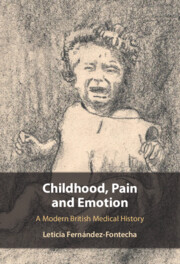
Situated between the history of pain, history of childhood and history of emotions, this innovative work explores cultural understandings of children's pain, from the 1870s to the end of the Second World War. Focusing on British medical discourse, Leticia Fernández-Fontecha examines the relationship between the experience of pain and its social and medical perception, looking at how pain is felt, seen and performed in contexts such as the hospital, the war nursery and the asylum. By means of a comparative study of views in different disciplines – physiology, paediatrics, psychiatry, psychology and psychoanalysis – this work demonstrates the various ways in which the child in pain came to be perceived. This context is vital to understanding current practices and beliefs surrounding childhood pain, and the role that children play in the construction of adult worlds.
Acquired chylothorax is an established complication of CHD surgery, affecting 2–9% of patients. CHD places a child at risk for failure to thrive, with subsequent chylothorax imposing additional risk.
Objective:
We conducted a retrospective chart review to ascertain quantitative markers of nutrition and growth in children affected by chylothorax following CHD surgery between 2018 and 2022 compared to controls.
Methods:
We utilised electronic medical record system, EPIC, at Children’s Hospital, New Orleans, targeting subjects < 18 years old who underwent CHD surgery between 2018 and 2022 and developed a subsequent chylothorax. Study subjects were identified using the 10th revision of the International Classification of Diseases codes (ICD-10 codes: J94.0, I89.8, and J90.0). Each chylothorax case (n = 20) was matched by procedure type and age to a control with no chylothorax (n = 20). Data were recorded in REDCap and analysed using SPSS.
Results:
After removal of outliers, we analysed 19 total matched pairs. There was no statistical difference in growth velocity (p = 0.12), weight change (operation to discharge) (p = 0.95), weight change (admission to discharge) (p = 0.35), Z-score change (operation to discharge) (p = 0.90), Z-score change (admission to discharge) (p = 0.21), serum protein (p = 0.88), or serum albumin (p = 0.82). Among cases, linear regression demonstrated no significant association between maximum chylous output and growth velocity (p = 0.91), weight change (operation to discharge) (p = 0.15), or weight change (admission to discharge) (p = 0.98).
Conclusions:
We did not observe statistically significant markers of growth or nutrition in children with chylothorax post-CHD surgery compared to those without chylothorax. Multisite data collection and analysis is required to better ascertain clinical impact and guide clinical practice.
Data on arterial thromboembolism in children undergoing cardiac surgery are limited. We sought to characterise, and estimate rates of, incident and recurrent arterial thromboembolism, and describe antithrombotic therapies for treatment in a large multinational population of children with CHD undergoing cardiac surgery.
Methods:
We queried the TriNetX global electronic health record (derived real-world data research platform) from 2017 to 2024 for patients less than 18 years of age and an index arterial thromboembolism within 1 year of congenital cardiac surgery. Data were descriptively analysed.
Results:
Of 20,102 children who underwent an index cardiac surgery for CHD, 206 (1.1%) developed an index arterial thromboembolism within 1 year of surgery: 111 (53.9%) had only arterial thromboembolism and 95 (46.1%) had concomitant venous thromboembolism. The most common anatomic site for arterial thromboembolism was the lower extremity (n = 141, 68.4%), and the most common surgery was the Glenn procedure (n = 35, 17%). Unfractionated heparin was utilised in 136 (67 %) and aspirin in 91 (44.2%) patients. Recurrent thromboembolism occurred in 36 (17.5%) patients within 1 year of the index thromboembolism.
Conclusions:
Among children undergoing congenital cardiac surgery, arterial thromboembolism was rare (1% of patients), but the 1-year risk of recurrent thromboembolism was high, at 17.5%. Multicentre prospective cohort studies are warranted to further evaluate risk factors for recurrent thromboembolism, to facilitate future risk-stratified interventional trials designed to reduce the high thromboembolism recurrence risk in these children.
Edited by
James Ip, Great Ormond Street Hospital for Children, London,Grant Stuart, Great Ormond Street Hospital for Children, London,Isabeau Walker, Great Ormond Street Hospital for Children, London,Ian James, Great Ormond Street Hospital for Children, London
Trauma is the leading cause of mortality and morbidity in children in developed countries. Traumatic brain injury is responsible for the largest proportion of deaths. Preventable death due to major haemorrhage occurs early in the first 24 hours. Mechanisms vary with age. Blunt injury represents over 80% of cases. Falls and road traffic collisions (RTCs) are the most common mechanisms across all ages, except for non-accidental injury (NAI) in < 1 year olds. There has been a substantial rise in penetrating trauma due to gun and knife crime in the adolescent population. The centralisation of trauma services in the United Kingdom with the creation of regional networks has changed how paediatric trauma is managed. Severely injured children are triaged at scene and taken directly to major trauma centres (MTCs). Outcomes have improved, and there is better standardisation between treating institutions. Initial trauma management involves stabilisation, resuscitation, identification and treatment of life-threatening injuries in the primary survey. Some patients will need damage control surgery to control haemorrhage. This is followed by definitive care and rehabilitation. Anaesthetists are an integral part of the trauma team involved throughout the patient journey. Dedicated anaesthetic roles are airway management and ongoing resuscitation during surgery.
The delivery of paediatric cardiac care across the world occurs in settings with significant variability in available resources. Irrespective of the resources locally available, we must always strive to improve the quality of care we provide to our patients and simultaneously deliver such care in the most efficient and cost-effective manner. The development of cardiac networks is used widely to achieve these aims.
Methods:
This paper reports three talks presented during the 56th meeting of the Association for European Paediatric and Congenital Cardiology held in Dublin in April 2023.
Results:
The three talks describe how centres of congenital cardiac excellence can be developed in low-income countries, middle-income countries, and well-resourced environments, and also reports how centres across different countries can come together to collaborate and deliver high-quality care. It is a fact that barriers to creating effective networks may arise from competition that may exist among programmes in unregulated and especially privatised health care environments. Nevertheless, reflecting on the creation of networks has important implications because collaboration between different centres can facilitate the maintenance of sustainable programmes of paediatric and congenital cardiac care.
Conclusion:
This article examines the delivery of paediatric and congenital cardiac care in resource limited environments, well-resourced environments, and within collaborative networks, with the hope that the lessons learned from these examples can be helpful to other institutions across the world. It is important to emphasise that irrespective of the differences in resources across different continents, the critical principles underlying provision of excellent care in different environments remain the same.