To save content items to your account,
please confirm that you agree to abide by our usage policies.
If this is the first time you use this feature, you will be asked to authorise Cambridge Core to connect with your account.
Find out more about saving content to .
To save content items to your Kindle, first ensure no-reply@cambridge.org
is added to your Approved Personal Document E-mail List under your Personal Document Settings
on the Manage Your Content and Devices page of your Amazon account. Then enter the ‘name’ part
of your Kindle email address below.
Find out more about saving to your Kindle.
Note you can select to save to either the @free.kindle.com or @kindle.com variations.
‘@free.kindle.com’ emails are free but can only be saved to your device when it is connected to wi-fi.
‘@kindle.com’ emails can be delivered even when you are not connected to wi-fi, but note that service fees apply.
The conversation draws on two texts by members of the art collective Identidad Marrón, which both explore how racialised subalterns can decolonise the art world and specifically museums. The first is a statement by visual artist Abril Caríssimo; the second is a text by Flora Alvarado y América López, titled ‘Malonear los museos’, reflecting on their experience of curating an exhibition titled Qué necesitan aprender los museos? (What Do Museums Need to Learn?) for the public Palais de Glace museum, Buenos Aires, Argentina.
Using the case of the exhibition Véxoa: Nós Sabemos, the first Indigenous-only arts exhibition at the Pinacoteca de São Paulo (2020–2021), we explore the deconstruction of the coloniality of a visual culture based on stereotypes of Indigenous peoples; self-representation as a strategy to combat the invisibilisation of Indigenous authorship in Brazil; and Indigenous arts as affective interventions that amplify the struggle for Indigenous rights. We show how contemporary Indigenous arts in Brazil are unsettling categories persistently associated with native aesthetics, and enacting anti-racism by challenging the dominant culture’s appropriation and exploitation of Indigenous cultures. In Véxoa, objects perceived as artifacts or crafts by hegemonic visual cultures are recontextualised as works of art, empowering Indigenous artists in symbolic, political and economic terms. Indigenous artists can disrupt the power dynamics that perpetuate racism, demonstrating that, in order to confront colonial and extractive practices that have historically marginalised Indigenous peoples, it is important for museums to establish collaborative relationships with Indigenous artists and community members in the curatorial process.
America’s history and culture wars have escalated at pace since Donald Trump returned to office in January 2025. And while the President’s second term has been marked by a rapid stream of executive orders and supporting remarks, articles, and statements affecting all aspects of life, it has demonstrated a particular interest in the nation’s cultural assets and has coalesced on the Smithsonian Institution. This article argues that Trump’s attention to the Smithsonian Institution has arisen because 2026 is the 250th anniversary of American independence. It presents archival evidence from the Smithsonian alongside contemporary analysis to demonstrate that the political playbook being utilized by President Trump has an extensive history. To make its point, the article offers a case study of The West as America, an exhibition that was shown in 1991 at the Smithsonian and generated such political controversy that it ended up being the subject of extensive questioning in Congress. The article aims to show the clear similarity between political and public responses to the 1991 exhibition—which was designed to commemorate a national anniversary but occurred in a period of heightened history wars—with conservative attempts to regulate culture in 2025, ahead of “America 250.” It exemplifies how important historical inquiry is in informing decisions and responses to processes of cultural production in the current era.
This article is a proof-of-concept that archaeologists can now disseminate archaeological topics to the public easily and cheaply through video games in teaching situations or in museum or heritage communication. We argue that small but realistic, interactive, and immersive closed- or open-world 3D video games about cultural heritage with unscripted (but guardrailed) oral conversation can now be created by beginners with free software such as Unreal Engine, Reality Capture, and Convai. Thus, developing tailor-made “archaeogames” is now becoming extremely accessible, empowering heritage specialists and researchers to control audiovisual dissemination in museums and education. This unlocks new uses for 3D photogrammetry, currently mostly used for documentation, and could make learning about the past more engaging for a wider audience. Our case study is a small game with two levels, one built around 3D-scanned Neolithic long dolmens in a forest clearing and an archaeologist and a prehistoric person, who are both conversational AI characters. We later added a more open level with autonomous animals, a meadow, and a cave with a shaman guiding the player around specific cave paintings. We tested the first level on players from different backgrounds whose feedback showed great promise. Finally, we discuss ethical issues and future perspectives for this format.
As technology continues to shape how we engage with the world, museums are increasingly encouraged to adapt in order to appeal to younger audiences. Promoting exhibits through platforms such as Instagram and TikTok can be an effective way to attract visitors, but that doesn’t mean museum spaces themselves need to become more digitally driven. For a generation already saturated with screens, adding more technology to exhibitions may actually detract from the experience. In this essay, I explore the effects that excessive screen use has on us and argue that museums can offer something more meaningful by providing a break from the digital overload. To support my argument, I conducted a straw poll survey to better understand how other young people feel about technology in museum settings.
This Element explores the yearning for things of the past, from early modern antiquarianism to the contemporary art market. It tells a global story about scholars who, driven by this yearning, roamed the world and amassed many of its historical artefacts. Their motivation was not just pleasure or profit. They longed for a past that had been lost and strived to reconstruct world history anew. This rewriting of history unleashed heated debates, all over the world and raging for centuries. The debates concerned not only the past but also the present and the future. Many believed that, by revealing a strange and foreign past, the material remains opened a path to modernity. So, the Element investigates not only the history of historical scholarship, and its obsession with things, but also our relationship to the past as modern human beings.
It is often claimed that public history represents a democratisation of historical knowledge, but how is “the public” being imagined here? This short article provides a report from a collaborative, student–staff research project that investigated how key stakeholders involved in public history—students, academics, and heritage professionals—understood their publics. It reflects on two key themes that emerged from the testimonies: issues of inclusion and positionality. We analyse a selection of telling cases, situating these extracts in the context of financial pressures, neo-liberal marketisation and the politicisation of DEI agendas. We suggest that there is a need for more open, reflexive, and cross-disciplinary dialogue between different stakeholders about the various publics they construct and engage.
Museums, including Holocaust museums, display artifacts and other aspects of material culture in order to convey historical events in a manner that allows the visitor to experience them at various levels. The combination of didactic and narrative exhibits generates a sense of identification and empathy with the victims and offers visitors an emotional and even spiritual experience. Thus, Holocaust museums are located in an intermediate zone between the academic establishment and the popular media. Holocaust museums form an integral institution for forming and conveying Holocaust memory. Unavoidably, they are also shaped by the political cultures of their home countries. This chapter examines how different Holocaust museums have been constructed in different times and places to serve both a didactic function for Holocaust education and a political function in shaping contemporary culture.
This chapter explores the major auction landscapes before 1914 and also describes the defining elements of the fin-de-siècle European market: integration, free trade, and cosmopolitanism. Examining societies’ approaches to artwork acquisition unveils contradictions and frictions within a milieu united by an international collecting class. France contended with an international, yet conservative, nationalist art world, while Germany’s bourgeoisie tried to control the world of luxury and consumption. In contrast, Britain grappled with questions about free trade and the preservation of art that challenged its laissez-faire tradition. It is precisely these tensions, which directly reflect the challenges posed by the commercialisation of art, that provide a framework for analysing the impact of the war. By emphasising the shared features of an integrated trade sphere, this chapter paints a balanced portrayal of a European market, where art mirrored the complex integration of both socioeconomic and cultural frameworks.
Over the last decade or so, China has seen an unprecedented building boom of museums and memorials. One curious new genre is the museums for Mao-era “Cultural Revolution” youth “sent down” to the countryside by Mao during the 1960s and 1970s. After Mao's death, they struggled to return to the cities. Surviving returnees have recently established several museums commemorating their suffering and sacrifice, even though the topic is politically fraught and the period's history is strictly censored in official museums and histories. One museum, the Shanghai Educated Youth Museum, doubles as a memorial site and a collective cemetery for former sent-down youth who wish to be buried together. This paper locates these memorials and burial grounds in their historical and political context. It also reflects the Shanghai institutions' copying of the design and architecture of the Korea and Vietnam war memorials in Washington D.C.
This article examines the transformative power of creative play in enhancing innovation, collaboration, and mental agility within professional and educational settings. It differentiates “creative play” from talent and leisure, arguing that creativity is an essential, learnable behavior. Drawing on personal experiences from the advertising industry and academia, as well as psychological research and case studies, the article illustrates how activities such as artist’s dates, museum visits, and drawing exercises stimulate cognitive flexibility and boost productivity. By advocating for the integration of creative practices into daily routines, it highlights the importance of fostering environments that support creative thinking and adaptability to drive innovation and maintain mental agility in a rapidly evolving technological landscape.
In 2022, the Centre for Global South Asia (CGSA) at Royal Holloway University of London developed a small research project entitled ‘Exhibit Asia’. The aim was to explore the use of exhibitions in nation-making in postcolonial South and East Asia in contrast to the scholarly preoccupation with investigating the region’s history of museums and exhibitions primarily in a colonial context. Its academic outcomes were to be a conference and related publication; but we also wanted our research to be relevant to our students. The resulting intervention in the teaching and learning of history took the form of a curatorial fellowship for an international cohort of ten students from Taiwan, Japan, India, Pakistan and the UK, leading to a co-curated online exhibition. The first section of this article sets out the development, design and delivery of the fellowship and discusses the viability and relevance of such projects. The subsequent three sections are co-authored by several of the participating students. They outline their methods, reflections and learnings; share their insights on the role of exhibitions in perceptions of Asia in the UK today; and analyse responses to ‘Tea and Tigers’, the online exhibition that was the outcome of the fellowship.
This essay will discuss the issue of Native American history and periodization where we are not allowed “premodern” histories. History prior to European contact is relegated to terms like “Pre-Columbian” and consigned to the domain of archeologists. As a reclamation of Native sovereign ancestral presence, I am interested in public humanities as an interdisciplinary way to push against the myths and stereotypes that both confine Indigenous people to static pasts, either displacing ancestors into settler national memory or oblivion. My goals in public humanities are to work toward reclamations of ancient pasts in the so-called Americas from the limited imaginations of settler skull- and arrowhead-collectors toward reasserting the ongoing lived relationships that Natives have with spaces condemned as ruins and materials as relics. I briefly mention my own work in digital curation, Red Coral Stories, to provide counternarratives from European conquest toward expanding Native American presence across space and time.
The Inclusuem is a collaborative project established in 2012 with international reach and global impact. The three co-directors, Aletheia Whitman, Dr. Rose Paquet, and Dr. Porchia Moore share a mission to “advance new ways of being a museum through dialogue, community building, and collaborative practice related to inclusive practice in museums.” We have provided a platform for over a decade which prompts arts and cultural heritage professionals to push the bounds of museum work to be as expansive and inclusive as possible while enacting structural change. In this piece, we focus on museums as sites where the humanities are made public. Our manifesto proposes a vision for the public humanities in a changing political landscape and will introduce new perspectives for both an emerging museum and an emergent new understanding for the public humanities within museums faced with an antagonistic intellectual and cultural ecosystem.
Museums and news organizations make up major parts of the structure that maintains an informed community essential to democracy. As resources for both of these institutions dwindle, it’s more important than ever for these sectors to work together toward their common goals – not only with each other, but with their respective communities in ways that are collaborative and egalitarian. The following outlines Civil Wrongs, a program started at the University of Memphis Department of Journalism and Strategic Media in 2022, as an emerging example of how these institutions can work together and learn from each other for the sake of a more informed community. Civil Wrongs is both a journalistic project of the nonprofit Institute for Public Service Reporting, and an academic class for junior and senior college students from multiple disciplines, including journalism, history, and political science. Through narrative podcasting, the program aims to examine past cases of racial terror in the Mid-South and analyze their connection to present-day injustices. It is a break from the traditional journalistic model that focuses solely on the present with little historical context and therefore naturally creates a bridge to museums that are grounded in history education.
Inspired in large part by the author’s residence on the grounds of a former plantation in Stafford County, Virginia, Sparking Freedom highlights local stories of enslaved resistance. The program incorporates stops at multiple National Park Service sites, as well as several other historic locations and the Fredericksburg Area Museum. Combining historical documentation and archival research, the tour features accounts of enslaved resistance including an uprising of enslaved men at Chatham Plantation in the winter of 1805, the story of Anthony Burns, an enslaved man who escaped to Boston in 1853 but was later apprehended under the Fugitive Slave Law of 1850, and enslaved individuals like Bethany Veney who resisted sales and auctions. Sparking Freedom is a highly personal example of innovative and engaging public history work honoring enslaved communities.
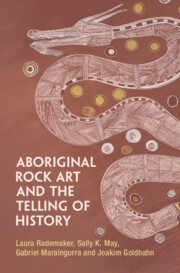
The rock art of Australia is among the oldest, most complex, and most fascinating manifestations of human creativity and imagination in the world. Aboriginal people used art to record their experiences, ceremonies, and knowledge by embedding their understanding of the world in the landscape over many generations. Indeed, rock art serves as archives and libraries for Australia's Indigenous people. It is, in effect, its repository of memory. This volume explores Indigenous perspectives on rock art. It challenges the limits and assumptions of traditional, academic ways of understanding and knowing the past by showing how history has literally been painted 'on the rocks'. Each chapter features a biography of an artist or family of artists, together with an artwork created by contemporary artist Gabriel Maralngurra. By bringing together history, archaeology, and Indigenous artistic practice, the book offers new insights into the medium of rock art and demonstrates the limits of academic methods and approaches.
The ethical treatment of human remains after excavation is a core debate in archaeology. This project explores the treatment of human remains in some European museums with an aim to support open discussion of complex ethical issues among research and heritage professionals involved in the care of human remains.
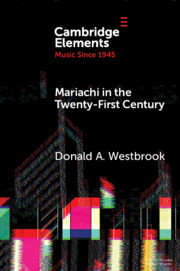
This Element contributes to the interdisciplinary study of mariachi, especially in the United States, by focusing on two areas that have yet to receive substantive academic attention: philanthropy and museum studies. In 2011, UNESCO included mariachi music on its list of expressions of intangible cultural heritage. While it is undoubtedly true that mariachi is in many ways intangible, this downplays expressions of its rich material culture and the work of scholars to research mariachi history beyond an emphasis on musical performance. The first section considers mariachi collecting and philanthropy in the US, especially the efforts of Edward E. Marsh and Chris Strachwitz. The second section examines the first major mariachi history museum/exhibit in the US, managed by the Mariachi Scholarship Foundation and housed at Southwestern College in California. Finally, some open areas for research are proposed and appendices concerning mariachi studies in the US are provided.
Religious practice in the Roman world involved diverse rituals and knowledge. Scholarly studies of ancient religion increasingly emphasise the experiential aspects of these practices, highlighting multisensory and embodied approaches to material culture and the dynamic construction of religious experiences and identities. In contrast, museum displays typically frame religious material culture around its iconographic or epigraphic significance. The author analyses 23 UK museum displays to assess how religion in Roman Britain is presented and discusses how museums might use research on ‘lived ancient religion’ to offer more varied and engaging narratives of religious practices that challenge visitors’ perceptions of the period.