To save content items to your account,
please confirm that you agree to abide by our usage policies.
If this is the first time you use this feature, you will be asked to authorise Cambridge Core to connect with your account.
Find out more about saving content to .
To save content items to your Kindle, first ensure no-reply@cambridge.org
is added to your Approved Personal Document E-mail List under your Personal Document Settings
on the Manage Your Content and Devices page of your Amazon account. Then enter the ‘name’ part
of your Kindle email address below.
Find out more about saving to your Kindle.
Note you can select to save to either the @free.kindle.com or @kindle.com variations.
‘@free.kindle.com’ emails are free but can only be saved to your device when it is connected to wi-fi.
‘@kindle.com’ emails can be delivered even when you are not connected to wi-fi, but note that service fees apply.
The book concludes with the practical and theoretical implications of the study. The chapter shows that ZANU PF gained from a combined HIV/AIDS and migration exit premium of 5 percent in the 2000 and 2002 elections, 2 percent in the 2005 elections, 12 percent in the 2008 elections, and 4 percent in the 2013 elections. If not for voter exit, the opposition would have had more parliamentary seats and won the presidency in the disputed 2008 elections. This chapter also demonstrates that the theory of exit and party sustainability can be generalized to other states, including but not limited to Russia, Venezuela, and Syria—countries that have also experienced a mass exodus of citizens from authoritarian regimes. This chapter provides a brief comparison of the role of migrant voters in Ghana and the Gambia, where democracy struggled but ultimately thrived. I discuss the study’s policy implications, considering ongoing debates about the global immigration crisis.
A key challenge for the party since 1949 has been to forge a new Chinese nation within the boundaries of a vast, ethnically heterogeneous former empire. The party has experimented with a variety of policies and mechanisms for securing the loyalty and obedience of non-Han groups, shifting between accommodative and assimilative approaches depending on the broader political climate at any given time. Frustrated by continued ethnic unrest, which the party sees as a threat to social stability and its political legitimacy, the party has, in recent years, sought to fortify the unity of the nationalities via increasingly coercive administrative and technological measures. This chapter examines the coercive measures implemented by the CPC to guide and control China’s minority nationalities. These include controls over religion, language, traditional practices, minority nationality regions, and minority nationalities who ventured to other parts of China. The controls are designed to prevent ethnic protest and to forge a common Chinese ethnic identity that subsumes all other ethnic identities and which is united by loyalty to the party-state.
This chapter analyzes the impact of remittances – the money migrants living abroad send to their family members in the home country – on the survival of authoritarian regimes, particularly in developing countries where poor economic and political conditions lead people to exit en masse. Immigrants have remitted over $500 billion in the last decade, with much of the money flowing from high-income to low- and middle-income countries. In 2018 alone, officially tracked remittances to low- and middle-income countries reached $529 billion. The actual amount is probably more because much money is channeled via unofficial routes. Ethnographic data from family interviews shows that senders can bargain for or against political participation with their receivers. Parents of young adults were likely to discourage them from engaging in politics, fearing for their lives. Receivers could also opt out of political engagement because they did not see the government playing an essential role in their economic lives. Remittances also cushioned the government from possible voter protests and welfare demands.
Functionalism proposes that the translation process is guided by extra-linguistic factors, more specifically by the function of the translation. Chapter 2 reviews the theory of functionalism (based on Skopos theory, from the Greek skopos meaning “purpose”) and some basic notions associated with it, while also explaining how to apply them in translation practice and discussion. It addresses basic functionalist concepts: extralinguistic factors (also known as situational features) and how they shape both monolingual and translated texts; the translation brief and translation norms; changes in situational features, and how they influence and guide translation decisions; and the “lifecycle” of a commissioned translation. Examples and illustrations accompany the presentation. The chapter starts by considering the relationship between extra-linguistic factors and monolingual texts, progressing to translated texts and translation tasks.
The purpose of this article is to bring provincial and local perspectives into the research of urban space in the wartime Habsburg monarchy. Using the case of Olmütz/Olomouc, a midsize town in central Moravia, it analyzes how various social actors used public space and how they could appropriate its symbolic meaning in wartime. While local urban geography had long been contested by political, most often nationalist actors, World War I introduced fresh themes to the context of the city. Public rituals of loyalty repurposed and intensified some of the old traditions, even as organized and unorganized actors sought to “capture,” “invade,” and potentially “occupy” the same spaces to highlight their agendas in public demonstrations whose form owed much to the traditional public rituals. After October 1918, when the balance of power shifted between nationalist groups, the contest for urban space continued, along with ongoing political unrest, showing strong continuity of wartime practices into the immediate postwar era both in terms of political instability and in terms of the patterns of public ritual.
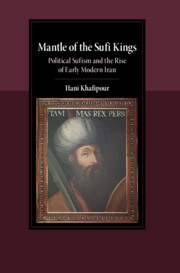
The rise and establishment of Safavid rule in Iran is a clear and momentous event in the wider history of the Middle East and Islamic world. In this study, Hani Khafipour explores how loyalty, social cohesion, and power dynamics found in Sufi thought underpinned the Safavid community's sources of social power and determination. Once in power, the Safavid state's patronage of art, literature, and architecture, turned Iran into a flourishing empire of culture, influencing neighboring empires including the Ottomans and Mughals. Examining the origin and evolution of the Safavid order, Mantle of the Sufi Kings offers fresh insights into how religious and sociopolitical forces merged to create a powerful Shi'i empire, with Iran remaining the only Shi'i nation in the world today. This study provides a bold new interpretation of Iran's early modern history, with important implications for the contemporary religio-political discourse in the Middle East.
This article presents the first study of an oath-letter (sawgand-nāma) from medieval Anatolia. It is drawn from the recently rediscovered Qiṣṣa-yi Salāṭīn, an anonymous inshāʾ work from the mid-thirteenth century. This text exemplifies a typical bottom-up oath in which the oath-taker pledges loyalty to Sultan Ghiyāth al-Dīn Kay-Khusraw II (d. 644/1246), while the oath also ensures a clear line of dynastic succession in favour of his son, ʿAlāʾ al-Dīn Kay-Qubād II (d. 655/1257). A comparison with similar texts from Iran reveals the extent to which Turkish states in Anatolia adhered to the norms established under the Great Saljuqs, although the Rum Saljuq version is noted to be more severe in ideological terms in cases of perjury, yet less demanding in practical aspects. This sawgand-nāma also highlights how the Qiṣṣa-yi Salāṭīn might have functioned as a sort of “para-archive”, potentially supporting the claims of ʿAlāʾ al-Dīn, who was sidelined after his father’s death.
The relation of subordination that characterises the contract of employment is created by the implied terms of the contract of employment such as the duty of obedience. Recently the courts have confirmed that both parties are under a duty not to destroy mutual trust and confidence and to perform the contract in good faith. The employee owes a duty of loyalty and both parties have to respect confidentiality. The chapter also examines the legal effect of breach of health and safety standards, tax law, immigration law and competition law on the enforceability of the contract of employment.
Judging an individual’s loyalty in security-sensitive roles is a high-stakes task, yet little is known about the extent and sources of variability in such judgments. This study examined how 58 participants with experience in personnel security assessment evaluated applicant profiles connected to five different countries. Each participant reviewed five protocols and judged whether the case contained information relevant to a personnel security clearance, then rated the applicant’s loyalty on a 7-point scale. Using Bayesian probit regression and an ordinal item response model with hierarchical structure, we analyzed both binary judgments and rating patterns, accounting for country of connection, applicant gender, and participant-specific variability. Results revealed substantial between-participant variability (‘noise’) in how likely judges were to flag foreign ties as relevant. Pattern noise, reflecting idiosyncratic differences in how individuals interpret the same case, was evident in loyalty ratings. Connections to Brazil and Thailand were associated with systematically lower loyalty ratings and heightened disagreement between judges, reflecting both bias and pattern noise. Contrary to policy guidance, fewer than half of foreign connections were judged as relevant, and this tendency did not vary by participant gender. The findings underscore the risk of inconsistency in high-stakes assessments and highlight the need for structured conceptual calibration in personnel vetting.
Failures of environmental law to preserve, protect and improve the environment are caused by law’s contingency and constitutional presumptions of supremacy over the self-regulatory agency of nature. Contingency problems are intrinsic to law and, therefore, invite deployment of technologies. Constitutional presumptions can be corrected through geo-constitutional reform. The latter requires the elaboration of geo-constitutional principles bestowing authority on nature’s self-regulatory agency. It is suggested that principles of autonomy, loyalty, pre-emption, supremacy and rights have potential to serve that aim and imply proactive roles for technologies in environmental governance. Geo-constitutional reform is necessary to prevent the fatal collapse of the natural regulatory infrastructure enabling life and a future of environmental governance by design. Once environmental catastrophe has materialized, however, geo-constitutionalism loses its raison d’être.
This chapter examines how the head of the Safavid order, originally a Sufi master, came to acquire the mantle of kingship. Using sociolinguistics to analyze the political language, the chapter explores how the Safavid leader maintained his ties with the Qizilbash tribal chiefs. Their power dynamic was underpinned by a set of moral codes, with the concept of shukr al-niʿma (obligation of gratitude) being central. The chiefs viewed their loyalty as a debt owed to the Safavid leader, who provided them with both material and spiritual benefits.
By the mid-fifteenth century, the Safavid order had militarized, emerging as a significant threat to regional powers like the Aqquyunlu, Qaraquyunlu, Shirvanshah, and later, the Ottomans. This provoked the deaths of key Safavid leaders – Sheikh Junayd, Haydar, and Sultan ʿAli – along with thousands of their followers, who were killed in battle or executed. Despite these devastating losses, the Safavid community’s loyalty to their cause remained steadfast.
By tracing the origin and evolution of the Safavid order, the book offers fresh insights into how religious and sociopolitical forces merged to create a powerful Shiʿi empire. Iran remains the only Shiʿi nation in the world today. Ideal for readers interested in Middle Eastern history, religious studies, and political thought, Mantle of the Sufi Kings is essential for anyone seeking to understand the complex roots of Iran’s identity.
In the digital economy, quality is increasingly becoming the predominant variable of competition. Markets are expected to seek out that state of affairs in which product quality rather than efficiency is maximized. But an effective conceptual resolution of what constitutes product quality is more complex and elusive than previously thought, and there has been a widespread repudiation of the notion that dominant online platforms can be held accountable for failing to deliver something that a single descriptive standard would command them to produce. Furthermore, microeconomic theory provides little guidance for evaluating how adjustments in the level of competition in a market have a bearing on product quality. This chapter suggests that claims relating to product quality can best be resolved by underscoring loyalty. Product quality, viewed from this perspective, provides a framework for assessing the behavior of digital platforms while at the same time legitimizing the manner in which zero-price markets operate. The issue is most prominent with regard to search engine rankings, privacy, and the sale of goods in online marketplaces.
I begin by highlighting three characteristics that ancient elites imagined that enslaved persons ought to have: usefulness, loyalty, and property. I start by noting how discourses of enslavement and utility are intertwined. The Shepherd’s concern for utility is most clearly expressed in its two visions of a tower under construction, in which enslaved believers are represented as stones who will be useful (or not) for the construction of the tower before the eschaton. Second, I turn to the concept of loyalty (pistis), suggesting that the Shepherd uses such language in a way that encourages God’s enslaved persons to exhibit loyalty to God at all costs. Finally, I point to how enslaved persons in antiquity were often characterized as commodified by placing the Shepherd alongside inscriptions about enslaved people from Delphi and documentary correspondence. Not only does the Shepherd portray its protagonist Hermas as lacking bodily autonomy while being exchanged between divine actors, but the text also calls on God’s enslaved persons to purchase other enslaved people who are imagined to be their physical property (e.g., as houses, fields) when they arrive in God’s city.
Civil War allegiance has long been a preoccupation of early modern British historians. They have weighed geographical, religious, political, and pragmatic reasons for British people to choose sides in 1642. A study of the changes of allegiance in the years that followed is just as important. Side-changing reveals the fractures and difficulties that war, regime change, and an uneasy peace created. Most scholarship has examined figures whose ideas and beliefs remained consistent as the world around them changed. This article argues that others changed their minds (and their side) because their ideas fundamentally shifted, through an engagement with oppositional literature, a royalist social environment, and relationships built with royalist agents. Through a case study of the parliamentarian Major-General Sir Thomas Myddelton it examines this process of change. The article takes the study of allegiance into the Interregnum and beyond to the Restoration, tracing the impact of Myddelton's reading, experiences, and actions upon his declared loyalty. To do this, the article proposes a methodology that cuts across historical approaches, using evidence from financial accounts, libraries, and legal cases alongside surviving correspondence and printed pamphlets to build a composite image of a changing mind.
The Oirats were key supporters of the Mongol enterprise and helped to bring Chinggis Khan to power. Chinggis and his family intermarried with the royal lineage of the Oirats who were descended from Qutuqa Beki. As these marriages continued throughout Mongol history, descendants of Qutuqa Beki and Chinggis's daughter Checheyigen became key supporters of various successor khanates. In the Ilkhanate of Iran, one of their relatives, Tanggiz Küregen, and his family were intimately connected with the ruling house. The importance of Oirat military support for the Ilkhanid government was to such an extent that he and his descendants were regularly pardoned for treasonous acts. While other elite lineages such as the Juvainīs, the family of Arghun Aqa, and the Chupanids all had had great power and influence, they met violent ends at the hands of their Ilkhanid rulers. Tanggiz and his descendants however, were not only not overly punished for their acts of lèse-majesté, but in fact outlived the Ilkhanid Dynasty itself. This culminated in the government of ʿAlī Pādshāh, who ruled much of the former Ilkhanid realm through a puppet khan for a short period in 1336. This article investigates how Oirat power was both central to the Ilkhanid regime and helped cause its downfall.
Antigone is the only character in Sophocles who explicitly purports to value philia above hatred. She does so in the course of a short dialogue, central to the play, which turns on the nature of philia and enmity.
Some neo-Aristotelians see a strong link between virtues and eudaimonia or flourishing, but others do not. After acknowledging this difference, the chapter explores some of the possible implications of this link. The view explored in this chapter is that virtues contribute to success in goal and good pursuit, which, in turn, contributes to a flourishing life. The neo-Aristotelian view examined holds that there are things that are good for humans qua humans (e.g., close personal relationships, group belonging). Success in pursuing these goods is hypothesized to be correlated with eudaimonia. It explores several challenges in studying eudaimonia, but concludes that eudaimonia research should continue and be updated as conceptualization and measurement improves. The chapter concludes with a discussion of three well-documented human goods (close personal relationships, group belonging, and meaning) and their hypothesized relationships with specific virtues (e.g., loyalty, forgiveness, honesty).
In Chapter 2, Chen takes his readers to the roots of Chinese face and politeness: the social structure of hierarchy and the social value of harmony. Both features are traced to Confucianism, a codification of a society in which every member knows the rung they are at on the ladder of the social hierarchy and is expected to behave accordingly. To keep such a society stable, the notion of harmony is championed by Chinese philosophers, most notably Confucius. To promote harmony, Chen demonstrates, Confucius prescribes an elaborate system of behavioral rules for people of all walks of life. The monarch and the ruling class should be benevolent, subordinates loyal; parents should be caring; children filial; husbands should be responsible, wife faithful. Finally, every member of the society should strive for ren, which includes all that is good, and treat others with deference and respect. Lastly, Chen argues that the notions of hierarchy and harmony have been remarkably stable across the ages and appear to be present in contemporary Chinese-speaking societies outside mainland China: Taiwan and Hong Kong.