To save content items to your account,
please confirm that you agree to abide by our usage policies.
If this is the first time you use this feature, you will be asked to authorise Cambridge Core to connect with your account.
Find out more about saving content to .
To save content items to your Kindle, first ensure no-reply@cambridge.org
is added to your Approved Personal Document E-mail List under your Personal Document Settings
on the Manage Your Content and Devices page of your Amazon account. Then enter the ‘name’ part
of your Kindle email address below.
Find out more about saving to your Kindle.
Note you can select to save to either the @free.kindle.com or @kindle.com variations.
‘@free.kindle.com’ emails are free but can only be saved to your device when it is connected to wi-fi.
‘@kindle.com’ emails can be delivered even when you are not connected to wi-fi, but note that service fees apply.
The chapter examines how anthropologists can produce ethically engaged and scientifically rigorous results in their work with people living at society’s social, political, and economic margins. It builds on long-term participatory research with street-involved youth in Yogyakarta, Indonesia, and elucidates affect-focused methodologies to build empathetic relationships with collaborators and to develop critical theoretical insights. The chapter argues against compartmentalizing the researcher’s affect, feelings, and emotions, which is thought to characterize a rigorous scientific approach. The affect, feelings, and emotions experienced in this challenging work are an invaluable source of ethnographic data, allowing greater theoretical insight into emotional economies, where street-involved youths’ careful arrangements of emotives in social interactions create attention, trust, concern, care, or cooperation. Affect, as forms of discourse and governmentality, can construct orders of feeling, found as emotives present in laws, billboards, and news headlines. These matter for discursive changes implemented by governments to sanitize cities of unwanted communities.
This chapter takes the anthropology of emotion and affect as its central problem, with a particular focus on socialization processes. It starts with an overview of how psychological anthropologists have approached the topic of emotion since the 1980s and outlines the social–anthropological understanding of emotion before it considers the “affective turn” in the social sciences and humanities and its impact on anthropology. In the second part of the chapter special attention is paid to the socialization of emotions, first from a cross-cultural and second from a transcultural perspective. Using the example of the socialization of emotions in transcultural settings, it discusses the extent to which the notion of “affect” enhances our understanding of how the transformation of socially learned emotion repertoires might work.
Kant’s account of the function of orientation vis-à-vis human agency has been the subject of a recent debate in the literature. On the reading this chapter puts forward, orientation consists in giving me a sense of myself and my activity in relation to the world so that I can reach the destination I have chosen. By contrast, Melissa Merritt has argued that orientating myself consists in having a sense of the direction I should follow in order to realize my rational vocation. This chapter revisits this debate by examining Kant’s notion of orientation through the prism of the Stoic notion of oikeiōsis. While Kant and the Stoics share the view that agency requires orientation and orientation requires a certain form of self-awareness, they disagree on the function of orientation, and locating the source of their disagreement will shed light on Kant’s account.
This chapter traces Qiu Jun’s use of Classical ritual texts, legal debates, and historical cases to discuss the political, emotional, and ritual dilemma of filial revenge, the ancient obligation of a child to avenge a parent’s murder. Legal and ritual precedents are given in order to find a balance between the Confucian tenets embodied in the central virtue of filial piety and ensuing ritual obligations, personal feeling, and popular sympathy, with legal sanctions and imperial power, while also elevating filial revenge to a cosmic principle. His chosen texts and commentaries urge leniency and sympathy and for individual filial revenge cases to be considered at the highest level. I argue that there is a palpable unease at the heart of Qiu’s discourses, in that his lifelong attachment to ritual studies and his filial piety complicate his responses as a loyal minister in handling the perennial problem of filial revenge.
The standard philosophical model of intentional action-explanation appeals to states of belief and desire to do the explaining. This chapter evaluates what philosophers have had to say about the nature of desire. Chapter 5 showed that the ordinary notion of desire encompasses two very different kinds of mental state: goals and intentions, on the one hand, and affective or emotion-like forms of desire, on the other. The focus here is on the latter. The chapter shows that desires of this sort always incorporate anticipatory pleasure, and that pleasure itself is an analog-magnitude representation of value. The chapter begins with what the science can tell us about the respective natures of pleasure and desire, before comparing the results with claims made by armchair-philosophers. Many of the latter are false, albeit sometimes containing partial insights.
This essay traces the study of the vexed topic of sentimentalism in long nineteenth-century American critical discourse. Over the past decades, scholars have drawn upon different disciplines and critical theories to reframe the expansive and subtle complexities of sentimentalism’s influence as mode and ideology; these investigations, under the capacious term “feeling,” sometimes dovetail with, and other times are disaggregated from, inquiries into sympathy, affect studies, the sensorium, and the history of emotions. Although the turn to affect has been seen as a way out of political overdetermination, concerns about liberatory potential and structural collusions were prefigured and informed by debates about sentimentality’s ethical bind. This essay turns to negative terms, glossing the use of “unfeeling” in Harriet Beecher Stowe’s Uncle Tom’s Cabin and then appearances of “unfeeling” and “unsympathetic” in illustrative scholarship over the last three decades for their operations and implications. The chapter then teases out the cultural politics of unfeeling from a queer, feminist of color perspective: What if one reconsiders unfeeling from the vantage point of those marginalized and not simply as hegemonic imposition? The discussion closes with Yankton Dakota writer Zitkala-Ša, reassessing the Indigenous activist’s wish, in her own words, to become “unfeeling stone.”
This chapter offers an exposition of Collingwood’s theory of imagination as presented in the commonly overlooked Book Two of The Principles of Art. I show how the standard objections to Collingwood’s view are relatively superficial, and also how the account in Book Two should be understood in the light of Collingwood’s remarks concerning the imagination in his earlier writings (especially Speculum Mentis and Outlines of a Philosophy of Art). For Collingwood, sense perception inseparably involves the imagination of possible objects of perception in any perceptual experience. Moreover, the imagination makes the sensory object thinkable – a position that blends Kantian and Humean motifs. Additionally, the crucial mark of the imaginary object is self-containment (“monadism”), a notion serving to clarify both Collingwood’s claim that the imagination is indifferent to reality or unreality and the conceptual connection, on his view, between imagination and art.
Robert Clewis focuses on a number of different themes in Kant’s precritical and critical aesthetics in The Origins of Kant’s Aesthetics. Clewis carefully documents where Kant’s views on these themes are the same, where they are different, and why; yet his approach might give readers the impression that Kant lacks a unified conception of aesthetics. I show, on the contrary, that the method and sources Clewis employs also reveal the frameworks within which Kant addresses the themes that Clewis discusses in Origins; the consistencies in Kant’s precritical and critical conceptions of aesthetics; and the changes in his conception of aesthetics that we find in the third Critique.
People have often thought that Kant left no room for compassion in the virtuous life, because virtue for him is about doing the right thing when you don't feel like it. However, compassion is an important virtue in Kantian ethics, where it is understood as a form of moral cognition grounded in a commitment to act for the good of others. Though this means that the Kantian virtue of compassion is primarily intellectual in nature, contrary to what people have thought, the virtuous person can experience great feelings of compassion, affection and pleasure. And yet, these feelings are not strictly necessary for someone to have the virtue. For this reason, some, for example neurodiverse, agents who would not qualify as virtuous on the Aristotelian picture do qualify as virtuous on the Kantian picture. This expands the traditional virtue label in a good way.
By 1660 the number of common criminals hanged in England had fallen dramatically: but England still executed far more people than other European states. That practice was sustained in part, in the minds of England’s urbane peoples, by a time-honoured perception of crime as a moral failing akin to others, albeit of far greater social consequence. By the third quarter of the eighteenth century, however, that vision was being eroded by two cultural transformations. First, a more worldly (secular) vision bred impatience with the idea that the most lasting and certain punishment of serious crime must be left to God’s Last Judgment rather than achieved in the here and now. Such views were reinforced, secondly, by a new culture of feeling, which inspired not only distaste for the physical and emotional sufferings inflicted upon serious criminals, but also (contrarily) greater anxiety about the threat of their crimes.
The transition from one culture of governance to another explains the character and timing of changes in the nature, location and scale of English executions from 1660 to 1900. Traditional landed elites adhered both to a “Bloody Code,” whose enforcement against common criminals could be regularly adjusted through consultations between trial judges and themselves, and to the occasional use of prolongedly agonizing execution rituals against traitors. The men who dominated England’s uniquely extensive and steadily expanding urban realms, and embraced new cultures of desacralization, feeling and reason, increasingly viewed the purposes, numerical extent and staging of executions differently. As the numbers and power of urbane people grew, first the extent and finally the practices of execution were adjusted accordingly. The many paradoxes of “feeling”, however, ensured their continued commitment to execution for murder, and some measure of hypocrisy in their views of executions and the people who attended them.
The Murder Act of 1752 imposed post-mortem dissection as the primary punishment for all people convicted of that crime. Recent historians have viewed this statute as strikingly regressive. In fact, its purposes and effects were notably humane. It dramatically reduced the number of dissections imposed on criminal bodies in London. By almost entirely confining dissection to murder alone, it substantially ended riots at executions. And, in ensuring a legal supply of “subjects” to anatomists, it helped make surgery as swift as possible in an age before reliable anaesthesia. On the other hand, public anatomization of dead killers was so uncommon that it seems likely to have inspired fascination rather than deterrent horror. And, in failing to supply enough “subjects,” the Act inspired epidemical levels of grave robbery, finally coming undone when enterprising monsters resorted to murder itself in meeting the needs of anatomists, who now seemed complicit in such crimes.
This book provides the first comprehensive account of execution practices in England and their extraordinary transformation from 1660 to 1900. Agonizing execution rituals were once common. Male traitors were hanged, disembowelled while still alive, then decapitated and quartered. Female traitors were burned alive. And common criminals slowly choked to death beneath wooden crossbeams erected at the margins of towns. Some of their bodies were either left to rot on roadside gibbets or dissected by anatomy instructors. Two centuries later, only murderers and traitors were executed – both by hanging – and they died alone, usually quickly, and behind prison walls. In this major contribution to the history of crime and punishment in England, Simon Devereaux reveals how urban growth, and the unique public culture it produced, challenged and largely displaced those traditional elites who valued the old 'Bloody Code' as an instrument of their rule.
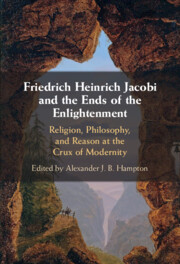
This chapter addresses Jacobi’s literary contributions, Edward Allwill’s Collection of Letters and Woldemar, in the context of his critique of both Enlightenment reason and feeling. Both, Jacobi argues, undermined human individuality and freedom.
Friedrich Jacobi held a position of unparalleled importance in the golden age of late eighteenth and early nineteenth century intellectual history. Nonetheless, the range and style of his thought and its expression has always posed interpretative challenges that continue to hinder his reception. This volume introduces and evaluates Jacobi's pivotal place in the history of ideas. It explores his role in catalyzing the close of the Enlightenment through his critique of reason, how he shaped the reception of Kant's critical philosophy and the subsequent development of German idealism, his effect on the development of Romanticism and religion through his emphasis on feeling, and his influence in shaping the emergence of existentialism. This volume serves as an authoritative resource for one of the most important yet underappreciated figures in modern European intellectual history. It also recasts our understanding of Fichte, Hegel, Kierkegaard, and others in light of his influence and impact.
Decision making research often dichotomises between more deliberative, cognitive processes and more heuristic, intuitive and emotional processes. We argue that within this two-systems framework (e.g., Kahneman, 2002) there is ambiguity over how to map the System 1/System 2 axis, and the notion of intuitive processing, onto the distinction between conscious and non-conscious processes. However the convergent concepts of experience-based metacognitive judgements (Koriat, 2007) and of fringe consciousness (Mangan, 1993) can clarify intuitive processing as an informative conscious feeling without conscious access to the antecedents of the feeling. We stress that these intuitive feelings can be used to guide behaviour in a controlled and contextually sensitive manner that would not be permitted by purely non-conscious influences on behaviour. An outline is provided for how to empirically recognise these intuitive feelings. This is illustrated with an example from research on implicit learning where intuitive feelings may play an important role in peoples’ decisions and judgements. Finally we suggest that our approach to understanding intuitive feelings softens rather than reinforces the two-systems dichotomy.
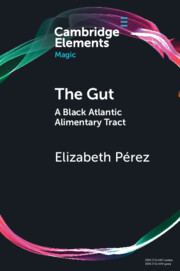
If the head is religion, the gut is magic. Taking up this provocation, this Element delves into the digestive system within transnational Afro-Diasporic religions such as Haitian Vodou, Brazilian Candomblé, and Cuban Lucumí (also called Santería). It draws from the ethnographic and archival record to probe the abdomen as a vital zone of sensory perception, amplified in countless divination verses, myths, rituals, and recipes for ethnomedical remedies. Provincializing the brain as only one locus of reason, it seeks to expand the notion of 'mind' and expose the anti-Blackness that still prevents Black Atlantic knowledges from being accepted as such. The Element examines gut feelings, knowledge, and beings in the belly; African precedents for the Afro-Diasporic gut-brain axis; post-sacrificial offerings in racist fantasy and everyday reality; and the strong stomachs and intestinal fortitude of religious ancestors. It concludes with a reflection on kinship and the spilling of guts in kitchenspaces.
Karl Heinrich Heydenreich contends in “On Moral Freedom” (1791) that the human being is originally endowed with consciousness of freedom. Moreover, Heydenreich explicitly denies that our consciousness of freedom is a consequence of consciousness of the moral law and instead maintains that the moral law provides only indirect support for our innate consciousness of freedom. Similar to Snell’s contention that our freedom is revealed to us through the feeling of our own self, at one point Heydenreich refers to our feeling of freedom. According to Heydenreich, the task of philosophy is to secure this feeling of freedom from the skepticism of speculative reason.
Kant’s theory of friendship is crucial in defending his ethics against the longstanding charge of emotional detachment. But his theory of friendship is vulnerable to this charge too: the Kantian sage can appear to reject sympathetic suffering when she cannot help a suffering friend. I argue that Kant is committed to the view that both sages and ordinary people must suffer in sympathy with friends even when they cannot help, because sympathy is necessary to fulfill the imperfect duty to adopt others’ merely permissible ends (MPEs), and we ought to take friends’ MPEs as our own. MPEs are individuated in terms of concepts which include marks of the first person, and no marks of law other than permissibility. To adopt ends of others individuated in terms of such concepts rather than merely promote them as means to different ends, those concepts must engage with one’s feelings in a way that requires sympathy.
This section outlines the contents and purpose of the book. It asks why we should read poetry, what a poem is, and how we can connect with poems and understand and enjoy them.