To save content items to your account,
please confirm that you agree to abide by our usage policies.
If this is the first time you use this feature, you will be asked to authorise Cambridge Core to connect with your account.
Find out more about saving content to .
To save content items to your Kindle, first ensure no-reply@cambridge.org
is added to your Approved Personal Document E-mail List under your Personal Document Settings
on the Manage Your Content and Devices page of your Amazon account. Then enter the ‘name’ part
of your Kindle email address below.
Find out more about saving to your Kindle.
Note you can select to save to either the @free.kindle.com or @kindle.com variations.
‘@free.kindle.com’ emails are free but can only be saved to your device when it is connected to wi-fi.
‘@kindle.com’ emails can be delivered even when you are not connected to wi-fi, but note that service fees apply.
This chapter provides an overview of suicidal behaviours and suicide prevention strategies among minority groups, including refugees, migrants, asylum seekers, and internally displaced persons (IDPs). The chapter highlights the interplay of cultural and gender diversity in shaping suicidal behaviours and emphasizes the need for tailored interventions that address the specific challenges faced by these populations. It reviews the existing literature on the prevalence of suicide among minority groups in both high-income countries (HICs) and low- and middle-income countries (LMICs), examining the role of cultural factors, gender-based violence, and mental health issues. The chapter also discusses suicide prevention strategies in humanitarian settings, such as community engagement, gatekeeper training, cultural adaptation of interventions, and the importance of integrating mental health services into primary healthcare services. The chapter highlights evidence-based practices recommended by research, the Inter-Agency Standing Committee (IASC), and the World Health Organization (WHO). The conclusion underscores the need of a comprehensive, culturally sensitive approach and calls for further research, increased investment in mental health infrastructure, and the development of gender-sensitive strategies to reduce the burden of suicide among minority groups in humanitarian contexts.
This chapter considers Christian converts from Islam who were converted forcibly in the early sixteenth century and known as moriscos. Once Catholic, the moriscos came under the jurisdiction of the Spanish Inquisition. For more than a century, Spanish authorities worried about Moriscos adhering to their former religion and being Christian in name only; Spanish inquisitors investigated and prosecuted them for practicing Islam. The number of trials reached a high point in the second half of the sixteenth century, and only dropped when the monarchy expelled the Moriscos from the Spanish kingdoms between 1609 and 1614. This essay examines how the Spanish Inquisition constructed a model of Islamic heresy that encompassed Morisco cultural traditions. It surveys the rise in inquisitorial prosecution of this population across multiple Spanish regions. It also considers Morisco responses to the Inquisition, including strategies of petitioning and financial negotiation. This chapter assesses what Inquisition records can reveal about Morisco histories, as well as methods for reading beyond inquisitorial perspectives.
Cognitive assessment is used to detect, characterize, and monitor the degree of cognitive impairment in dementia and its earlier stages. Brief cognitive assessments are frequently used across diverse clinical settings and offer scalability as a frontline marker aimed at enhancing the clinical efficiency of diagnostic work-up. These tools have a potential to facilitate early detection and diagnosis of symptomatic cognitive impairment, which is a crucial first step to providing medical and supportive care that benefits people with cognitive impairment and their care partners and for identifying pre-surgical or hospitalized patients who may benefit from delirium prevention interventions. This chapter provides an overview of the most commonly used brief cognitive measures in clinical practice, recent developments and novel measures, and future directions for use of brief cognitive tools across clinical settings including primary, dementia specialist, preoperative, and inpatient care. Recommendations for cultural considerations and optimal implementation paradigms are also discussed.
This chapter examines specifically oriented poetry anthologies of the twenty-first century, observing their interstitial and multivalent nature. It argues that they fall into two kinds. one is deployed towards institutional consolidation; the other, which is the principal focus of the chapter, is a strategic gathering around a cultural identity, or a thematic, aesthetic, formal or dialogical imperative. The chapter discerns that many such anthologies extend recuperative, topical or other discursive trajectories established in the late twentieth century. Many exceed national-historical formations, track evolving conceptual frames of literary and cultural studies, and map material changes in, and significant structures of feeling around, social, political, intellectual and artistic life. It also includes a discussion of the challenges and significance of translation.
Trust in biomedical research is essential, multidimensional, and shaped by individual experiences, culture, and communication. Participants’ trust relies on researchers’ commitment to ethical practices. As public trust in science declines due to misinformation and disinformation campaigns, biomedical researchers (BmRs) must ensure trust and cultivate trustworthiness. This study explores BmR’s perspectives on trust and trustworthiness.
Methods:
We employed a qualitative, phenomenological approach to explore the experiences of BmRs. Through purposive sampling via the Indiana Clinical and Translational Sciences Institute, we invited BmRs to participate in semi-structured interviews. We employed rapid qualitative analysis (RQA) to identify key themes from interviews with BmRs. This action-oriented approach enables a research team to efficiently summarize experiences and perspectives, using structured templates and matrixes for systematic analysis and interpretation.
Results:
Fourteen BmRs were interviewed. Volunteer demographics were collected for race/ethnicity, gender, faculty rank, and investigator experience level. The following domains were identified: individual trust and trustworthiness, institutional trustworthiness, and trust and equity as a crucial part of structural and social drivers of health.
Conclusion:
We recognize that BmRs are dedicated to health equity and addressing disparities. However, in addition to committing to “best practices,” BmRs should prioritize actions that foster genuine trust from the communities they serve. More development opportunities are needed for reflection of what it means to be trusted by research volunteers and communities. Furthermore, intentions alone aren’t sufficient; earned trust and trustworthiness are vital.
Mental health literacy (MHL) encompasses both cognitive and cultural dimensions. Low MHL sustains stigma by reinforcing misconceptions, social distancing and discrimination, discouraging help-seeking and adherence to treatment. In education, MHL extends beyond knowledge to empathy, emotional intelligence and inclusivity. Integrating MHL into psychiatry training enhances competence and compassion, cultivating openness toward mental illness. Promoting diversity and inclusion is not only a moral imperative but also vital for effective psychiatric education. Embedding MHL across learning environments fosters understanding, reduces stigma and strengthens psychiatry’s connection to the human experience in all its emotional and cultural depth.
Understanding the regional diversity of epiphytic bryophytes along elevation gradients is crucial for assessing forest ecosystems, particularly in areas vulnerable to climate change. The study aimed to compare the composition and richness of epiphytic bryophytes colonising on basal trunks of Cryptomeria japonica, a predominant conifer in the Darjeeling hills, across different altitude zones, and to assess the underlying macroclimatic factors driving such variations. The field surveys were performed at nine elevation zones of Darjeeling between 1450 and 2250 m above sea level. Bryophytes belonging to 37 genera, primarily from Dicranales and Hypnales, were recorded. Diversity profiles reflected low evenness, with Syrrhopodon confertus emerging as the dominant moss in the community. Species richness displayed a multimodal pattern along the altitudinal gradient. The trend exhibited an initial hump peaking at 1550 m and a subsequent rise of richness above 2150 m. About 43.24% of species were confined to a single altitude zone, signifying a narrow range of occurrence. The epiphyte compositions of 1450, 1550 and 2250 m were distinct compared to the other elevation zones. Furthermore, statistical evaluation predicted the influence of climatic parameters such as precipitation, temperature stability and solar radiation on bryophyte assemblage. Therefore, the outcome provides a broad overview of the distribution of bryophytes at managed conifer forests and underscores the significance of elevation-specific climatic conditions in shaping bryophyte diversity, which can be useful for designing their effective conservation strategies.
Anurans are bioindicators and key components of ecosystem functions. Although South America harbors more than 4,000 identified anuran species, fewer than 10% have been analyzed regarding their trematode fauna. When tadpoles are considered, the paucity of studies becomes even more evident. Considering the ability of digeneans to serve as indicators of ecosystem health, it is evident that there is a gap in the knowledge of trematodes occurring in anuran biodiversity hotspots. Herein, we provide an ecological and morphological analysis of the trematode component community recovered in tadpoles and adult anurans. During a long-term herpetological and helminthological study conducted in a Cerrado fragment in Brazil, 569 anurans from 17 species were necropsied. Eleven species were common to both adults and tadpoles, and six species occurred only in adults. The total prevalence was 61% (352/569), in separate analyses, 65% (192/296) for adult anurans, and 58% (160/273) for tadpoles. A total of 12,397 trematodes belonging to 16 taxa were recovered. The component community was composed mostly of metacercariae. We provided a brief morphological description for each trematode taxa recovered. Additionally, statistical analysis was performed to elucidate the differences between tadpoles and adult anurans trematode communities. The trematode community analyzed in our study revealed 24 new host records and was the first to include tadpoles in such an analysis, highlighting the importance of faunistic inventories for a better understanding of parasitism in their hosts, as well as providing a foundation for further research.
How do perceptions of demographic change affect the strength of white identity and corresponding attitudes toward immigrants, immigration and personal perceptions of victimhood? While white identity has received scholarly attention in the United States, we know much less about its effects in Canada. We conducted a preregistered survey experiment in which we exposed respondents to different framings on Canada’s increasing ethnic diversity. We find that perceiving demographic change increases feelings of white identity, particularly when framed as an increase in Canada’s visible minority or immigrant population. However, exposure to these trends does not in turn robustly affect respondents’ attitudes toward immigrants, immigration admission preferences or own perceptions of personal victimhood. These findings suggest that white identity is both present and can be primed in Canada; however, it has not yet been politically mobilized in the same way as in other contexts, such as the United States.
Belgium follows global standards in psychological assessments, and great attention is paid to issues concerning bias and fairness by legal authorities, test developers, and researchers. Anti-discrimination laws cover around nineteen protected grounds and align with European Union directives, but hiring discrimination persists. This chapter illustrates the tension between the law, test developers and researchers who promote proper test use, and practitioners who continue to rely on tools that can perpetuate bias, such as unstructured interviews and intuition-based decision-making. Despite comprehensive anti-discrimination regulations and affirmative action measures such as gender quotas, there are no legal requirements for the use of valid selection procedures in Belgium. Balancing validity and diversity is emphasized more in the public sector than the private sector. Although professional bodies offer guidelines for appropriate test use, they mainly target clinical settings rather than employment settings.
Selection processes in France are governed by a comprehensive legal and regulatory framework that prioritizes fairness, non-discrimination, and equal opportunity. French labor laws explicitly prohibit discrimination based on twenty-five criteria, including sex/gender, ethnicity, disability, and age. Despite these protections, disparities persist, fueling ongoing policy debates and legislative refinements. Regulatory bodies such as the Defender of Rights oversee compliance and promote unbiased hiring practices. However, implicit biases and structural barriers continue to influence employment decisions, challenging efforts to achieve true workplace equality. Employers must balance legal obligations, diversity objectives, and test validity while adapting to evolving EU regulations, such as the AI Act (2024). The introduction of diversity labels and corporate social responsibility initiatives reflects a proactive commitment to fostering inclusive workplaces. Yet enforcement challenges remain, as rising reports of workplace discrimination highlight persistent gaps. Several recommendations have been proposed to mitigate discrimination without compromising the quality and effectiveness of selection methods.
Nigeria’s diverse history and ethnic diversity have shaped the country’s current understanding of bias and fairness, including issues relating to employment. This chapter focuses on employment testing bias and fairness in Nigeria. When making employment decisions, it is a common occurrence, albeit not a legally permissible one, to have factors such as age, sex, political beliefs, religion, ethnicity, and disability taken into account. Nigeria’s discrimination laws cover all employers, third parties, and licensure. However, Nigerian discrimination adjudication has a narrow purview. For instance, there are no clear standards for validity evidence, no rules for demonstrating disparate impact, no shifting of the burden of proof, and no recognition of disproportionate impact. The limited use of professionally designed selection processes also means that bias-related concerns receive little attention. Information about the impact of the legal environment on industrial and organizational psychology is similarly lacking. Nonetheless, there are initiatives aimed at professionalizing psychology in the nation, which should increase the reliability and validity of selection procedures.
This chapter has been written from the stance of a patient and public contributor to mental health research. It examines the role of patient and public involvement in mental health research which has evolved since the mid 1960s and continues to do so. Examining the people, roles and research and providing a definition for the different stages of Patient and Public Involvement, the chapter looks at how these roles interact, the ethics and rationale for involvement, the power relations between the various parties, whether involvement is moving the research agenda closer to preventative health care, and the subject of equality, diversity and inclusion. The difficulties of working with people with serious mental health issues are addressed. Case studies are given to illustrate various points. Subjects such as training and language are included. The complex subject of evaluation and impact and how they can be resolved are raised. Finally, the chapter concludes by inviting the reader to consider what ‘good PPI’ is, and how it is done.
This chapter presents an overview of the goals of universal biology. It is noted that biological systems are generally hierarchical as molecules-cells-organisms, where the components of each level are quite diverse. How such diversity arises and is maintained is discussed. We then discuss the possibility of understanding such biological systems with diverse components, and explore the possibility of macroscopic theory to reveal and formulate universal properties in living states, noting that robustness, plasticity, and activity are essential to life. Recalling the spirit (not the formulation) of thermodynamics, we explore the possibility of formulating a theory for characterizing universal properties in life, emphasizing macroscopic robustness at each level of the hierarchy and the importance of macro-micro consistency.
This textbook provides students with basic literacy on key issues related to Justice, Equity, Diversity, and Inclusion in the United States. Over twelve chapters, it employs critical race theory and intersectionality to promote critical thinking and civic engagement on issues such as American culture, gendered racism, and Black reparations. Each chapter employs interactive and engaging opportunities to learn, making it the ideal introductory resource for undergraduate students. The text is structured around real-world stories, which exemplify the humanity of each person and the complexity of these issues. Causadias presents questions for further discussion or to enhance comprehension, defines key concepts, debunks popular myths, summarizes evidence from trusted sources that challenge misinformation and disinformation, and proposes in-class exercises. Curated reading lists can be found at the end of every chapter for readers to expand their understanding of different topics. This book is also available as Open Access on Cambridge Core.
This Perspective article addresses the issue of recovery in mental health research, policy and practice from a service user/survivor perspective. In doing so, it brings to bear a fundamentally different viewpoint to that which has dominated psychiatric history, one based on lived experience rather than the ideological allegiances of its founders. The article addresses the modern history of Western mental health provision, its over dependence on medicalised individual understandings of wellbeing, the limitations this has imposed and the challenges it has been subjected to. The issue of recovery is examined in its historical context, exploring its strengths and weaknesses. The latter weaknesses have been magnified by the association of recovery by different governments, nationally and internationally, with pressing mental health service users and others experiencing distress into employment; this is often poor quality and unsupported employment. The article puts this in the broader context of a number of values and principles underpinning both the developing psychiatric system survivor movement and the emerging international interest in Mad Studies. In doing so, the article offers a basis for the radical reform of both understandings of madness and mental distress, recognition of their holistic relations and more helpful routes to offering support and engaging with the lived experience and experiential knowledge of mental health service users.
The recovery concept has been widely integrated into mental health policy, services, and research. However, its applicability across diverse contexts and populations remains a subject of ongoing critique. This paper discusses key issues pertaining to the suitability of implementing the recovery approach in child and youth mental health services, including adult-centric foundations of the recovery concept; limited multi-stakeholder participatory research; privileging individualistic ideologies; differences in developmental stages; differences in illness trajectory, mental health experiences, and service provider interactions; and different systems of care and social environments. The paper concludes with recommendations for future research.
This chapter offers a definition of a local priest. It explores the normative framework inherited from Late Antiquity that defined their status and regulated their behaviour, but also stresses that the label designates a social fact rather than a specific grade within the Church. To illustrate the diversity that the term encompasses and the methodological challenges that studying these people involves, the chapter offers four case studies of particular local priests in different parts of the former Carolingian empire, from Saxony through to southern France.
Living systems consist of diverse components and constitute a hierarchy, from molecules to cells to organisms, which adapt to external perturbations and reproduce stably. This book describes the statistical and physical principles governing cell growth and reproduction, and the mechanisms for adaptation through noise, kinetic memory, and robust cell differentiation through cell to cell interaction and epigenetics. The laws governing rate, direction, and constraints of phenotypic evolution are examined from the perspective of microscopic units (molecules) and macroscopic states (cells), with a focus on maintaining consistency between these length and temporal scales. By integrating theoretical, computational, and experimental approaches, this book offers novel insights into biology from a physicist's perspective and provides a detailed picture of the universal characteristics of living systems. It is indispensable for students and researchers in physics, biology and mathematics interested in understanding the nature of life and the physical principles it is based upon.
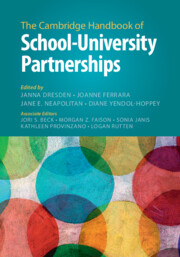
The Cambridge Handbook of School-University Partnerships offers a panoramic view of research on school-university partnerships (SUPs), laying the groundwork for further development in the field. Through different theoretical and methodological perspectives, it amplifies the voices of scholars and practitioners across various institutions. This inclusive approach provides a comprehensive resource for researchers, scholars, students, practitioners, and policymakers, that honors diversity while fostering unity and expansion within the field of SUPs. Covering topics from historical foundations to international perspectives, the handbook delves into areas such as teaching, equity, leadership, community engagement, innovation, funding, and policy. By embracing the collaborative essence of SUPs, it promotes mutual benefit and encourages continued exploration in these dynamic settings.