To save content items to your account,
please confirm that you agree to abide by our usage policies.
If this is the first time you use this feature, you will be asked to authorise Cambridge Core to connect with your account.
Find out more about saving content to .
To save content items to your Kindle, first ensure no-reply@cambridge.org
is added to your Approved Personal Document E-mail List under your Personal Document Settings
on the Manage Your Content and Devices page of your Amazon account. Then enter the ‘name’ part
of your Kindle email address below.
Find out more about saving to your Kindle.
Note you can select to save to either the @free.kindle.com or @kindle.com variations.
‘@free.kindle.com’ emails are free but can only be saved to your device when it is connected to wi-fi.
‘@kindle.com’ emails can be delivered even when you are not connected to wi-fi, but note that service fees apply.
Voluntary work in Charities is a constantly growing reality: in particular, in the last few years, voluntary work in hospitals has become of great importance, marking a substantial increase of commitment in social issues. However, at the same time, volunteering Charities have been plagued by the increase of the phenomenon of dropout, that is, volunteers abandoning the Charitable Association they’re working in, often after a relatively short period of activity. In this study, we attempted to verify if and how active and dropped out volunteers perceive their own activity as a source of anxiety and stress. Our data show that both active and dropped out volunteers show high levels of burnout; in fact, dropped out volunteers show higher levels of burnout, especially of emotional exhaustion, in comparison with active volunteers. Subsequently, we identified the factors potentially assuming the role of mediators or moderators in the direct relation involving the status of voluntary work activity and the levels of anxiety and burnout. Our study demonstrates that coping strategies and the relationship established with hospital workers can be considered good moderators.
Non-suicidal self-injury (NSSI) displays an alarmingly high prevalence rate among university students, placing them at high risk for adverse long-term outcomes, including suicide.
Aims
This study aimed to achieve a better understanding of factors contributing to NSSI in university student populations by examining reasons for NSSI and histories of stressful events and coping strategies.
Method
A total of 185 university students with a lifetime history of NSSI were assessed for depressive symptoms and NSSI characteristics. They completed three questionnaires on NSSI reasons, stressful events and coping strategies during childhood and adolescence. Each questionnaire included an ‘others’ option combined with an open-ended response box. After descriptive analysis of the closed questions, these open-ended responses were qualitatively categorised and analysed as predictors of depression severity and NSSI continuation from adolescence into adulthood.
Results
Qualitative analysis identified eight, five and ten categories from the open-ended responses for NSSI reasons, stressful events and coping strategies, respectively, with substantial to almost perfect interrater reliability. Two qualitative reason categories, one stressful event category and two coping strategy categories significantly predicted depression severity (β = 0.21–0.23). Participants reporting events in the stressful events category ‘Traumatisation and experiences of violence’ were three times more likely to continue NSSI into adulthood (f2 = 0.07).
Conclusions
This study demonstrates the value of mixed-methods approaches. Stable qualitative categories highlight the need to capture individual variations in NSSI-related factors. It emphasises trauma-related stressors due to their influence on depression severity and persistence of NSSI into adulthood.
Living in a city for older adults inevitably involves facing and coping with the frequent deaths of neighbors, friends, and acquaintances, serving as a constant reminder of one’s mortality. Through the stories of three individuals, this chapter offers a glimpse into the experiences of dying, caregiving for the dying, and grieving in The Villages. It also contrasts the pervasive presence of death with the relative invisibility of the "fourth age."
Cognitive and behavioral factors contribute to the mitigation of stress-related health outcomes in later life. Given that stress management interventions for older adults are an important target for healthcare, there is a need for a relatively short and standardized assessment tool to comprehensively measure stress and coping in later adulthood while minimizing the burden on participants. The Stress Assessment Inventory (SAI), a 123-item measure designed to assess stress and coping resources in younger adults.
Objective
The objective of this study was to examine the psychometric properties of the SAI in 294 older adults.
Methods
The SAI was evaluated on its dimensionality, reliability, and validity.
Findings
A shortened SAI is proposed for older adults, with good internal consistency and criterion validity. The Revised SAI was found to have a three-factor model that captures Adaptive Cognitive Resources, Maladaptive Behavioral and Cognitive Habits, and Adaptive Health Habits.
Discussion
The current study supports the use of the Revised SAI in community-dwelling older adult populations as a comprehensive tool to assess stress and coping for use by researchers and healthcare professionals.
Will voters punish incumbents for psychological distress associated with public policy during external shocks? This study examines this question in the empirical context of the first wave of the COVID-19 pandemic in India, utilizing three novel cross-sectional surveys conducted in the first three weeks of June 2020, immediately after the national lockdown policy was officially revoked. We find that propensity to vote for the nationally incumbent Bharatiya Janata Party (if hypothetical elections were held on the day of the survey) was negatively correlated with mental stress from routine disruptions in mobility (Week 1); worsening mental health (Week 2); and emotion-focused coping (Week 3). We show that these effects are strongest in BJP-ruled states. We argue that psychological distress shaped political attitudes in the midst of the pandemic and this effect was conditional on the source of distress and moderated by governmental clarity of responsibility.
Childhood bereavement is a public health issue with significant mental health implications, including depression, intrusive grief, and suicidality. Theories suggest that children’s malleable processes, like coping and subjective views of themselves and their environment, influence adaptation to bereavement. Protective processes may mitigate mental health risks, while risk processes may exacerbate them. Using a sample of support-seeking, parentally-bereaved children (8–16 years; M = 11.39, SD = 2.43; 53% male; 67% White), this study employs latent profile analysis to identify baseline patterns of coping and subjective views; and examines how profile membership predicts depression symptoms, intrusive grief, and suicidality at 14-month and six-year assessments. Three profiles were identified: Low Protective-High Risk (34%), High Protective-Low Risk (23%), and High Protective-High Risk (43%). Profile membership predicted depression symptoms. Children in the Low Protective-High Risk profile showed higher depression symptoms than those in the other profiles 14-months later, while children in the High Protective-Low Risk profile unexpectedly showed higher depression symptoms six-years later compared to those in the Low Protective-High Risk profile. Profile membership did not predict intrusive grief or suicidality. Findings underscore the importance of person-centered approaches in understanding adaptation following parental death and raise questions about the association between baseline childhood protective processes and long-term depression symptoms.
Traumatic experiences can trigger post-traumatic stress disorder (PTSD) and influence one’s future perspective, which can change over time with the sense of control.
Aims
We measured changes in predictions about the future among individuals who experienced a traumatic event, with or without PTSD, according to their sense of control, and its relationship with post-traumatic change (post-traumatic stress symptom severity, well-being and coping strategies).
Method
Eighty-one exposed individuals (who experienced the 2015 Paris terrorist attacks), some with PTSD, and 71 non-exposed controls (who had not experienced the attacks) were asked to estimate the probable future occurrence of 20 controllable and 20 uncontrollable events, 7–18 and 31–43 months after the attacks. Repeated-measures analysis of variance and correlations were performed to measure inter-group differences in outcomes and relationships with post-traumatic change.
Results
Exposed participants with PTSD and without PTSD estimated uncontrollable future events to be more likely over time. Uncontrollable predictions were related to increases in post-traumatic stress symptom severity for individuals without PTSD. Uncontrollable predictions were not correlated with well-being or coping in exposed individuals.
Conclusions
Over time, exposed individuals provide increasingly high probability ratings for the future occurrence of uncontrollable events, a tendency associated with an increase in post-traumatic stress symptom severity in exposed individuals without PTSD. This may reflect potential delayed PTSD symptoms over time in individuals who did not initially develop PTSD following the attacks. The range of the measurements and the use of a self-constructed questionnaire limit the internal validity of the results.
Research on grief among family caregivers of individuals with dementia has seen a notable increase. Our objective was to synthesize the relationship between coping factors and pre-death grief (PDG).
Design
(Prospero protocol: CRD42024560208) We conducted a systematic review of literature from PubMed, Web of Science, Scopus, PsycInfo, and Medline up to July 2024. Included studies encompassed quantitative, qualitative, and mixed methods approaches. During the study selection process, we excluded data on intervention effectiveness and studies not published in English. The quality of the studies was evaluated using the Mixed Methods Appraisal Tool. Evidence was summarized narratively.
Participants
Participants in this study are family caregivers who take care of dementia patients.
Methods
We included data from 12 studies in our analysis. The majority of these investigations were carried out in Western countries. The research primarily involved spousal or adult child caregivers and centered on PDG. We included validated measures of PDG in each study.
Significance of results
Among the reviewed studies, five reported on coping strategies, while seven addressed coping resources. Overall, the findings indicated that the application of coping strategies, specifically positive coping strategies, is effective in alleviating PDG and mitigating the effects of caregiving burden on PDG. Coping resources – including self-efficacy, sense of coherence, and support from friends and family – appear to have a beneficial impact in reducing PDG. Additionally, the quality of relationships with friends and family members was found to be a significant factor. Moreover, spiritual and religious beliefs, along with community faith, have been identified as crucial elements in alleviating grief experienced by caregivers.
Conclusion
Knowing what coping strategies and resources are beneficial to decrease PDG experiences among dementia caregivers.
Exposure to COVID-19 messaging that conflates older age with risk/infirmity has been suggested to have negative effects on older people’s sense of personal agency (i.e., sense of capacity to exercise control over one’s life).
Objectives
This qualitative study sought to determine how older adults perceived this vulnerability narrative within early COVID-19 public messaging and how this may have influenced their personal agency.
Methods
Semi-structured interviews with 15 community-dwelling older adults in Manitoba were completed and analysed using inductive thematic analysis.
Findings
Study findings suggest that early COVID-19 public health messaging created associations between vulnerability and older age that increased the participants’ sense of age-related risk. As a response, many participants described engaging in certain actions (e.g., lifestyle behaviours, following public health protocols, coping mechanisms) to potentially increase their feelings of personal agency.
Discussion
This study suggests that creators of public messaging pertaining to older age must be mindful of the ways that it may fuel a vulnerability narrative.
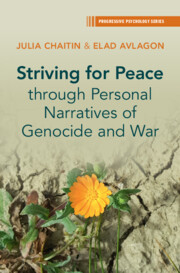
Personal narratives of genocide and intractable war can provide valuable insights around notions of collective identity, perceptions of the 'enemy,' intergenerational coping with massive social trauma, and sustainable peace and reconciliation. Written in an accessible and narrative style, this book demonstrates how the sharing of and listening to personal experiences deepens understandings of the long-term psychosocial impacts of genocide and war on direct victims and their descendants in general, and of the Holocaust and the Jewish–Arab/Palestinian–Israeli context, in particular. It provides a new theoretical model concerning the relationship between different kinds of personal narratives of genocide and war and peacebuilding or peace obstruction. Through its presentation and analysis of personal narratives connected to the Holocaust and the Palestinian–Israeli conflict, it provides a deep exploration into how such narratives have the potential to promote peace and offers concrete ideas for further research of the topic and for peacebuilding on the ground.
Chapter 9 proposes topics and issues that connect to further research of personal narratives of genocide and war, and their connections to sustainable peace and reconciliation. This chapter proposes four different areas that have relevance for further exploration of this topic that can be explored qualitatively, quantitatively, or via mixed methods. The four research arenas are: (1) exploration of the categories of personal narratives of genocide and war; (2) personal narratives of genocide and war and their ties to societal transformation; (3) personal narratives and coping with the effects of genocide and war; and (4) further exploration of our conceptual model concerning kinds of personal narratives and the conditions that can either encourage peacebuilding processes or peace obstruction.
Haridimos Tsoukas develops the argument of Chia and Rasche further. In line with earlier works by Chia (Chia and Holt 2006; Chia and MacKay 2007; MacKay, Chia and Nair 2021), he argues that strategy as practice researchers need to adopt a real practice ontology if they wanted to go beyond the process approach in strategy. He supports the call for a clear break with methodological individualism in favour of a view that gives primacy to practice. Yet he warns about pushing research too much in the opposite direction, where strategy is treated as emergent by definition. Instead, we need to reconcile – from a practice-based approach – the possibility of both non-deliberate and deliberate types of action in strategy. Drawing on Heidegger’s philosophy, he develops a framework that distinguishes between four different types of actions according to the involved form and degree of intentionality: (1) ‘practical coping’ (based on tacit understandings); (2) ‘deliberate coping’ (based on explicit awareness); (3) ‘detached coping’ (based on thematic awareness); and (4) ‘theoretical coping’ (based on theoretical understanding). These four forms of action are then linked to four forms of strategy making.
Communication is essential to medical care and is key in improving patient outcomes. We aimed to understand clinicians’ emotions when communicating with patients in palliative care (PC) and the evolution of their communication skills.
Methods
Between October and November 2021, 231 Swiss PC clinicians participated in an online cross-sectional survey (65% nurses, 35% physicians). Three questions invited participants to reflect on the development of their communication skills and on their emotions when communicating with patients in PC. Answers to these questions were analyzed thematically.
Results
Constantly adapting to complex emotions in communication was the overarching theme. Three main themes further allowed for an understanding of different communication challenges: emotions as a dynamic compass, not always under control, and evolving comfort and competence through personal and professional growth. In evolving comfort and competence, 6 strategies helped clinicians overcome fears and improve their confidence in communication: learning by doing and formal training, integrating life experiences and gaining insight from private life, taking time, collaborating and connecting with peers, acknowledging individuality, and connecting with one’s own and patients’ emotions.
Significance of results
Participants described powerful emotional experiences when communicating with patients in PC, underscoring the emotional labor involved in PC communication. Our study highlights the need to re-conceptualize emotions as a valuable resource rather than a hindrance in clinical practice. The interplay between personal and professional identities in shaping communication skills, emphasizes the importance of emotional competence as a core professional skill. As clinicians often develop these skills individually, our findings suggest a need for earlier integration of emotional competence training in medical education, along with ongoing support through collaboration, and improved allocation of time resources, to enhance clinician well-being and patient care.
Persistent discrimination and identity threats contribute to adverse health outcomes in minoritized groups, mediated by both structural racism and physiological stress responses.
Objective:
This study aims to evaluate the feasibility of recruiting African American volunteers for a pilot study of race-based stress, the acceptability of a mindfulness intervention designed to reduce racism-induced stress, and to evaluate preliminary associations between race-based stress and clinical, psychosocial, and biological measures.
Methods:
A convenience sample of African Americans aged 18–50 from New York City’s Tri-state area underwent assessments for racial discrimination using the Everyday Discrimination Scale (EDS) and Race-Based Traumatic Stress Symptom Scale. Mental health was evaluated using validated clinical scales measuring depression, anxiety, stress, resilience, mindfulness, resilience, sleep, interpersonal connection, and coping. Biomarkers were assessed through clinical laboratory tests, allostatic load assessment, and blood gene expression analysis.
Results:
Twenty participants (12 females, 8 males) completed assessments after consent. Elevated EDS scores were associated with adverse lipid profiles, including higher cholesterol/high-density lipoprotein (HDL) ratios and lower HDL levels, as well as elevated inflammatory markers (NF-kB activity) and reduced antiviral response (interferon response factor). Those with high EDS reported poorer sleep, increased substance use, and lower resilience. Mindfulness was positively associated with coping and resilience but inversely to sleep disturbance. 90% showed interest in a mindfulness intervention targeting racism-induced stress.
Conclusions:
This study demonstrated an association between discrimination and adverse health effects among African Americans. These findings lay the groundwork for further research to explore the efficacy of mindfulness and other interventions on populations experiencing discrimination.
Introduction: Young-onset AD (YOAD) affects people aged 65 years old or younger with greater initial loss of cognitive abilities, more significantly on attention, visuospatial function, motor- executive functions, and language.
Methods: 30 dyads, People with AD – caregivers, were evaluated. People with YOAD were assessed for: disease awareness, and depression. Caregivers were assessed for: depression, anxiety, coping, and burden. Additionally, caregivers provided information about mood, neuropsychiatric symptoms, dementia severity, and patients’ activities of daily living.
Results: Caregivers showed moderate level of burden 38.94 (SD = 14.74), low level of anxiety9.11 (SD = 9.8), moderate level of coping strategies 65.71 (SD = 11.7), and mild level of depressive symptoms 10.72 (SD = 8.8). People with AD had an average cognition score of 15.27, 50% had moderate dementia rating (CDR=2), mild depression index 12.35 (SD = 5.4), moderate index of neuropsychiatric symptoms 36.2 (SD = 23.3), and partially compromised disease awareness 9.06 (SD = 5.12). Coping strategy total score of caregivers was positively correlated with their cognition. Problem-focus is positively correlated with caregivers’ years of education, cognition and inversely correlated anxiety. The coping strategies were not correlated with the clinical variables of people with YOAD. Dysfunctional and emotional- focus did not have significant correlations with the clinical variables of people with YOAD or their caregivers.
Conclusions: Most caregivers, likely experiencing significant disruption in their personal lives, were similar-aged spouses to people with AD. Problem-focused coping strategies appear effective for caregivers, indicating that better cognitive health and higher education levels may enable them to use planning and active coping strategies to manage dysfunctional behaviors. Self-distraction was observed as a dysfunctional coping strategy, suggesting an association with anxiety and depression in caregivers, though our results do not confirm a causal relationship. Future studies with larger dyads samples should explore the relationship between coping strategies, clinical variables in patients with YOAD, and their caregivers, aiming to develop interventions to assist caregivers more effectively.
Background: The transition from hospital to community for psychiatric patients is often challenging due to difficulties in managing community life after discharge and receiving consistent mental health treatment (Marianne, 2019). Some systematic reviews reported on interventions to improve discharge from acute adult mental health inpatient care to the community (Tyler, 2019) and the effectiveness of crisis resolution/home treatment teams for older people with mental health problems (Toot, 2011). However, these reviews revealed inadequate evidence for nursing interventions in community. In Japan, home-visit nursing is considered to play an important role for people with mental disorders living in community.
This review aims to provide an overview of the effectiveness of home-visit nursing in supporting community life for individuals with mental disorders discharged from psychiatric hospitals.
Methods: We conducted a search in electronic databases including Medline (OVID) and CINAHL (EBSCOhost). The search was conducted using the following keywords: “mental disorders”, “hospitalization”, “patient readmission”, “home visit nursing”, “home nursing”, “home health care”, “home care services”, and “house calls”. The review included original articles and research reports. Conference reports and articles about other professions, and interventions conducted in hospitals or facilities were excluded.
Results: A total of 205 articles were extracted, with 109 from Medline and 96 from CINAHL. We retrieved 13 studies, including three randomized controlled trials, two interventional studies, and eight retrospective studies. Most participants were post-discharge individuals with mental disabilities, but some studies included individuals prior to hospital admission. Most studies reported that home-visit interventions reduced psychiatric rehospitalization, the duration of hospitalization, and medical costs. One study reported that community-based treatment for older persons with severe mental illness decreased depressive symptoms and psychiatric hospitalization at 6 months. Additionally, telephone follow-ups were reported to be more effective than regular interventions in some studies. However, the intervention and effectiveness measurement Methods varied among the studies.
Conclusions: Home-visit interventions appear to be effective in preventing hospitalization for individuals with mental disorders. However, it is difficult to make simple comparisons as the content of home-visit interventions varies according to the background system and the region. Further research and systematic reviews are necessary.
This chapter describes how clinical psychologists work with medical professionals to treat disorders, help patients to cope with the stress of medical conditions, and to adhere to medical treatment recommendations. It also describes factors that contribute to disease, focusing on relationships between psychosocial factors (such as stress and unhelpful patterns of thinking) and physical factors (such as nervous system activity, circulation, and immune system functioning). The chapter also includes a description of behavioral and psychological risk factors that enhance the likelihood of illnesses such as cardiovascular disease, chronic pain, and cancer. Also discussed are programs for preventing or minimizing the impact of those risk factors.
As we face a future of rising global temperatures, and associated extreme weather events, distressing emotional responses are understandable. Climate scientists comprise a unique group, in that they must regularly confront the reality, and consequences, of climate change. In this paper, we explore how the principles of compassion-focused therapy (CFT) might be applied to comprehend the responses of climate scientists to climate change; by doing so, we aim to gain a deeper understanding of these responses in order to consider fruitful avenues for providing support and investigating this area further. We consider how flows of compassion, and blocks to compassion, might play a role in climate scientists’ experiences. Additionally, we conceptualise a role for compassion towards the wider world and humanity more broadly. Finally, by applying the CFT Three Systems model to current understanding of climate scientists’ emotional experiences, we seek to proffer a potential conceptualisation of them.
Key learning aims
(1) To formulate the emotional experiences of climate scientists from a compassion-focused therapy perspective.
(2) To explore how blocks to flows of compassions serve to negatively impact and/or maintain difficult emotional experiences of climate scientists.
(3) To consider ways in which the field of psychological therapy can support climate scientists through a difficult emotional journey, and how future research might explore this further.
Despite advances in treatment and outcomes for paediatric heart failure, both physical and psychosocial comorbidities remain notable among this patient population. We aimed to qualitatively describe the psychosocial experiences of adolescent and young adults with heart failure and their caregivers’ perceptions, with specific focus on personal challenges, worries, coping skills, and resilience.
Methods:
Structured, in-depth interviews were performed with 16 adolescent and young adults with heart failure and 14 of their caregivers. Interviews were recorded and transcribed. Content analysis was performed, and themes were generated. Transcripts were coded by independent reviewers.
Results:
Ten (63%) adolescent and young adults with heart failure identified as male and six (37.5%) patients self-identified with a racial or ethnic minority group. Adolescent and young adults with heart failure generally perceived their overall illness experience more positively and less burdensome than their caregivers. Some adolescent and young adults noted specific worries related to surgeries, admissions, major complications, death, and prognostic/treatment uncertainty, while caregivers perceived their adolescent and young adult’s greatest worries to be around major complications and death. Adolescent and young adults and their caregivers were able to define and reflect on adolescent and young adult experiences of resilience, with many adolescent and young adults expressing a sense of optimism and gratitude as it relates to their medical journey.
Conclusions:
This study is the first of its kind to qualitatively describe the psychosocial experiences of a racially and socioeconomically diverse sample of adolescent and young adults with heart failure, as well as their caregivers’ perceptions of patient experiences. Findings underscore the importance of identifying distress and fostering resilient processes and outcomes in young people with advanced heart disease.