To save content items to your account,
please confirm that you agree to abide by our usage policies.
If this is the first time you use this feature, you will be asked to authorise Cambridge Core to connect with your account.
Find out more about saving content to .
To save content items to your Kindle, first ensure no-reply@cambridge.org
is added to your Approved Personal Document E-mail List under your Personal Document Settings
on the Manage Your Content and Devices page of your Amazon account. Then enter the ‘name’ part
of your Kindle email address below.
Find out more about saving to your Kindle.
Note you can select to save to either the @free.kindle.com or @kindle.com variations.
‘@free.kindle.com’ emails are free but can only be saved to your device when it is connected to wi-fi.
‘@kindle.com’ emails can be delivered even when you are not connected to wi-fi, but note that service fees apply.
Women are grossly underrepresented in the German political science profession, but some progress in breaking the glass ceiling has been made in the last 20 years. This article outlines women’s entry and advancement in the German academic community. We examine the particulars of obtaining a German doctorate and the nature of how postdocs prepare for their qualifications to receive a tenured professorship. We also analyse the gendered nature of the German academic institution and measures for promoting equal opportunity. Our findings show that gender inequalities are visible in the number of women in the profession and in their rank, although some progress has been made in closing this gap. Equal opportunity measures and some changes in German academic institutions, such as in the German Political Science Association (DVPW), have benefited women. Problems remain, however, in German universities’ inability to provide postdoc level job security and (in many cases) adequate pay in the postdoc phase. More permanent lecturer positions are needed in Germany.
A clear majority of Ph.D. students in the United States still aim to enter the domestic job market. Nonetheless, a growing number of graduates choose to teach at universities in other parts of the world. Despite this apparently upward trend toward relocating abroad, few graduate programmes in the United States prepare their students for an academic career outside of the States. Having made the transition from a doctoral programme in the United States to a university position in Europe, I outline what I have learned from my experience in order to provide information for Ph.D.s who are considering an academic career in Europe.
As many Ph.D. candidates appreciate, the reality of maintaining productivity during the course of your candidature often proves to be challenging. This article aims to provide a fresh way to view your Ph.D. candidature to aid productivity and learn skills which can be transferred over to future employment as an early career academic. The article presents a set of sub-skills and perspectives to deconstruct the task of writing a thesis and to establish skills which can benefit your future academic career.
For many (if not most) artists, their work is a key part of who they are. Their creative efforts help shape their identity and how they see themselves in the world. It is not just the generic notion of “being an artist,” but rather their specific field, style, and project that define their self-concept. Some discuss the parallels between creating art and creating an identity; both involve generating different possible ideas and ultimately choosing the best one. They also talk about the process of learning to think of themselves as artists.
Networks, which are defined as groups or systems of interconnected people or things, can be formal and informal in nature and can be applied for different purposes. The capability to network can build influence in groups and organisations to support change or generate new ideas. The process of networking can be seen as a supportive system of sharing information and services among individuals, groups and organisations with a common interest. Networking can be applied at a personal level for career and leadership development, at an intraorganisational level for organisational development and at an interorganisational level for research, knowledge management, process improvement and relationship development.
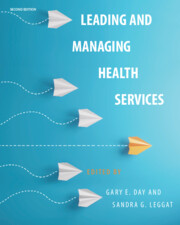
Including perspectives from across various health sectors, Leading and Managing Health Services considers the fundamental leadership and management skills students need to successfully navigate change and innovation in health service settings. The second edition has been updated to reflect changes to the health services industry in recent years. Two new chapters on empathic leadership and leading and managing in the digital age cover concepts including compassionate care, digital health, artificial intelligence and telehealth. Each chapter includes definitions of key terms for easy reference, contemporary case studies to provide relevant industry perspectives and end-of-chapter reflective and self-analysis questions for deeper student engagement. Written by leading academics and industry experts, Leading and Managing Health Services provides students with practical skills to lead and manage in a wide range of healthcare settings, no matter where they sit in the organisational structure.
While exploring how specialist medical publishers and regular practitioners worked together to publish and advertise medical works on sexual matters, Chapter 3, Publishing for Professional Advantage, shows that the boundaries between communicating knowledge, promoting expertise, and trading on medical eroticism were not just blurry in contexts of the pornography trade and irregular medical practice. They were also blurry in regular medicine. Works on reproduction and sexual health issued by medical publishers were often textually similar to those issued by pornographers and irregulars, worked up using similar techniques, advertised, and distributed to non-medical readers in similar ways, and, regular practitioners often argued, for similar purposes. The chapter explores how and why these overlaps aroused particular concern among groups that advocated radical reforms to the medical profession. Rather than seeking to discipline regular medical publishing, however, reformers initially took a different route: they launched campaigns aimed at stamping out irregular practitioners’ trade in sexual health manuals.
This chapter is an introduction to your teaching degree. It provides opportunities to explore different understandings of education as a career and also serves as an introduction to tertiary study with information to prepare you for successful tertiary study and experiences. You can reflect on your learning through activities, and also critically engage with the ideas presented in this chapter. First, we will look at the university experience for pre-service teachers. There is no one, exclusive or all-encompassing university experience that everyone will undergo in the same way; it is impossible to essentialise student experiences.
What next for autistics in the academy? In this chapter participants reflect on their career aspirations: the roles they aspire to and their expectations as to whether they will achieve their career goals. For those goals that seem out of reach, this chapter tries to answer the question of whether the barriers are intrinsic to being autistic or are systemic and structural.
Women’s authorship position in science, technology, engineering, mathematics and medicine research reflects career progression, especially the transition from first to last (usually senior) author. Employment of women in mental health sciences has increased, and so should have had an impact on the change to senior author position.
Aims
To identify if first or last women’s authorship has changed, and mental health has better representation.
Method
We investigated women’s authorship position in a systematic review and meta-analyses, following PRISMA guidelines and using random-effects regression analyses.
Results
We identified 149 studies with sampling periods from 1975 to 2020 (excluding potential COVID-19 pandemic effects) that showed a large variation of women authors, and found an average proportion for first (26.2%) and last (16.1%) author position. In mental health (psychology and psychiatry), there was a higher representation, with 40% first author and 36.7% last author position, whereas medicine was 25.9% and 19.5%, respectively. The rate of change for psychology and psychiatry women authors was also higher every 10 years: 8.56% (95% CI 6.44–10.69%) for first and 6.86% (95% CI 4.57–9.15%) for last author, and rate was 2.35% higher for first author and 2.65% higher for last author than in medicine. Different methods of classifying gender and identification method did not affect our results.
Conclusions
Although mental health topics seem to fare better, our comprehensive review highlighted that the proportions of women first compared with last authors shows the same leaky pipeline as in other analyses, so we cannot be complacent about gender equality and career progression.
Accordingly, the inquiry endures as to what specific art galvanized the modern world’s original treatise on painting. How Alberti’s remarkable journey through the art of his past and present is both reflected and refracted in De pictura demands examination of the lines of transmission through education and career in Alberti’s decisive locales before Florence.
In this article, we reflect on factors which may tempt psychiatrists to move from working in the UK to Australia. A comparison between the UK and Australian healthcare systems is presented. Following this, G.W. offers personal reflections on his transition between working in the UK and Australia, including an experience of being a patient, the benefits of working and training in the respective countries, and personal sacrifices which must be considered. We conclude that individual clinicians must weigh up the positives and negatives of the system which they want to work within, with the best option for each person being specifically individual to them.
This article investigates the career trajectories of Hong Kong solicitors during two historical turning points, specifically 1994–1997 and 2018–2021, when hundreds of lawyers left private practice to pursue alternative career options such as business and finance, government and politics, or relocation to other countries. Data are sourced from the career mobility records of law firm partners reported in 336 monthly issues of the Hong Kong Lawyer journal between 1994 and 2021, as well as other relevant archival sources. The research examines the underlying forces that led these law firm partners to abandon their high-status positions and pursue alternative career paths during these pivotal moments in Hong Kong’s history. The findings suggest that the career trajectories of these elite professionals are not solely based on individual choices but are also shaped by their social origins and the physical and social spaces that influence their careers over time. This study contributes original insights into the complex interplay between individual, spatial and temporal factors that drive career mobility among legal professionals.
Aside from its intellectual content, the essay provides a space for contemporary British novelists to enhance their career prospects. This takes the threefold forms of intertexual affiliation by co-publication within the same title as other writers; of creating a space in which to generate prestige-enhancing controversy; and of enabling novelists to hold academic affiliations. This chapter examines these features through a network analysis of the publications in The London Review of Books over the past two decades and then through case studies of Hilary Mantel, Will Self, Tom McCarthy, and Zadie Smith.
Chapter 1 details the major events in Goethe’s long and varied life, from its beginning to its end, and explains their significance for his development. The scope of the account ranges from intimate details of Goethe’s life to the impact of major political events on him and his work. It follows Goethe from location to location, examines the many strands of his career and considers particularly important relationships, professional, literary, intellectual and personal. The chapter also explains the circumstances of the composition of all his most significant works.
This brief chapter examines how narratives are useful in work psychology. Narratives can be used for everything from career planning to worker relations and ideas around job identity. People often want to identify with the organisation they work for, and successful identification can be positive in terms of satisfaction and productivity. If there is a shared narrative between workers and managers, then the organisation is likely to be more successful. Narrative is a useful device for examining the nature and progress of careers, and activities such as appraisal can enhance these narratives.
Stepping down after a decade of service as editor of this journal, this brief testimonial recognises the pivotal contributions made by Professor David Skuse and highlights his stellar career achievements as an academic.
The introduction recounts the life and writing career of Jonathan Swift, centred on his authorship of Gulliver’s Travels (1726). It provides an overview of the action of Swift’s masterpiece, placing the adventures of Lemuel Gulliver in parallel to the events of Swift’s life: his education, early career as secretary to William Temple, forays into satire, political writings during Anne’s reign, and Irish writings in the decade before he published Gulliver. The introduction establishes the circumstances of its publication, the different states of the text (and its paratexts), and some of the main critical attitudes to the work. It summarises the chapters within the volume.