To save content items to your account,
please confirm that you agree to abide by our usage policies.
If this is the first time you use this feature, you will be asked to authorise Cambridge Core to connect with your account.
Find out more about saving content to .
To save content items to your Kindle, first ensure no-reply@cambridge.org
is added to your Approved Personal Document E-mail List under your Personal Document Settings
on the Manage Your Content and Devices page of your Amazon account. Then enter the ‘name’ part
of your Kindle email address below.
Find out more about saving to your Kindle.
Note you can select to save to either the @free.kindle.com or @kindle.com variations.
‘@free.kindle.com’ emails are free but can only be saved to your device when it is connected to wi-fi.
‘@kindle.com’ emails can be delivered even when you are not connected to wi-fi, but note that service fees apply.
The articles by Kees van Kersbergen and Daniele Caramani constitute an impressive joint plea in favour of descriptive analyses within comparative politics. They also warn, less convincingly, against an alleged obsession of the discipline with variation that, according to them, does not do justice to the similarity of many cases. This response demonstrates that limiting the analysis to similar cases creates the risk of engaging in the hapless exercise of explaining the constant. Augmenting the role of description without simultaneously advancing sound theoretical models furthermore leads to theory-free data mining exercises. I argue that all empirically oriented fields in political science could profit from what I call ‘causal description’ and hence the in-depth univariate analysis of the dependent variable.
Although American political science is, as Bernard Crick emphasised, in many respects a distinctly American science of politics, its evolution has been deeply informed by European ideas. This was quite obviously the case during the nineteenth century, when the German concept of the state dominated the discourse of the field, as well as in the early part of the twentieth century, when English scholars made significant contributions to the theory of democratic pluralism. By the middle of the century, German émigrés had contributed to a fundamental transformation in political theory which challenged the mainstream vision of political enquiry; but what is less well understood is the extent to which the reaction to this challenge in behavioural political science was also based on ideas that were the product of the European exodus.
This article compares political science to another discipline, with which it has much in common. That discipline is architecture. The political-science-as-architecture analogy has a long history in political thought. It also has important implications for the ends, means, and uses of political science. It follows from the political-science-as-architecture analogy that political science is necessarily a heterogeneous and pluralistic discipline. It also follows that political scientists have a common purpose, which is to conceive of institutional structures that allow humans to live together in societies, just as the purpose of architecture is to conceive of physical structures in which humans can live together.
Political theory, with its abstract reasoning and unfamiliar vocabulary, is a subject that students are often apprehensive about. Whilst popular culture has been employed extensively in the teaching of other areas of political science, such as international relations, I seek to draw attention to its comparative under-use in political theory and argue that it is a highly effective teaching tool for this subject. I use the autoethnographic method to make my case, drawing on my years-long experience in the university classroom, and take this position for three key reasons: the familiar nature of popular culture allows students to more easily acclimate to the political theory classroom, it renders abstract political theory concrete, and provides a useful arena in which to better test the logic of political theory arguments, enhancing student criticality.
This article seeks to explore democratic theory by focusing on the example of agonistic democracy, in which contest between citizens is valued for its potential to render politics more inclusive, more engaging, and more virtuous. Using Connolly and Tully's inclusivism, Chantal Mouffe's adversarialism, and David Owen's perfectionism, the article discusses democratic theory as a critique, a series of normative proposals, and a potential bridge between political theory and public policy. It is this bridge that enables democratic theory to pull together critical and normative discussions with those surrounding public policy and institutional design.
The article introduces a discussion on approaches to the history of political thought based on a panel at the ECPR General Conference in Potsdam, 2009. After reconstructing the three classic approaches, the Cambridge School, the ‘Begriffsgeschichte’, and Foucault's Genealogy as well as more recent developments in the field, the authors outline a scheme for further methodological and comparative research. They also emphasise the importance of historical approaches for political theory and political science.
Despite the creation of ever more journals in the field of political theory, all so far seem to have found their distinctive niche. By and large, competition between journals has proven beneficial for the discipline, opening up new areas of research and stimulating innovation. As with other goods, product differentiation, quality control and association with a major distributor are the keys to success.
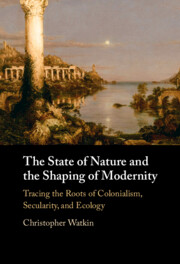
Abstract: This chapter theorizes three “figures” – the theoretical gestures or patterns – of the state of nature: a flattening of complexity, a partition between natural and civil conditions, and a normalization one of the sides of the partition. It argues that these figures recur across Hobbes, Locke, and Rousseau’s work, where they present en abyme characteristic patterns of Western modernity.
The state of nature is a powerful idea at the heart of the fragmented and sometimes conflicting stories the modern West tells about itself. It also makes sense of foundational Western commitments to equality and accumulation, freedom and property, universality and the individual. By exploring the social and cultural imaginaries that emerge from the distinct and often contradictory accounts of the state of nature in the writing of Hobbes, Locke and Rousseau, The State of Nature and the Shaping of Modernity offers a fresh perspective on some of the most pressing debates of our time, showing how the state of nature idea provides a powerful lens through which to focus the complex forces shaping today's political and cultural landscape. It also explores how ideas about human nature and origins drive today's debates about colonialism, secularism, and the environment, and how they can shed new light on some of society's most heated debates.
A theoretical intervention into the challenge of thinking through the complexities of life, in Iran or elsewhere. Hannah Arendt and Michel Foucault offer us a model of thinking as a practice. Each attempted one project in which they were thinking systematically about ongoing events, and offering that thinking as a contribution to public understanding. Arendt traveled to Jerusalem to observe the Adolf Eichmann trial, and her contemporaneous writing was published in The New Yorker magazine. Foucault traveled to Iran to observe the early stages of the revolution, and his contemporaneous writing was published (mostly) in the Corriere della Sera newspaper. These two projects have commonly been regarded as their author’s most controversial and have often been ignored or used to denigrate the writer’s entire theoretical oeuvre. Yet they offer compelling models of thinking as a practice that critically links the self and the world. Rescuing theory from the confines of academic specialization restores it, and us, to the possibility of thinking as a practice of freedom, and freedom as the daily possibility of beginning anew.
International security is an ambiguous concept – it has many meanings to many people. Without an idea of how the world works, or how security is defined and achieved, it is impossible to create effective policies to provide security. This textbook clarifies the concept of security, the debates around it, how it is defined, and how it is pursued. Tracking scholarly approaches within security studies against empirical developments in international affairs, historical and contemporary security issues are examined through various theoretical and conceptual models. Chapters cover a wide range of topics, including war and warfare, political violence and terrorism, cyber security, environmental security, energy security, economic security, and global public health. Students are supported by illustrative vignettes, bolded key terms and an end-of-book glossary, maps, box features, discussion questions, and further reading suggestions, and instructors have access to adaptable lecture slides.
Combining key elements of classical and constructivist approaches to representation, this article suggests a novel reconceptualisation of political representation. Developed through participatory agency research with people in socio-economically difficult situations and anchored in people’s lived experiences and sense-making processes, the representative relationship is redefined as a pragmatic and solution-oriented partnership between representatives and the represented. Expanding the classical Pitkinian model, it enables representatives to be better informed about how to address peoples’ concerns. In doing so, it advances the notion of dynamic political representation, where the represented are not passive principals but active partners in decision-making. While we uphold the classical principle of acting in the interests of the represented, we reconceptualise these interests as dynamic and continuously evolving – a perspective consistent with constructivist thought. This research aligns with scholarly calls to rethink representation and revise the roles of the representatives and the represented, fostering meaningful and effective engagement. Our empirical findings highlight the urgency of reform for people in socio-economically difficult situations and underscores the broader relevance of these insights, in a context of increasing legitimacy deficits and rising discontent with current modes of representation in contemporary democracies.
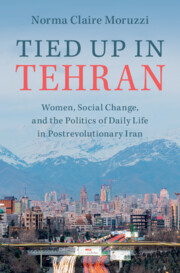
Tied Up in Tehran offers a richly interdisciplinary study of ordinary life in Iran since the 1979 revolution and a critical intervention in political theory debates on knowledge and method. Drawing from over ten years of field work in Iran since the 1990s, and originating in the author's surreal experience of being served tangerines during a home invasion in Tehran, Norma Claire Moruzzi examines the experiences of women, young people, artists, and activists: at home, at work, and in the street. These stories - of food and family, film and politics, shopping and crime-reckon with the past, demonstrate resilient democratization in the present, and provide glimpses of a plausible future while offering a refreshing model to ethically engaged modes of study. Moruzzi's lucid and engaging writing explores Iranian daily life as unexpected, contradictory, and full of political promise.
How should the responsibility for refugees be distributed among states? While scholars have proposed various sources of responsibility to make the distribution more equitable, they have not provided guidance on how to weigh each principle within a composite scheme. This is an important problem to resolve because the principles often implicate different actors, resulting in distinct distributions of responsibility. Moreover, states are particularly able to obfuscate their level of responsibility when multiple principles exist. To remedy this problem, I specify the range of possible solutions to the weighting problem, based on the principles of liability, community, and capacity. This argument identifies the relative importance of each principle based on the stated goals of a particular framework. These goals include whether the scheme is intended to operate under ideal or non-ideal assumptions, or if it intends to optimize state or refugee interests. By focusing on how to weigh various sources of responsibility, this paper paves the way for scholars to develop determinate schemes that can identify each state’s fair share in contexts where multiple principles apply.
This Element explores Kierkegaard's Two Ages, his literary review of a contemporary novella, situating it in the context of his other writings from the same period of his life and his cultural/political context. It investigates his review's analysis of the vices and virtues of romance and political associations, which he treats in parallel fashion. It traces a theme that certain types of both romance and political association can foster virtues that are necessary for the religious life, although the political ethos of his contemporary age mostly encouraged vices.
This chapter turns to the relationship between the courts and the executive branch of government. The executive branch is ordinarily the most powerful branch of government, and when courts act to hold the executive to account, they are often at risk. The charged relationship between courts and the executive arises not only from the political tension that is generated by holding a powerful executive to account, but also from the different structural and functional characteristics of the executive and the judiciary. The chapter analyses these characteristics, noting that courts must act fairly and independently deciding the disputes that come before them and the executive must act to protect the state and its inhabitants and govern effectively. The chapter then illustrates the dynamic relationship between the courts and the executive by exploring three difficult contexts for that relationship: illiberalism and authoritarianism, emergencies and crises, and corruption by members of the executive branch.
Chapter 1 establishes that the criminal law, as a form of public law, is subject to social justice scrutiny like any other public institution, and so has a duty to offset social injustice where it arises. This duty applies to criminal law doctrine, and excuse doctrine, in particular, as the language of culpability evaluation. A core challenge to advancing social justice at this site is highlighted through the criminal law’s apparent passivity to forms of social injustice through the depoliticisation of its doctrine. Drawing on literature that reignites the political credentials of criminal responsibility attribution, the chapter seeks to erode the impunity of culpability evaluation from social justice interrogation. Moreover, it introduces the concepts of vulnerability and recognition with a view to forging a pathway for the Real Person Approach to blaming people, which manifests in doctrine through the Universal Partial Defence.
This chapter asks: how did institutionalised political participation, individual equality and, in particular, their fusion survive into and develop during the nineteenth century, and what can we learn from the historical genesis of democracy as a composite of two different elements, as sketched in this book, for the predicament of democracy today?
Boat-based metaphors, which portray individual societies or even humanity as a whole as cast adrift on a sea of challenges, have resonated within political theory since the time of Plato, and they continue to frame how we understand and respond to key political choices. However, unless handled very carefully, they can facilitate mis-framings of our contemporary predicament. To date, these metaphors have often done a poor job of capturing the ecological challenges we face. They also risk downplaying the messy pluralism that enduringly characterises political life. If this is true, we should be suspicious of the conclusions their authors seek to draw about our collective future. Lifeboat metaphors, I will suggest, are prone to the same general problems but also add some distinctively their own. As a consequence they should be deployed with especial caution.
This article argues against the cliché (posited most famously by Alexis de Tocqueville and Carl Schmitt), that there were inherent correspondences between religious and political concepts. Such connections were historically contingent, and had to be forged by polemicists and apologists who eclectically drew upon a variety of sources. This is evident from an examination of differing Presbyterian reactions to the French Revolution. John Brown in Scotland combined an aristocratic Presbyterian ecclesiology with a Burkean view of authority to argue for an anti-democratic conception of “representative government.” By contrast, the Scottish-American Alexander McLeod synthesized radical Presbyterian political theology with Painite ideas of “representative democracy.” Thus representation emerged as the key concept in both authors, yet its compatibility with democracy was an open question. The examples of Brown and McLeod also show that religion, as much as “secular” politics, had to grapple with and re-imagine “democracy.”