To save content items to your account,
please confirm that you agree to abide by our usage policies.
If this is the first time you use this feature, you will be asked to authorise Cambridge Core to connect with your account.
Find out more about saving content to .
To save content items to your Kindle, first ensure no-reply@cambridge.org
is added to your Approved Personal Document E-mail List under your Personal Document Settings
on the Manage Your Content and Devices page of your Amazon account. Then enter the ‘name’ part
of your Kindle email address below.
Find out more about saving to your Kindle.
Note you can select to save to either the @free.kindle.com or @kindle.com variations.
‘@free.kindle.com’ emails are free but can only be saved to your device when it is connected to wi-fi.
‘@kindle.com’ emails can be delivered even when you are not connected to wi-fi, but note that service fees apply.
The influence of the People’s Republic of China (PRC) on the law and legal order of the Hong Kong Special Administrative Region might seem not to be a case of inter-Asian law because it occurs within a single jurisdiction. Yet, Beijing has employed a wide range of means to shape Hong Kong’s legal order, ranging from making or interpreting PRC law for Hong Kong, to mandating or pressing for local lawmaking in Hong Kong, to more diffuse influences on Hong Kong’s legal order and its context. Chinese influence has made Hong Kong law less liberal and democratic and more like the PRC’s. The China–Hong Kong case shows the spectrum of modes of inter-Asian legal influence, the complexity of the relationship between transplants or exports of legal models and legal influence, and the issues that lie ahead in an era of possible competition between China and the United States/the West for legal influence.
This chapter examines what is known about China’s remedied wrongful convictions including three well-publicized “back from the dead” cases. The predominant cause was false confessions obtained through police torture. As in the United States, remedied cases typically involved multiple rounds of litigation that establish proven or obvious innocence. China’s responses to well-publicized wrongful convictions from 2006 to 2013, including the introduction of an exclusionary rule for involuntary confessions, are assessed. These reforms may help legitimate or wrongful conviction wash an unjust system. Unremedied wrongful convictions may increase under a 2018 law to encourage guilty pleas. The precarious and marginal role of defence lawyers is examined. Compensation has increased for the wrongfully convicted and is available to the wrongfully detained. The extension of the authoritarian Chinese system would have regressive effects, given Hong Kong’s broader focus on miscarriages of justice and Taiwan’s more democratic approach and lesser reliance on guilty pleas.
The contemporary expansion of alternative dispute resolution (ADR) in Asia has been unparalleled in the world. While London and other traditional forums remain a vital jurisdiction for Asian parties, those constructing ADR regimes in Asian jurisdictions increasingly turn to their neighbors – other Asian jurisdictions. This chapter analyzes the interactions between the prominent ADR hubs in Asia and their neighboring jurisdictions. Topics include the race between Singapore and Hong Kong for the crown, Singapore’s impact on Vietnam, and the implications of Singaporean promotion of mediation on the practice of ADR in Asia. The chapter argues that ADR centers, viewed from the perspective of legal transplantation, provide successful models for secondary markets, although such transplantation is far from seamless. This chapter suggests that Singapore and Hong Kong, as established hubs, will remain influential and play a critical role in shaping ADR legal developments in Asia, although competition may result in disparate effects.
This article examines the policy effects of Hong Kong’s Statutory Minimum Wage (SMW) on underemployment, working hours, and wages. Using a Difference-in-Differences methodology on General Household Survey data (2011–2019), we assess five SMW adjustment cycles. We define a ‘most disadvantaged’ treatment group and a ‘less disadvantaged’ group based on the concentration of minimum wage earners in their industry-occupation cell, relative to an unaffected control group. Our findings show no significant increase in underemployment or reduction in working hours for either group. Wage effects were also contained, with inconsistent direct gains for the most disadvantaged group and no evidence of significant wage spillovers for the ‘less disadvantaged’ group. These findings indicate that the SMW and its adjustments in Hong Kong did not lead to the feared wage-job trade-off constraints; instead, they highlight the need to explore policy options for appropriate SMW increases to reduce economic inequality.
Hong Kong’s history remains contested during its decolonisation. The colonial government of Hong Kong, the People’s Republic of China (PRC), and historians at the University of Hong Kong (HKU) all attempted to interpret the past in their own right. This article argues that the contest for epistemological territory between the Chinese and British colonial governments led to the fragmented accounts of Hong Kong history in official curricula. Unlike other cases, Hong Kong’s decolonisation did not result in independence. Instead, the United Kingdom transferred the colony’s sovereignty to the PRC in 1997. Both sides attempted to showcase their right and ability to shape the colony’s past. Instead of having an ultimate “winner,” both occupied a share of the epistemological territory regarding historical knowledge, producing fragmented accounts of the past. The article also recovers and examines the agency of locally trained historians. These people of Hong Kong did not have any chance to produce their own “autonomous history” precisely because of the impossibility of independence. This process resulted in the partially decolonised yet censored historical narratives that persist in Hong Kong under Chinese rule. Through this case, this article calls for further discussion of what ‘decolonisation’ meant for actors beyond the state.
Political control is pervasive in authoritarian contexts; however, the use of economic instruments as a means of political repression has been underexplored. Embedded in Hong Kong’s political upheavals triggered by the 2019 extradition bill, this paper underpins the erosion of Hong Kong’s political environment by analysing economic pressure exerted on businesses, or ‘economic repression’, to eliminate, convert, and/or silence their dissenting behaviour. Drawing on Earl’s repression typology, it distinguishes between two forms of repression: economic channelling and economic duress. The former involves covert actions that increase the operational costs of targeted businesses, including administrative inspections and the severance of economic ties, while the latter embodies overt actions that disrupt their operations, such as asset freezes and vandalism of shop premises. Although both businesses and individuals may be subject to economic repression, this paper pays special attention to businesses, as their responses have far-reaching implications for the political and economic landscape. Employing the cases of Cathay Pacific, Taipan Bakery, Apple Daily, and Chickeeduck, which were well-known players in their respective industries in 2019–2021, it is observed that economic channelling was usually deployed at a defiant company first, followed by economic duress if the target did not conform to the new political norms. Economic repression not only stifles political resistance in the marketplace but also hampers the competitiveness of the international financial city.
As the Indian indenture network expanded across the British Empire, the rise of the Chinese diaspora brought into relief new tensions around labour freedom and economic mobility. Chapter 4 examines Hong Kong and Victoria as connected colonies within the British Asia Pacific to consider how global Chinese mobility created different mechanisms for governing the relationship between British subjects and others in this region of the empire. Like colonists elsewhere, Australia’s colonial pastoralists participated in a new ‘coolie trade’ of Chinese indentured labour. By the 1850s that trade had triggered fresh imperial pressure to protect labour freedom through Hong Kong as a British port. But at the same time as the British Empire sought to reinforce its moral authority as the empire that protected personal liberty and labour freedom, the Australian colonies were working to establish legal limits on free Chinese emigration, and to reassert the freedom to move as a white settler privilege.
This chapter focuses on the legal ramifications of the rendition of Taiping Lieutenant Hou Yutian (mistakenly identified as Mo Wang) by the Hong Kong government to the Canton administration in 1865. This case was the first to reveal the tension between the Treaty of Tianjin (1858) and colonial law regarding fugitive rendition. The strong reaction of the British public to the execution of Hou by “lingering death” led to Britain’s amendment of its fugitive rendition procedure under the Treaty of Tianjin. The British government henceforth no longer considered “political offenses” as an extraditable crime to China and stipulated that no prisoner could be surrendered without a guarantee by the Chinese government of a “fair trial” and a pledge not to use any torture. While the Qing government accepted the amendment as an act of expediency, the British Foreign Office interpreted it as an acquiescence to British rules of extradition and the Political Offense Exception (POE).
This article explores the role of international law in Hong Kong’s Court of Final Appeal (CFA). The CFA makes extensive use of international and comparative materials, particularly the International Covenant on Civil and Political Rights (ICCPR). However, it avoids issuing judgments that would clash with Beijing’s core interests and accepts its broad definition of “national security”. This arguably facilitates authoritarian interpretations of the ICCPR and undermines the authority of the Human Rights Committee. Yet, in March of 2025, the CFA granted an appeal and upheld the right to fair trial, emphasizing that the ICCPR continues to enjoy constitutional status in Hong Kong. Moreover, the CFA continues to advance the rights of vulnerable groups, including the LGBT community. The CFA’s contributions to comparative jurisprudence on international human rights law are decidedly mixed. But this is arguably inevitable, given its unusual status as an “apex court” operating in the shadow of Beijing.
Previous research has demonstrated that the COVID-19 pandemic led to a global increase in mental distress. However, few studies have examined the impact of the pandemic on mental health stigma.
Aims
To investigate changes in measures of mental health stigma, including knowledge, attitudes and behavioural intentions, in 2021 and 2023 in Hong Kong; to examine the mediating role of attitudes on the relationship between knowledge and behavioural intentions; and to explore how disclosure of mental illness contributes to enhanced overall well-being.
Method
Data were collected as part of a larger research project focusing on mental well-being in Hong Kong. A total of 1010 and 1014 participants were surveyed in 2021 and 2023, respectively. The participants were Hong Kong residents aged 18 years and above.
Results
Our findings demonstrate that all measures of mental health stigma showed increases in severity between 2021 and 2023. In addition, our mediation analyses observed both full and partial mediation effects of attitudes on the relationship between knowledge and behavioural intentions. The results also showed that mental illness disclosure was associated with higher well-being; however, despite these benefits, there was a decrease in willingness to disclose in 2023 compared with 2021.
Conclusions
This study highlights the ongoing issue of mental health stigma in Hong Kong. Future mental health programmes and interventions should aim to address various facets of mental health knowledge, including symptom recognition, access to support resources and the deleterious consequences of mental health stigma.
This study presents a mixed-methods analysis of the integration of social justice into legal practice in Hong Kong. While social justice within the legal field is a growing area of interest, research on how it can be enhanced through legal education remains relatively limited. This study aims to explore how higher education law courses can be leveraged to better incorporate social justice principles into contemporary legal practice. The research adopts a mixed-methods approach, including a quantitative analysis of questionnaires completed by 99 current law students in Hong Kong and a thematic analysis of interviews conducted with 33 students and legal professionals in the region. Findings suggest the potential benefits of increasing the emphasis on social justice within law programs at Hong Kong universities. The study also raises important questions about the optimal content and methods for delivering social justice education in legal curricula.
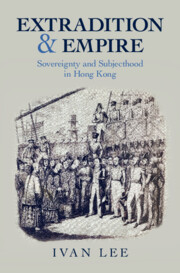
In the first book-length study of the imperial history of extradition in Hong Kong, Ivan Lee shows how British judges, lawyers, and officials navigated the nature of extradition, debated its legalities, and distinguished it over time from other modalities of criminal jurisdiction – including deportation, rendition, and trial and punishment under territorial and extraterritorial laws. These complex debates were rooted in the contested legal status of Chinese subjects under the Opium War treaties of 1842–43. They also intersected wider shifts and tensions in British ideas of territorial sovereignty, criminal justice and procedure, and the legal rights and liabilities of British subjects and alien persons in British territory. By the 1870s, a new area of imperial law emerged as Britain incorporated a frontier colony into an increasingly territorial and legally homogenous empire. This important perspective revises our understanding of the legal origins of colonial Hong Kong and British imperialism in China.
With the re-emerging homelessness issue in Hong Kong, given its least affordable housing, securing food to meet the basic physiological needs is of priority concern for the homeless. This study aims to examine the situation and determinants of food insecurity among the homeless in Hong Kong.
Design:
Cross-sectional survey on food insecurity level, socio-demographic characteristics, homeless experiences and health status and behaviours.
Setting:
360 community hot spots of homeless people identified by NGO and experienced social workers in different districts of Hong Kong in 2021.
Participants:
711 individuals experiencing homelessness.
Results:
The observed prevalence of low, medium and high food insecurity levels was 37·4 %, 20·4 % and 42·2 %, respectively. Results from multivariable ordinal logistic regression showed that older, female, non-Chinese and non-married respondents were inversely associated with food insecurity, whereas having sufficient savings for more proper housing was the primary determinant among socio-economic indicators. In addition to reasons for homelessness, risk factors of food insecurity included living in guesthouses/hotels and difficulties due to government measures on homeless control. Except for disability, both self-rated physical and mental health statuses showed dose–response relationships with food insecurity level.
Conclusions:
The substantial individual variations in socio-demographic statuses, homeless experiences and health deficits shaped the differential risks of food insecurity within the homeless community in Hong Kong. Targeted homeless programmes should go beyond the conventionally vulnerable groups but consider the multifaceted nature of homeless experiences in relation to food access and integrate health assessments to holistically support the homeless.
Globally, progress has been made in relation to the abolition of the death penalty. However, to maintain the “war on drugs”, East and Southeast Asia have adopted the most punitive responses to drug possession, use, trafficking, and production. The most extreme response has been the death penalty. Its presence in the East and Southeast Asia region continues to be regarded as an effective measure of deterrence, although several countries have invoked moratoriums or eliminated the mandatory component in its application. This chapter examines the context of the death penalty for drug trafficking in the region, particularly its role in shaping sentencing rationales in neighbouring abolitionist states. Hong Kong is an important case to consider as it is a locale within the region with a historical reputation as one of the major international transshipment sites, and while it does not have the death penalty like many of its neighbours, it metes out “harsh but consistent sentences.”
The Anti-Extradition Bill Movement in 2019 sparked the most radical mass protests seen in Hong Kong since the transfer of sovereignty. Scholars have proposed various explanations for the radicalization of the protests, as well as for the mass support for this radicalization across various sectors of society. However, economic grievances have been relatively downplayed in attempts to understand the radical protests. Using data from a survey conducted during the suspension of the movement in 2020 (N = 1,574), this study examines the relationship between economic grievances and support for the protests. Through mediation analysis, the findings show that individuals who perceived themselves as belonging to a lower class tended to have a diminished sense of social mobility and equality. These negative perceptions contributed to concerns about the activities of Mainland Chinese individuals and the use of public resources. Thus, these particular economic grievances were found to be positively associated with support for the 2019 movement.
Jellyfish are widely distributed throughout the world’s oceans. However, understanding jellyfish species’ distributions remains poor. Here, we addressed this knowledge gap by applying an approach that uses citizen science observations to inform collection of samples which then undergo molecular analysis. Doing so allowed us to confirm the presence of the jellyfish Cyanea purpurea in the waters of Hong Kong SAR for the first time. Due to morphological overlap in Cyanea species, DNA analysis confirmed specimen identification. Samples were taken from 19 jellyfish individuals for subsequent DNA analysis. Ten samples (53%) were confirmed as C. purpurea, two samples (10%) were identified as Cyanea nozakii, and seven samples (37%) were not able to be identified. The combined application of citizen science and DNA analysis has proven effective in confirming the presence of C. purpurea in Hong Kong waters. This approach of using citizen science observations to inform the collection of samples for subsequent molecular analysis could be transferrable to other similar situations in which identification based solely on morphology is insufficient, potentially enhancing our ability to recognise species occurrence.
This chapter makes a case for rethinking the early history of colonial Hong Kong – for seeing the young colony as an ambiguous juridical space, shaped and bounded by inchoate ideas of extradition. History has forgotten this feature of early Hong Kong because most studies have assumed, anachronistically, that the Opium War treaties of 1842–43 instituted ‘extradition’ between Hong Kong and China, in addition to British ‘extraterritoriality’ in China. In fact, these ideas took time to crystallise from fuzzier arrangements for dividing jurisdiction. This jurisdictional ambiguity coincided with the belated rise of territorial thinking in the British Empire. It also coincided with ongoing developments in the British approach to surrendering fugitives to foreign states – a procedure that legal actors were only starting to refer to as ‘extradition’. So, historicising the idea of extradition allows us to understand how British actors perceived their practices in Hong Kong and China in comparison to their practices elsewhere. This perspective reveals that the imperial origins of extradition involved crucial experiments in the colonial ordering of territory, people, and executive power.
The Chinese University of Hong Kong is launching a pioneering BA program in Public Humanities, combining two existing units—Cultural Studies and Cultural Management—to form a socially relevant undergraduate education that promotes community-building, critical and creative skills, and humanities values. Hong Kong’s public sphere has been shrinking, necessitating a deeper reflection and conceptualization of the public within its historical and cultural contexts. The term “public” in Hong Kong has diverse meanings and overlaps with private and communal aspects, influenced by Chinese cultural history and colonial experiences. Despite the decline of civil society, various public activities, such as markets, performances, and talks, continue to foster local culture and community engagement in Hong Kong. The program emphasizes collaboration, participatory arts, and media technology to foster civic agency and public engagement, encouraging students to work with diverse community stakeholders. The program promotes care and connection as guiding principles for community-building, aiming to cultivate responsible citizens and rebuild trust through open communication and meaningful civic participation.
Housing informality has emerged across developing and developed societies amid the global housing crisis. This article presents an intra-national comparative analysis of informal housing interventions in Hong Kong and Guangzhou, two major Chinese cities, to investigate the policies and discourses of urban housing informality and the factors shaping different governance regimes. A critical policy discourse analysis was conducted on official documents addressing subdivided units in Hong Kong and urban villages in Guangzhou between 2010 and 2023. The analysis focuses on policy goals, interventive measures and state-market-society relations, revealing that despite similarities between subdivided units and urban villages, government interventions differ significantly. The Hong Kong government has adopted a regulatory-welfare-mix model, whereas the Guangzhou government has pursued a developmental approach to address the phenomenon. This article contributes to policy studies by comparing informal housing intervention approaches and analysing the within-country divergence of normative goals and policy levers under different sociopolitical contexts.
Americans living in nineteenth-century Hong Kong and China's treaty ports encountered a contradiction. The British dominated elite foreign society, their political, social, and cultural agendas often setting the pace for life within the community. But as citizens of a country that had recently wrested its independence from its one-time imperial overlord, Americans arriving in China were ostensibly averse to imperialism and the culture of empire. They maintained a belief that theirs was a benevolent republic that championed international amity and self-determination. Still, as Elisa Tamarkin notes, if Americans were wary of the British Empire, many found the spectacle of it appealing—a tendency evident in Hong Kong and the foreign enclaves along China's coast. Americans eager to enter elite foreign society proclaimed newfound sympathies for British belligerence in China, in turn developing increasingly prejudiced opinions about their Chinese neighbours and staff. Their derisive expressions of racial difference reinforced efforts to reconcile Anglo-American cultural incongruities. Such sentiments reflect the entangled processes through which extraimperial groups such as Americans fashioned themselves as members of the colonial elite. I argue that through such processes, the British and Americans subordinated national rivalry in the interest of entrenching racial divisions between white and non-white communities.