To save content items to your account,
please confirm that you agree to abide by our usage policies.
If this is the first time you use this feature, you will be asked to authorise Cambridge Core to connect with your account.
Find out more about saving content to .
To save content items to your Kindle, first ensure no-reply@cambridge.org
is added to your Approved Personal Document E-mail List under your Personal Document Settings
on the Manage Your Content and Devices page of your Amazon account. Then enter the ‘name’ part
of your Kindle email address below.
Find out more about saving to your Kindle.
Note you can select to save to either the @free.kindle.com or @kindle.com variations.
‘@free.kindle.com’ emails are free but can only be saved to your device when it is connected to wi-fi.
‘@kindle.com’ emails can be delivered even when you are not connected to wi-fi, but note that service fees apply.
Contrary to stereotypes about enlightenment texts, the Treatise of Human Nature is thoroughly inegalitarian. This inegalitarianism is descriptive, not normative: Hume builds a tendency to create inequities into his theory of human nature, and he describes humans as continually and inevitably ranking one another and themselves as superior or inferior. I begin by showing the pervasiveness of inegalitarianism in Book 2’s theory of the passions—in the analysis of pride and the influence of property on pride, in the way that human commonality intensifies power imbalances, and in the influence of comparison on our sympathy with those judged superior or inferior. I then explain how Book 3’s analyses of natural abilities and justice reinforce the inegalitarianism of our passions. In other writings, Hume seems more aware of and concerned with questions of equality, but the Treatise offers few resources for criticizing the inequality that seems to result from our nature.
There is a modern expectation that since Shakespearean theatre is in some respects a popular art form, it should represent ordinary people in a positive or sympathetic light. This hope is frustrated at many points by the hierarchical structure of early modern culture, and its consequent tendency to identify the common people with whatever is ignoble and disorderly – an identification which is deepened, in plays as in society more generally, by the conventional image of the people as a nameless, fickle, and latently rebellious crowd. The pejorative force of these associations is complicated, however, by the fact that something like that very crowd is present in the theatre itself, watching, even co-creating, the show. It is as a formal dimension of the entertainment that ‘the people’ most tellingly take possession of Shakespeare’s stage.
This chapter examines literature that emerged from the fraught historical juncture after the Second World War as Britain collectively reimagined itself as a national people. It takes up texts by two prominent groupings of writers who did not feel included within the expanding parameters of Britishness: the era’s youthful up-and-coming English writers Kingsley Amis, John Braine, and John Osborne, sometimes referred to as ‘Angry Young Men’; and the migrant West Indian writers E. R. Braithwaite, Beryl Gilroy, Joyce Gladwell, George Lamming, and Samuel Selvon, who are commonly thought of as belonging to the ‘Windrush generation’. Tracing how both sets of writers negotiated this tense cultural and political space, the chapter illustrates how these texts register structurally similar contradictions between formal and informal belonging along markedly different axes of, respectively, class and race, ultimately suggesting that the era’s literature both reveals restrictive forms of British identity and proposes models of redress.
This chapter analyses how poetry of the late nineteenth century were mythopoetic exercises which promoted a nativist labour poetics that typically subtended the primary conflict of settler colonialism. It analyses how the heroicisation of bush work in the 1870s was built upon in the late 1890s when economic depression and changes to labour conditions saw a tightened alignment between labour to values of citizenship, civilisation and moral virtue. While 1890s poetry depicted the material and psychological consequences of capitalism and economic depression, its advocacy for workers’ rights were racially bound and can be mapped onto events that led to the White Australia policy. The chapter also discusses the influence of correspondence with Walt Whitman in Bernard O’Dowd’s vision of radical nationalism, yet also how such vision was likewise racially limited.
The chapter focuses on the experiences and representations of the shipboard community in the late nineteenth and early twentieth centuries, to explore the changes in the imagining of ‘people’ and questions of individual and collective identity. By closely reading the novels by Joseph Conrad, James Hanley, and B. Traven, alongside the theoretical works of Sigmund Freud, Gustave Le Bon, and Hannah Arendt, it argues how fictional form diagnoses and dramatises with singular power the gradual move from Victorian ideas of the ‘crowd’ to an interwar imagining of peoples’ history and the language of rights. In the process, the chapter addresses a range of issues, from questions of race, class, and the body to the condition of statelessness and the growth of proletarian consciousness, which push the maritime novel in new directions.
Race Class identifies two competing aesthetics, the 'recognitional' and the 'redistributive,' that developed in Mexican American literature during the 1980s. Recognitional literature seeks to express an ethnic identity via a circular narratological discourse of self-creation. This expressive view of literature fosters readerly sympathy via testimony and textual personification, the author argues, but ultimately forecloses interpretive judgement. Redistributive literature instead averts the readers' sympathy to produce the evaluative distance through which interpretative judgement and structural critique are enabled. By tracking these competing aesthetics, Race Class shows why the Chicano Movement should not be understood as a working-class enterprise, why higher education cannot be a mechanism of social justice, and why the left continues to misunderstand the nature of economic inequality today.
Food shortages impacted some countries more severely than others. They also did not affect everyone equally within societies. Access to food determined new social hierarchies in wartime. Rising costs of living everywhere meant that a higher part of household income had to be devoted to food. Worsened material conditions sharpened old social divisions and created new ones. In many cases, it was easier for the rich to still obtain food despite rationing, which fed resentment against the comparatively better-off. The term ‘profiteer’ and its equivalent in other languages came to define the perceived enemy, which lived in opulence during times of scarcity and took advantage of the reduced circumstances of others. Employees on fixed incomes were particularly hit by the changing economic conditions. For middle-class people whose identity was linked to their class status, the struggles they experienced to obtain basic consumption goods were experienced as déclassement. Hunger both weakened and strengthened the spirit of community: outsiders, including a growing number of war refugees, were increasingly perceived as additional mouths to feed in a context of dwindling food supplies. Hunger thus transformed the self-perceptions of many Europeans and their positions within established social hierarchies.
This chapter explores a range of theoretical and conceptual resources for making sense of the state, with an accent on those most relevant to the role of the state in sustainability transitions. It looks at how the state has been addressed to date in literatures on socio-technical transitions, but also how conceptualisations in disciplines as diverse as politics and political theory, political economy and international relations, geography, sociology and development studies can be selectively combined to provide a more multifaceted, historical, global and political account of the state in all its dimensions as they relate to the challenge of sustainability transitions.
This chapter introduces the volume’s central premise that the uneasy relationship between Bloomsbury’s broad influence and perceived elitism is precisely why it continues to gain traction in critical debates. Instead of viewing the group as either radicals or gatekeepers, it is necessary to grapple with Bloomsbury’s imperialist biases and class complacencies at the same time as we resituate the group’s innovative aesthetics, transgressive relationships, and varied involvement in public life in national and global contexts. In response to Raymond Williams’ classic 1980 essay “The Bloomsbury Fraction” – which in considering Bloomsbury’s social position as an upper-class “fraction” settles into a relatively stable description of the group’s form – I propose friction as a more tangible and productive concept to explore Bloomsbury and its lasting contribution to culture.
Even if everyone wants to talk about sex, the most intimate aspects of a culture are the little things, which are often the most opaque. Jokes, toilet etiquette, and mutual deferrals in doorways mark shared achievements of mutual recognition. But humor and bodily practices can be the least translatable of cultural identifiers. Diaspora and foreign observers tend to overlook local class differences and a deep-seated culture of political skepticism, fixating instead on more superficial revelations of sexual behavior that may not be so surprising. How do we translate cultural differences? Is it even possible to understand each other’s jokes?
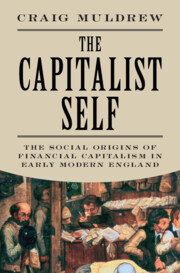
In this radical reinterpretation of the Financial Revolution, Craig Muldrew redefines our understanding of capitalism as a socially constructed set of institutions and beliefs. Financial institutions, including the Bank of England and the stock market, were just one piece of the puzzle. Alongside institutional developments, changes in local credit networks involving better accounting, paper notes and increased mortgaging were even more important. Muldrew argues that, before a society can become capitalist, most of its members have to have some engagement with 'capital' as a thing – a form of stored intangible financial value. He shows how previous oral interpersonal credit was transformed into capital through the use of accounting and circulating paper currency, socially supported by changing ideas about the self which stressed individual savings and responsibility. It was only through changes throughout society that the framework for a concept like capitalism could exist and make sense.
This chapter introduces the merchants who are the principal focus of this study and the sources on which the study is based. It also forecasts the argument that will be made about the class identity these merchants fashioned.
This chapter takes up a theme that has underlain all previous chapters: were these men capitalists or how are they positioned in the history of capitalism? It also explores the question of whether these merchants formed a class and, if so, in what sense. I argue that they did form a class based on their role in the economy, but that their identity was fashioned by drawing on other ideological registers as well. The complex “class identity” they constructed allowed them entry into their period’s moral economy. It also provided later merchants with a model that would enable a narrative about their own self-worth.
This chapter examines representations of and responses to the law’s attempts to regulate poverty in early nineteenth-century England. Drawing upon poems by William Wordsworth, periodical essays, legislative reports, legal cases, and popular treatises, the chapter shows how writers alternately affirmed and interrogated the law’s efforts to strip paupers of agency. It focuses on the legal discourse that governed metropolitan paupers and that some paupers themselves deployed in the service of self-representation. Many writers cast beggary as a professional mode characterized by inventiveness and effort, qualities that paupers were thought to lack. In mobilizing the theatricality of which they stood accused, paupers emerge as both competent and competitive, internally well-regulated and chaotic, criminalized by their very performance of selfhood. By defending their own character in both law courts and the court of public opinion, beggars interrogated legal constructs such as property and testimony.
Through mapping the sociological origins of Palestinian doctors: their birthplace, class and family origin, early educational background, and university education, this chapter shows the social transformations of Palestinian communities during the late Ottoman and Mandate periods. It traces the development of the professional classes, from landed, mercantile, and religious notability, which converted, and sometimes supplemented, existing economic and cultural capital into professional education. It argues that throughout the Mandate period, the social origins of the professional community diversified to include families and individuals who gained mobility through sociocultural and economic capital. The chapter also looks at secondary and higher education as a meeting ground for the formation of lifelong professional and personal networks on a regional scale, as doctors were one of the only groups educated outside Palestine. The chapter builds on quantitative analysis of biographical data of about 400 doctors who worked in Palestine. Sources include biographical dictionaries, biographies and autobiographies, and various educational and employment lists.
Two interrelated trends have narrowed the class backgrounds of policymakers over the past decades: a decreasing share of working-class MPs and a parallel rise of highly educated ‘career politicians’ with little occupational experience outside politics. Although these trends risk aggravating representational inequality, we know little about their causes. Focusing on parties as the main gatekeepers to parliament, we analyse how the class background of political candidates influences the chances of being nominated in electorally safer positions. Based on original data on MPs’ backgrounds and the German GLES Candidate Study, we show that candidates with a working-class background have lower chances to be placed in safe positions, especially in center-right parties. Careerists, in contrast, enjoy systematic advantages in the nomination process, at least in left-wing parties. Lacking individual resources is thus not the only obstacle to working-class representation, but political parties are important actors in shaping the class composition of parliaments.
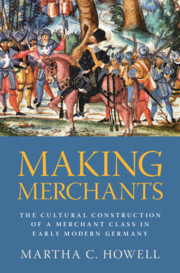
Using a rare collection of personal narratives written by successful merchants in early modern German-speaking Europe, this study examines how such men understood their role in commerce and in society more generally. As they told it, their honor was based not just on riches won in long-distance trade but, more fundamentally, on their comportment both in and outside the marketplace. As these men described their experiences as husbands and fathers, as civic leaders, as men who “lived nobly,” or as practitioners of their faith, they did not, however, seek to obscure their role as merchants. Rather, they built on it to construct a class identity that allowed them entry into the period's moral economy. Martha C. Howell not only disrupts linear histories of capitalism and modernity, she demonstrates how the model of mercantile honor these merchants fashioned would live beyond the early modern centuries, providing later capitalists with a narrative about their own self-worth.
This chapter engages with an important tradition of Marxist literary criticism – principally via Fredric Jameson – that has insisted on the insufficiencies of the naturalist novel as a vehicle for revolutionary impulses. It takes up Jameson’s claims as a spur to reconsidering the contested politics of Zola’s best-selling strike novel Germinal (1885). The chapter conceives of the strike as a particular vehicle for the idealist imagination that Zola obsessively discredits – casting it as a form of ‘impossibilism’, an epithet applied to the earliest manifestation of French Marxism. Embedded in contemporary schisms on the Left, Zola’s strike novel is shown to negotiate with debates about the ethical and political legitimacy of this weapon of working-class struggle, as well as the figure of the ambitious strike leader. Zola’s critical account of political idealism ultimately entails a set of anxious reflections on the naturalist novel’s own modes of representation, as well as its equivocal sense of political purpose.
In The Secret Life of Copyright, copyright law meets Black Lives Matter and #MeToo in a provocative examination of how our legal regime governing creative production unexpectedly perpetuates inequalities along racial, gender, and socioeconomic lines while undermining progress in the arts. Drawing on numerous case studies – Harvard’s slave daguerreotypes, celebrity sex tapes, famous Wall Street statues, beloved musicals, and dictator copyrights – the book argues that, despite their purported neutrality, key rules governing copyrights – from the authorship, derivative rights, and fair use doctrines to copyright’s First Amendment immunity – systematically disadvantage individuals from traditionally marginalized communities. Since laws regulating the use of creative content increasingly mediate participation and privilege in the digital world, The Secret Life of Copyright provides a template for a more robust copyright system that better addresses egalitarian concerns and serves the interests of creativity.
In The Secret Life of Copyright, copyright law meets Black Lives Matter and #MeToo as the book examines how copyright law unexpectedly perpetuates inequalities along racial, gender, and socioeconomic lines while undermining progress in the arts. Drawing on numerous case studies, the book argues that, despite their purported neutrality, key doctrines governing copyrights-such as authorship, derivative rights, fair use, and immunity from First Amendment scrutiny-systematically disadvantage individuals from traditionally marginalized communities. The work advocates for a more robust copyright system that better addresses egalitarian concerns and serves the interests of creativity. Given that laws regulating the use of creative content increasingly mediate participation and privilege in the digital world, The Secret Life of Copyright provides a template for a more just and equitable copyright system.