


Introduction
The rise of the radical rightFootnote 1 in Western Europe has generated a wide range of theoretical explanations behind its electoral appeal.Footnote 2 These range from demand‐side theories, with the study of micro‐level processes of individual and attitudinal determinants (Arzheimer & Carter Reference Arzheimer and Carter2006; Evans Reference Evans2000; Ivarsflaten Reference Ivarsflaten2008; Lubbers et al. Reference Lubbers, Gijsberts and Scheepers2002; Norris Reference Norris2005), to supply‐side theories with the investigation of political opportunity structures and electoral systems (Arzheimer & Carter Reference Arzheimer and Carter2006; Kitschelt Reference Kitschelt1997). Most seminal studies conclude that immigration and economic hardship are major predictors of radical right performance. Structural changes of de‐industrialisation and globalisation have weakened the economic situation and status of low‐income voters who are (or are perceived to be) in direct competition with immigrants for jobs or wages,Footnote 3 and who eventually respond to such threat by supporting the anti‐immigrant and anti‐globalisation radical right parties.
While this labour market competition (LMC) theory has been commonly reprised by scholars, journalists and policy‐makers, most studies have tested its validity at the individual‐ or macro‐levels (Arzheimer Reference Arzheimer2009; Golder Reference Golder2016; Pardos‐Prado & Xena Reference Pardos‐Prado and Xena2019; Scheve & Slaughter Reference Scheve and Slaughter2001). On the one hand, a large group of individual‐level survey studies has consistently rejected the economic argument that native workers who share similar skills with immigrants are more inclined to support anti‐immigrant radical right parties (Hainmueller & Hiscox Reference Hainmueller and Hiscox2007; Hainmueller & Hiscox Reference Hainmueller and Hiscox2010; Hainmueller et al. Reference Hainmueller, Hiscox and Margalit2015). On the other hand, contextual studies have found mixed evidence linking ethnic groups’ economic competition with radical right support (Golder Reference Golder2003; Ivarsflaten Reference Ivarsflaten2005; Lubbers & Scheepers Reference Lubbers and Scheepers2005). However, both sets of studies have significant limitations inherent to their respective observational scales: the former are more likely to detect a cultural effect by basing their studies on self‐reported radical right respondents, whereas the latter rely on aggregated geographical units and variables that mask the potential competition between groups.
Little scholarly attention has been given to the impact of immigration in the local labour markets of native residents. Yet, this is the ideal scale at which to test the LMC theory because it is the context in which residents interact with immigrants in their day‐to‐day lives. Native workers are directly exposed to and affected by labour market changes in their immediate surroundings. The presence of immigrants is likely to increase local job competition and suppress local wages for similar skill groups in some areas to an extent that is somewhat masked in aggregate indicators.
Following this hypothesis, this paper aims to investigate the effects of LMC on radical right voting from a local contextual perspective. Does local exposure to immigration affect natives’ radical right voting differently, depending on the level and type of LMC?
To answer this question, I use a unique panel dataset, which accounts for the French census data to test the impact that the skill composition of the French‐born versus the foreign‐born population has on the French vote share of Front National (FN), France's main radical right party, in four presidential elections (2002, 2007, 2012 and 2017) by municipality. I examine intra‐municipality variation in the skills‐based composition of immigrants and natives while controlling for time‐invariant unobserved heterogeneity.Footnote 4
I find consistent results that confirm the presence of LMC at a local level. This effect is strong and positive for any type of competition, whether it is between natives and immigrants of low‐, medium‐ or high‐skill levels. The effect of labour‐market competition on the vote share of the radical right is amplified in more economically deprived areas. I also show that the composition of immigrants and natives in municipalities can explain local variations in radical right support over time. Municipalities with a higher share of low‐skilled natives, or of medium‐skilled or high‐skilled immigrants, are more likely to register a higher radical right vote share because these immigrants are compelled to take up low‐skilled natives’ jobs.
The contribution is five‐fold. First, this paper adopts a close investigation of contextual factors at the lowest administrative level available, the municipalities. Such a fine‐grained level of analysis allows the evaluation of local contextual effects that directly affect voters, avoiding the need to infer local effects from national or sub‐regional aggregated levels and thus minimising the issues of ecological fallacy.
Second, this paper extends the analysis of contextual effects on radical right voting by operationalising economic circumstances with indicators other than unemployment rate and immigrant population size. Most of the macro‐economic aggregate indicators mask considerable variation in the types of immigration and therefore do not adequately capture LMC. The local unemployment rate or size of the immigrant population may be irrelevant for natives working in occupations facing little competition from immigrant workers. Despite the large concentration of immigrants, certain areas might register a low radical right vote share because most natives are not in direct economic competition with immigrants. Moreover, most labour economics studies use proxy variables like education that cannot directly assess the labour market dynamics. Although education is surely associated with people's skill level, it is also correlated with cultural tolerance and cosmopolitan attitudes (Chandler & Tsai Reference Chandler and Tsai2001; Nie et al. Reference Nie, Junn, Stehlik‐Barry and Saleheen1996). Cultural intolerance may not directly come from the LMC between workers of similar skill level, but rather from the fact that lower‐educated individuals are on average more culturally intolerant of foreigners than highly educated individuals. By focusing on the economic activity and job security of immigrants and natives, this study contributes to the missing link between immigration and economic conditions in studies of radical right voting.
Third, this paper brings evidence that actual economic threat related to job competition impacts radical right voting. Through isolating the economic effect according to the skill levels of natives and immigrants, I control for the cultural predispositions of immigrants using education and job activity. Without denying that cultural factors may affect the relationship between immigration and electoral preferences, the economic effects I find on radical right voting stress the need for scholars and policy‐makers to be less quick to dismiss economic considerations.
Fourth, this paper provides an explanation for the socio‐economic diversity of the radical right's voting base, which typically includes both blue‐collar workers and the middle class. Yet, the existing literature contains few thorough explanations of why this may be the case. By highlighting that local LMC occurs between immigrants and natives of similar skillsets, I identify one such explanation.
Finally, this paper sheds light on how and why the radical right's appeal in national elections varies considerably within municipalities over time. This fine‐grained longitudinal analysis of the skills‐based composition of immigrants and natives from 2002 to 2017 shows that municipalities with a higher concentration of medium‐ or high‐skilled immigrants are more likely to register higher radical right share. This complements previous research studies that mostly focused on the composition of the native population, unemployment or immigration while neglecting the specific skillset of immigrants.
This paper is organised as follows. I first briefly introduce the radical right party family, and place the present study in the context of recent trends in the evolution of its electoral platforms and voting base. I then provide an overview of the LMC thesis, summarise the extant literature on contextual features and radical right voting, and outline my hypotheses. I then lay out my data, research design, results and robustness checks. The final section of the paper discusses the limitations and potential implications of my findings.
The radical right
Within the wealth of scholarly research on the radical right in Europe, multiple labels have been advanced to define this party family. They range from ‘extreme right’ (Ignazi Reference Ignazi2003), ‘far‐right’ (Halikiopoulou & Vlandas Reference Halikiopoulou and Vlandas2016), ‘populist radical right’ (Mudde Reference Mudde2007) and ‘radical right’ (Norris Reference Norris2005). What unites such parties is their nativist policy agenda, which is expressed by a strong anti‐immigrant and nationalist stance (Halikiopoulou et al. Reference Halikiopoulou, Nanou and Vasilopoulou2012; Mudde Reference Mudde2007). The Front National (aka the National Front; hereafter FN) in France — whose support base is the subject of this article — is prototypical in this regard. This party counts as ‘radical’ in virtue of its opposition to key features of liberal democracy: it advances an idealised ethnically and culturally homogenous nation at the expense of individual rights and equality. It is, however, not ‘extreme’ because it does not share any lineage with the fascist parties (Norris Reference Norris2005).
More recently, radical right parties have combined their traditional nativism with an interventionist economic agenda (Roth et al. Reference Roth, Afonso and Spies2017). Despite initially supporting economic liberalism and espousing deregulatory beliefs in the 1980s and 1990s (Kitschelt Reference Kitschelt1997), over the last decade these parties have gradually adopted a domestic economic agenda focused on government spending to expand public services for natives (Schumacher & Kersbergen Reference Schumacher and Kersbergen2014) and have incorporated protectionist economic positions in their platforms (Roth et al. Reference Roth, Afonso and Spies2017). Moreover, most radical right parties have actively scapegoated immigrants as responsible for taking natives’ jobs and suppressing natives’ wages.
By aligning their economic positions with a nativist viewpoint, radical right parties have expanded their voting base into new socioeconomic demographics, in particular attracting economically left‐leaning supporters (Kitschelt Reference Kitschelt2007; Roth et al. Reference Roth, Afonso and Spies2017). In the 1980s, it was the anti‐state petite bourgeoisie that constituted the main electoral base of radical right parties (Norris Reference Norris2005). But with the recent tacking onto the economic left, they have gained support among the most economically insecure individuals (Arzheimer Reference Arzheimer2009). Low‐skilled workers and those who are most vulnerable to the rise of unemployment are more sensitive to the radical right's ethno‐nationalist and anti‐immigrant rhetoric. Interestingly, the radical right's electoral base also includes middle‐class groups: those who are not in the lowest income stratum but rather a few rungs up (Bornschier & Kriesi Reference Bornschier, Kriesi and Rydgren2012; Halikiopoulou & Vlandas Reference Halikiopoulou and Vlandas2016). One explanation for support among such groups is that they perceive a decline in their socio‐economic position relative to that in the past and/or relative to other groups (e.g., immigrants) (Gest et al. Reference Gest, Reny and Mayer2018; Gidron & Hall Reference Gidron and Hall2017). This article highlights an additional explanation for radical right support among socio‐economically diverse groups of voters: local LMC between natives and immigrants.
Local LMC and radical right voting
The LMC theory has been one of the most common explanations for the emergence and sustained success of the radical right. It posits an interest‐based form of threat to ‘native’ residents from the arrival of immigrants, which is characterised by the fear of losing jobs and wages (Pardos‐Prado Reference Pardos‐Prado2011; Pardos‐Prado & Xena Reference Pardos‐Prado and Xena2019; Scheve & Slaughter Reference Scheve and Slaughter2001). Echoing social psychology's ‘group conflict theory’ (Blumer Reference Blumer1958; Tajfel & Turner Reference Tajfel, Turner, Austin and Worchel1979), the LMC theory holds that the economic competition between natives and foreign‐born workers of similar skills pushes the former to cast a radical‐right ballot. It thus implicitly assumes an in‐group bias in which natives will always prefer giving a job to natives rather than to immigrants.Footnote 5 Some variants of the LMC theory have been developed with an identity‐based form of ethnic threat rooted in the fear of losing cultural resources (Hainmueller & Hiscox Reference Hainmueller and Hiscox2007; Inglehart & Norris Reference Inglehart and Norris2016; Sniderman et al. Reference Sniderman, Hagendoorn and Prior2004) and more recently with a status‐based form of threat that arises from the loss of subjective status following economic and cultural change (Gest et al. Reference Gest, Reny and Mayer2018; Gidron & Hall Reference Gidron and Hall2017).
Yet, while the LMC has been extensively discussed, the economic determinants of ethnic competition have been supported by weak empirical evidence. The individual‐level studies have concluded that the cultural form of ethnic threat has more explanatory power (Hainmueller et al. Reference Hainmueller, Hopkins and Margalit2014), whereas macro‐contextual studies have yielded inconclusive findings (Golder Reference Golder2016). This paper argues that these results stem from an over‐emphasis on individual and macro‐level studies that cannot account for labour competition, which plays out at the local level.
On the one hand, individual‐level survey data fail to adequately capture natives’ actual labour market exposure to immigrants. Survey studies base their results on a selected sample of radical right voters who are more likely to represent the most radicalised voters because they have to self‐identify as radical right sympathisers. Oesch (2008) finds that only 11.4 per cent of the respondents to the 2002/2003 wave of the European Social Survey acknowledged having voted for the FN, while the party registered 16.9 per cent of valid votes in the first round of the 2002 presidential election. Oesch demonstrates that self‐identified radical right supporters tend to hold the strongest xenophobic sentiments and disregard economic considerations. Although this ‘social desirability bias’ is less important nowadays given the success, and hence mainstreaming, of radical right parties and the use of online surveys, it was a significant phenomenon during the earlier part of the period covered by the present study (2002–2017), and thus remains a relevant point of comparison. In addition, the absence of attention to the local factors in which electoral decisions are made, for example satisfaction with the local environment and public services, can also result in biased estimates in individual‐level analyses.
On the other hand, macro‐level studies, because of their aggregated level of analysis, cannot meaningfully depict local lived experiences of competition between natives and immigrants. Not only do they include large geographical units like national, regional or district levels, which mask local dynamics (Golder Reference Golder2016; Jesuit et al. Reference Jesuit, Paradowksi and Mahler2009), but they also mostly focus on two large‐scale macro indicators, immigration and unemployment, which fail to produce consistent findings. Journalistic discourses and conventional wisdom would assume that areas with a large concentration of immigrants and high unemployment rate are traditional radical right strongholds. Yet, while the effect of immigration seems unequivocal (Arzheimer & Carter Reference Arzheimer and Carter2006; Golder Reference Golder2003; Lubbers et al. Reference Lubbers, Gijsberts and Scheepers2002), findings on the effects of unemployment and its interaction with immigration are mixed. While Golder (Reference Golder2003) shows that high levels of immigration and unemployment lead to larger radical right vote share, Arzheimer (Reference Arzheimer2009) finds that the effects do not reinforce each other and Lubbers et al. (Reference Lubbers, Gijsberts and Scheepers2002) report no significant effect of unemployment.
Instead, this paper draws on theory that highlights the importance of lived experiences between immigrants and natives in a local environment. Any actual direct economic threat is most likely to be experienced by natives in their municipality. Immigration at a national level is unlikely to have substantially affected the wage or job prospects of the average native‐born worker. However, if immigrants are concentrated in small spatial units, then native‐born workers in those geographic areas with similar skills to foreign‐born workers might be affected by their arrival. Local immigration increases the supply of labour competing for local jobs and may, therefore, increase local labour market pressure (Card Reference Card2001). Small labour markets influence the relationship between local wages and employment. Since individuals are more likely to vote according to the changing socio‐economic structure in their immediate environment, it is necessary to investigate panel data at a low level of analysis.
Also, the economic impact of immigration on radical right voting should be tested while differentiating between, on the one hand, native workers and their skill levels and, on the other hand, immigrant workers and their skill levels (Dancygier & Donnelly Reference Dancygier and Donnelly2013). Few studies demarcate the share of immigrant workers relative to native workers for each sector. Yet, occupation‐specific employment statistics are averages, which often mask considerable variations across occupation‐types with respect to the relative share of natives and immigrants. For instance, there is a gap between the foreign‐born unemployment rate and the native one in Europe (INSEE). Similarly, very few studies specify that actual economic competition affects individuals differently according to their skill level. Some rare exceptions have shown material self‐interest behind radical right voting, but this has been limited to the national aggregates (Scheve & Slaughter Reference Scheve and Slaughter2001) and industry sectors (Dancygier & Donnelly Reference Dancygier and Donnelly2013); none of these have looked at the local level.
Malhotra et al. (Reference Malhotra, Margalit and Mo2013) find that labour‐market concerns only drive anti‐immigration voting behaviour when actual economic competition between natives and immigrants is present. Immigration is expected to have very different impacts on natives’ risk exposure on the labour market depending on how immigrants affect competition within their occupational category. Thus, differentiating the native‐born and foreign‐born populations according to their skill level is useful to test more accurately the economic competition between the in‐group and out‐group, in line with the LMC theory. This leads me to develop two primary hypotheses.
The first hypothesis focuses on low‐skilled natives. The economic effect of immigration on radical right voting is likely to vary according to how secure native workers feel in their jobs, and it is workers in the lowest‐skilled, most routine jobs who are least secure. Their employers can more easily replace them, and they also tend to have lower income‐earning potential. Studies on labour market outcomes in western democracies have detected negative effects of immigration inflows on local wages only among low‐skilled workers (Card Reference Card2001). That is why I expect municipalities with a higher share of low‐skilled natives to exhibit higher radical right support, all else equal.
However, it does not necessarily follow that a larger concentration of low‐skilled immigrants would increase a municipality's radical right share. The economic effect of immigration on radical right voting is also likely to vary according to immigrants’ labour market access. Indeed, due to language barriers, lack of connections and qualifications that are insufficiently specific to the host country market (INSEE 2009), immigrants are more likely than other socio‐demographic groups to have higher qualifications than those required by their jobs (Quintini Reference Quintini2011) and thus tend to compete with lower‐skilled natives. For instance, countries tend to have distinctive legal traditions and restrictive regulations on who can practice law, which pose barriers to the entry of immigrant lawyers into a host country's market for legal services. I, therefore, expect that areas with a large share of medium‐ or high‐skilled immigrants will be more likely to threaten low‐skilled natives’ jobs.
Accordingly, my first hypothesis is as follows:
Labour Market Access Hypothesis: Municipalities with a higher share of any of the following three groups are more likely to register higher radical right vote shares: low‐skilled natives, medium‐skilled immigrants or high‐skilled immigrants.
My second hypothesis focuses on similarities among the skill levels of natives and immigrants.
Local Labour Market Competition Hypothesis: Municipalities with larger shares of natives and immigrants of similar skills are more likely to register higher radical right vote shares.
My third hypothesis considers the contextual effect of economic deprivation. The positive effects of immigration on radical right voting are expected to be compounded when economic resources are scarcer. Halla et al. (Reference Halla, Wagner and Zweimuller2017) have found that LMC intensifies when unemployment is high. Poorer economic circumstances are likely to increase job competition and scapegoating of immigrant populations by natives, as suggested by the ethnic competition thesis. Higher unemployment also heightens the risk of unemployment to those workers on temporary contracts as their perceptions of insecurity increases when market conditions deteriorate (de Witte Reference de Witte1999; Halikiopoulou & Vlandas Reference Halikiopoulou and Vlandas2016). As a result, I expect that a combination of a larger concentration of immigrants (no matter their skill level) with higher background unemployment is likely to increase radical right voting. Accordingly, my third hypothesis is:
Contextual Hypothesis: Municipalities with larger shares of immigrants and higher levels of economic deprivation, that is more unemployment, are more likely to register higher radical right vote shares.
Data and research design
The main novel contribution of this paper is to combine municipality‐level radical right vote share with information about skill levels and influx of migrants in France over a 15‐year period (2002–2017). This analysis differs from past research by (1) focusing on the actual economic threat by differentiating between the various types of occupational activities of immigrants,Footnote 6 (2) applying a skill‐level classification based on job security and ease of labour market entry and (3) examining the interaction between workers of similar skill level to directly assess local labour‐market competition when such threats exist.
Case study
Including local observations for a closer examination from a single country helps to avoid ideological and programmatic idiosyncrasies between radical‐right wing parties in different countries and keep institutional factors constant (Kestilä & Söderlund Reference Kestilä and Söderlund2007). Contradictory contextual determinants of LMC also result from the local idiosyncrasies of cross‐national studies, which ignore the national institutional arrangements and the history of each radical right party (Mudde Reference Mudde2007).
The choice of France is justified by its obvious pragmatic reasons of data availability, but there are also more substantive considerations. As the third political force in France, the FN is a thriving party that has proven to be successful in national, regional and departmental elections since 2002. Its leader, Marine Le Pen, has managed to garner more electoral support in the past five years by softening the openly racist discourse of her father (Evans & Ivaldi Reference Evans and Ivaldi2013). Despite having retained most of its core authoritarian, nativist, protectionist and anti‐immigrant policies (Stockemer & Barisione Reference Stockemer and Barisione2017), the recent FN and Marine Le Pen's ‘de‐demonization’ strategy has contributed to FN's unprecedented electoral gains. Not only has the FN increased its vote share from 11.2 per cent to 19.1 per cent in the first round of the presidential elections from 2007 to 2012, but it came second in the 2017 presidential race (second round) with 21.7 per cent.
The FN is thus an emblematic successful radical right party that benefits from a long‐lasting and growing success. It has been the prototypical party commonly used by researchers to explain theoretical patterns of the emergence and sustained electoral support of radical right parties (Betz Reference Betz1994; Kitschelt Reference Kitschelt1997; Mudde Reference Mudde2007). Although radical right parties differ in terms of their precise ideologies, they pertain to the same party family (Arzheimer & Carter Reference Arzheimer and Carter2006). In spite of their inconsistent findings, all cross‐national studies have included the FN as part of the West European radical right party family, along with parties from the Netherlands, Belgium, Denmark and, to a lesser extent, the United Kingdom (Arzheimer Reference Arzheimer2009; Golder Reference Golder2003; Lubbers & Scheepers Reference Lubbers and Scheepers2005). The FN traditionally embodies a successful radical right party among this party family. One instance of its wider implications for the West European radical right party family was its ideological refinement of combining ethno‐nationalist xenophobia and anti‐political establishment populism in 1984, which was later reprised by the majority of West European radical right parties (Rydgren Reference Rydgren2005). The findings of this study of the FN may, therefore, have important implications for understanding the local electoral success of other extreme right‐wing parties in Western Europe.
Moreover, the case of France is particularly relevant to test the local LMC theory. First, the recent large immigration influx in France allows us to test the effect of recent immigration on radical right electoral support. Immigrants represented 8.9 per cent of the French population at the beginning of 2013 compared with 7.3 per cent in 2000 (INSEE 2016). This recent surge explains why the radical right party has centred its narrative on immigration. As the arrival of distinct ethnic populations with varying skill levels has skyrocketed, the potential for political protest against ethnically distinct newcomers to translate into radical right support becomes more likely (Koopmans & Olzak Reference Koopmans and Olzak2004). The focus on the economic occupations of the immigrant population has been endorsed by Le Pen's rhetoric since the early years of the party. Jean‐Marie Le Pen's xenophobic resentment was initially expressed in economic terms in 1972 when he stated ‘two million immigrants equals two million unemployed people’. Despite a recent ideological focus on the religious attributes of the recent non‐European immigrants, the socio‐economic features of the foreign‐born population constitute a major issue dimension among FN voters (Evans & Ivaldi Reference Evans and Ivaldi2013).
Not only has immigration increased in recent years, but there has been also a rise in qualification levels of immigrants since 2008. Sixty‐three per cent of the immigrants who arrived in 2012 had at least a high school diploma (INSEE 2017a). As of 2015, 10.4 per cent of immigrants were manual labourers and 11.4 per cent were unemployed, but 14.6 per cent were public servants, private administrative employees, commerce employees and people working in the personal services sector or CEOs (INSEE 2016). France has recently witnessed a rise of foreign workers in IT services, especially from the Northern African and former French colonies. This influx was facilitated by France's immigration and integration law in 2007, which encouraged high‐skilled migration in fields experiencing professional shortages, like the IT sector. The work permit Passeport Talent, created in 2016, has also facilitated the arrival of entrepreneurs, engineers and managers by extending the duration of residence to four years for 10 categories of high‐skilled immigrants. In addition, recent immigration has included highly qualified Spaniards and Italian workers who fled their home country after the economic crisis (INSEE 2016). This case study, therefore, enables us to test the LMC theory for all skill levels.
LMC is expected to be particularly acute in France since most immigrants take jobs in regulated sectors. As over 20 per cent of immigrants in the labour force are blue‐collar workers or lower grade white collar workers (INSEE 2017a), their presence is more likely to increase unemployment because wages in these sectors cannot be suppressed below the regulated minimum. If they were more numerous in the unregulated sector, like in the United Kingdom, the effect would have been directly felt on wages as no minimum wage is applied. Manual labourers also tend to face more job insecurity in France than in any other European countries as around one third of them hold a temporary contract, whereas permanent contracts are predominantly awarded in medium‐ and highly‐skilled jobs (INSEE 2017a). These factors contribute to unemployment risk among low‐skilled natives during immigration inflows.
It is also relevant to use the French example because the FN puts the economic consequences of immigration at the forefront of its agenda. The party has regularly addressed anti‐immigrant positions from an economic perspective as well as from a cultural one. Since 2012, under the leadership of Marine Le Pen, the FN has departed from its previously rightist economic platform of small government and tax cuts, and has endorsed an economic protectionist agenda that prioritises government spending for natives (Stockemer & Barisione Reference Stockemer and Barisione2017). Marine Le Pen has explicitly blamed immigrants for taking over natives’ jobs and suppressing natives’ wages.
France is also a very practical case study to test the economic competition at a local level given the availability of data at a very granular scale. Not only does this allow this study to have dramatically more observations than any other studies for a long period of radical right electoral success (N = 117,872), but it also increases the theoretical relevance of the findings, since municipalities are very small geographic areas that are directly relatable to inhabitants. There is an average of 1,200 inhabitants for each municipality. This means that, if a certain municipality is characterised as having a large share of high‐skilled immigrants, one can safely assume that most residents of this municipality will live close to high‐skilled immigrants.
Lastly, economic competition is intensified in France because residential mobility is low. Indeed, the relevance of the local context depends on individuals’ low mobility. If individuals are very mobile and easily move between municipalities, then economic competition will be attenuated. In the 2006–2013 period, the share of households that moved residence decreased by seven percentage points from 17.8 per cent to 10.8 per cent (INSEE 2017b). This general mobility decline is similar among all types of housing status (landlords and tenants).
Data
The hypotheses are tested with the statistical model in equation (1).

The dependent variable γ is the vote share of the FN of votes cast in the first round per municipality i in the presidential elections t of 2002, 2007, 2012 and 2017. The data are drawn from the French Ministry of Interior. In the first round of France's presidential elections,Footnote 7 tactical voting is less prevalent than in the second round (where many vote for the lesser of two evils). The model that includes the registered FN vote share along with all blank and invalid votes for each municipality presents similar findings (see in the robustness checks section). I only account for the presidential electoral results because they exclude the vote share of the immigrant population, which would have biased the estimates (immigrants can only vote in local or European elections). Presidential elections are also more appropriate than parliamentary elections to conduct a fine‐grained analysis of local contextual factors because data on the latter are only available at the voting district level, which is an aggregated measure of combined municipalities (there are only 577 voting districts by comparison to 35,287 municipalities). In addition, detailed demographic data of the composition of immigrants and natives according to their skill level are only available at the municipal level. Four presidential elections are included to control for time‐invariant unobserved heterogeneity. α is the constant term.
The municipal scale of analysis is the finest aggregation level available, and enables a precise accounting of local contextual effects on electoral outcomes. Municipal characteristics are taken from population census data (INSEE). They include the whole French population and minimise measurement issues. There were 35,287 municipalities (called communes) in mainland France in 2017. Since the municipalities are registered for four consecutive presidential elections, the number of observations amounts to 117,872 with 29,709 municipalities.Footnote 8 Because of their size, big cities like Paris, Lyon, Marseille and Lille will be defined according to their arrondissements (neighbourhoods). The number of inhabitants per municipality (including neighbourhoods) varies from 200 to 22,000 with a mean of 8,100. The contextual characteristics correspond to the 2007 Census for the 2002 and 2007 elections, and to the 2014 Census for the 2012 and 2017 elections. The electoral results are between zero and five years from a census (for the 2002 presidential elections). Year and municipal fixed effects are included to control for the over‐time changes and between‐municipal variation.Footnote 9 They enable identification of within‐municipality changes in the composition of immigrants and natives over time.
X1it measures the varying job qualifications of immigrants per municipality i in presidential elections t. I sort the socio‐economic situation of immigrants from the national skill and job cell approach available in the French National Statistics to measure the distribution of labour market status. I classify job occupations of immigrants according to their economic status, hierarchical position and job security. It includes continuous variables of (1) the low‐skilled position, manual labourers, domestic helpers, plumber heating contractors and routine non‐manual employees, such as account clerks, sales workers and personal assistants with the lowest pay and status and weakest employment protection; (2) the medium‐skilled position, the white‐collar workers like clerical, administrative and management workers with higher work security, income and prestige; (3) the high‐skilled position, composed of managers, administrators, supervisors and professionals with higher educational attainment, career security, salaries and status who are more likely to have permanent and ‘protective’ contracts than any other labour position; and (4) the unemployed. The detailed classification of occupations according to skill levels is set out in the robustness checks section.
The status of immigrants includes those who are born a foreigner and abroad but reside in France. Those who were born abroad but who are of French nationality and live in France are not counted. Those counted as immigrants will remain immigrants despite acquiring French nationality unlike the category of foreigners registered in the census data. It is the country of birth and not nationality at birth that is registered. This allows me to include individuals that eventually obtained the French nationality according to the ‘right of soil’ after 15 years of permanent residence, unlike foreigners. It also enables me to avoid any compositional effects by excluding the immigrants with French nationality who can vote. However, it does not capture the second or third generation of immigrants who are born in France but can be perceived a threat by the native population and targeted by radical right parties in their anti‐immigrant narrative.
The local sectoral composition of occupational activities is drawn from the French National Statistics. The low‐skilled immigrant rate is calculated as the share of low‐skilled immigrants aged 18–64 relative to the immigrant labour force in each municipality. In the same vein, the medium‐skilled, high‐skilled and unemployed immigrant rates are obtained from the share of immigrants aged 18–64 in the immigrant labour force.
X2it represents the shares of the occupational activities of natives per municipality i for each presidential election t. These demographic control variables are classified similarly for immigrants along low‐skilled, middle‐skilled, high‐skilled and unemployed status.
Empirical studies of immigration have obvious endogeneity concerns given that immigrants themselves choose where to live. Voters who feel uncomfortable with the social and political atmosphere in their neighbourhood may also choose to move elsewhere, to more politically like‐minded surroundings. White progressive residents might have chosen an ethnically dense residential location, whereas white conservative individuals might have decided to move to more homogeneous places to live. But few recent studies attempt to account for geographical sorting through an instrumental approach of immigrant historical settlement patterns (Halla et al. Reference Halla, Wagner and Zweimuller2017), or share of housing stock (Harmon Reference Harmon2017). The choice of instruments remains questionable since they are likely to violate the exclusion restriction by affecting the outcome variable.
Also, the origin of the ethnic composition of immigrants is known to affect far‐right voting differently. The recent wave from the Middle East and North Africa by a large new Muslim population has been perceived as threatening the lifestyle and culture of the in‐group. Most leaders of far‐right parties have adopted anti‐immigrant political strategies that specifically target Muslims. Thirty per cent of the foreign‐born population is from Maghreb (INSEE 2016). Savelkoul et al. (Reference Savelkoul, Lameris and Tolsma2017) identify that not only is ethnic minority density positively associated with the likelihood to vote for the Party of Freedom in the Netherlands, but the relationship is also even more significant towards non‐Western migrants who do not mingle with their ethnic neighbours. While recognising the significance of the origin of the ethnic composition in determining far‐right voting, this study cannot include this ethnic composition variable due to a lack of data availability at a local level. A French law passed in 1978 has prevented individuals from being counted by race or ethnicity on the grounds that it is contrary to the Republican principle of equality.
X1itX2it represents the interaction terms between the different skill levels of natives and immigrants per municipality t. They first help to evaluate the direct competition of natives and immigrants of similar skill level (low/medium/high) under varying levels of local labour market conditions. They then measure the conditional effect of unemployment and the different occupational categories of immigrants on FN vote share. This helps to test the contextual hypothesis that immigrant populations (no matter their skillset) are likely to boost radical right support when unemployment is high. ε is the error term. Table 1 presents the summary statistics of variables used in my analysis.
Results and discussion
Local labour market competition and radical‐right voting
I first investigate the Market Access Hypothesis in Table 2, which presents the linear fixed effect regression of the effects of LMC between natives and immigrants according to their skill levels on the FN vote share in the 2002, 2007, 2012 and 2017 presidential elections. The first model shows that the different local employment compositional factors are able to explain why certain municipalities have a higher share of radical right votes than others over time. Having a higher share of any of the following groups boosts the radical right support in a municipality: low‐skilled natives, medium‐skilled immigrants or high‐skilled immigrants. A 1 per cent increase of medium‐skilled immigrants in a municipality leads to an increase of 0.073 percentage points of the municipality's radical right vote share, and a 1 per cent increase of high‐skilled immigrants leads to an increase of 0.086 percentage points of the municipality's radical right vote share. In addition, the effect of low‐skilled immigrants is insignificant, while the presence of unemployed immigrants strongly decreases the radical right vote in a municipality.
Table 1 Summary statistics
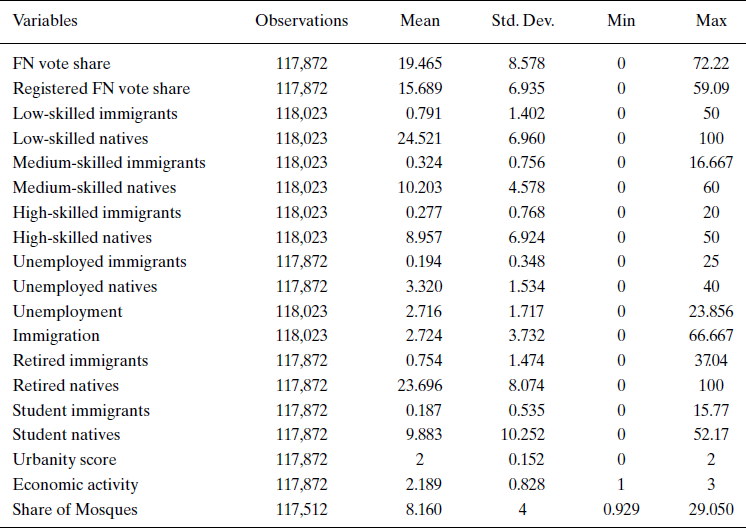
Table 2 Local labour market competition and radical‐right voting

Note: Robust standard errors in brackets. ***p < 0.01, **p < 0.05, *p < 0.1.
These findings corroborate the Market Access Hypothesis that medium‐ or high‐skilled immigrants, and not low‐skilled or unemployed immigrants, represent a direct economic threat to low‐skilled natives. One telling illustration is the comparison between Neuwiller and Villing. These two rural municipalities of less than 1,000 inhabitants are from neighbouring departments in the north‐east of France, and both register a majority of low‐skilled natives. They both share low unemployment rates and a high immigrant stock (immigrants comprise above 30 per cent of the local population in each municipality). Yet, in Villing, FN registered a 40 per cent share of the vote share in the first round of the 2017 election, by comparison to a 16.1 per cent share for the FN in Neuwiller. The skill levels of the immigrant labour force provide a valid justification for different radical right electoral results. While medium‐ and high‐skilled workers together comprise 40 per cent of the immigrant labour force in Villing, they comprise only 4 per cent of the immigrant labour force in Neuwiller. This shows that it is not immigration per se but rather the immigrants’ position within the labour market that affects the radical right's electoral support in an area. Unlike previous contextual literature, which used the macro indicator of immigration (Golder Reference Golder2003, Lubbers et al. Reference Lubbers, Gijsberts and Scheepers2002), my model provides a more detailed understanding of the types of immigration that drive radical right support at the municipal level over time.
Model 1 also confirms the diverse socio‐economic backgrounds of radical right voters. Larger concentrations of low‐skilled and high‐skilled natives lead to an increase in radical right vote share within municipalities. Areas with a 1 per cent increase of low‐skilled natives register a 0.019 percentage points increase of their radical right vote share, whereas the increase is 0.085 percentage points with a 1 per cent increase of high‐skilled natives. This finding is in line with individual‐level survey studies that show similar ethnic threats among low‐ and high‐skilled natives (Hainmueller & Hiscox Reference Hainmueller and Hiscox2010; Malhotra et al. Reference Malhotra, Margalit and Mo2013). Outer suburbs, where blue‐collar and low to medium service workers are concentrated, are FN bastions. For example, in the first round of the 2017 election, FN received 31.85 per cent of the vote in Meaux and 24.7 per cent in Melun. Surprisingly, model 1 also shows that a larger concentration of medium‐skilled immigrants decreases the FN vote share. However, this finding is only tentative since it has not been supported by all models (see robustness check section).Footnote 10 Areas with more unemployed natives are also likely to register a lower FN vote share. This is in line with recent studies that show stronger radical right support among people a few rungs from the bottom of the occupational hierarchy who perceive a threat to their position (Bornshier & Kriesi Reference Bornschier, Kriesi and Rydgren2012). Because the unemployed natives have no job to defend, they are less likely to perceive immigrants as a threat.
Models 2–4 of Table 2 test my second hypothesis. They look at the interaction effects of economic competition between immigrants and natives for low‐, medium‐ and high‐skilled workers on radical right voting. The significant and positive interaction terms for each skill level suggest that local economic competition between natives and immigrants of similar skills compounds the positive effects on radical right support within municipalities.Footnote 11 This corroborates the local LMC hypothesis. Figure 1 shows the interaction effects of local labour competition between natives and immigrants for each skill level. It evinces the positive marginal effects of immigrants on municipalities’ radical right support as the share of the native population with a similar skill level to immigrants increases. There is a positive effect for all skill levels, but it is particularly strong among high‐skilled workers. Brousse is an example of a municipality in which a large concentration of native and immigrant workers with similar skill levels (61.2 per cent of the total local labour force in 2017) is associated with higher support for the radical right: in the first round of the 2017 election, FN came first, receiving 27.7 per cent of the vote.

Figure 1. Marginal effects of local labour market competition for each skill level on radical right voting.
Local labour market competition, economic deprivation and radical‐right voting
Table 3 examines the third hypothesis concerning the intervening effects of scarcer economic resources on municipalities’ FN vote share as the population of immigrants increases (for each respective skill level). The effect is strong and significant no matter the immigrants’ skill level. Not only does it corroborate the contextual hypothesis, but the finding is also in line with the current literature that demonstrates the additive effect of unemployment on radical right support (Golder Reference Golder2003; Halla et al. Reference Halla, Wagner and Zweimuller2017; Malhotra et al. Reference Malhotra, Margalit and Mo2013). Figure 2 shows the impact of different shares of low‐, medium‐ and high‐skilled immigrants on radical right voting as economic deprivation increases. This finding is in line with the contextual hypothesis because it shows a strong and positive trend of immigrant influx (for each skill level) on radical right voting, conditional on the shares of unemployment increasing. Areas with scarcer economic resources have more local LMC for all skill levels of immigrants.Footnote 12
Table 3 Local labour market competition, economic deprivation and radical‐right voting

Note: Robust standard errors in brackets. ***p < 0.01, **p < 0.05, *p < 0.1.

Figure 2. Marginal effects of local labour market competition and economic deprivation on radical right voting.
This result follows previous findings that difficult economic circumstances positively impact the anti‐immigrant effect on radical right voting (Golder Reference Golder2003; Malhotra et al. Reference Malhotra, Margalit and Mo2013). In my study, it plausibly explains the radical right strongholds like Hénin‐Beaumont or Liévin in Pas‐de‐Calais, which have experienced difficult economic transitions after the shutdown of coal‐mining industries and subsequent attraction of white‐collar workers during the reconversion of these cities into service‐based areas. The local residents in these areas are predominantly low‐ and medium‐skilled workers. In the context of high local unemployment, competition for jobs with immigrants has escalated, and this has translated into strong electoral support for the FN, with Le Pen receiving over 60 per cent of the vote in these towns in the 2017 election.
Robustness checks
As a last step, I address some questions that might be asked of the presented results with several robustness checks. The first model of Table 4 shows that my findings do not hinge on the exact specification of the dependent variable. The results are similar if I change the expressed FN vote share per municipality (excluding blank and invalid votes) to the registered FN vote share per municipality including blank and invalid votes. Including blank and invalid votes does not affect my results.
Table 4 Robustness checks

Note: Robust standard errors in brackets. The baseline estimation for urbanity score is cities. The one for economic activity is industrial areas. ***p < 0.01, **p < 0.05, *p < 0.1.
The second model of Table 4 presents the squared term of the immigration inflow to test whether the relationship between the inflows of immigration and radical right support follows a curvilinear pattern, as one study previously found a threshold at which the arrival of foreigners becomes negatively associated with radical right vote share (Charitopoulou & Garcia‐Manglano Reference Charitopoulou and Garcia‐Manglano2018). These authors posit a non‐linear effect since the radical right vote in a municipality may decrease when there are large inflows of immigrants provided that a majority of the immigrant population supports a party that is not anti‐immigrant. On the contrary, I obtain a positive but insignificant effect of the quadratic term, which indicates that my models are not biased by any potential curvilinear effect. This is probably due to the fact that the immigrant population cannot vote in French presidential elections.
The third model of Table 4 shows the effects of various immigrants’ occupations relative to the population of each occupation, and not the whole labour force, on municipalities’ radical right voting. The findings are very similar to my previous models, which corroborate my previous estimates.
Finally, one might be concerned that my estimates are biased by unobserved compositional and contextual features. The last model of Table 4 addresses this concern by including segments of both the native and immigrant populations who are not part of the labour force, namely students and retired persons, and local contextual variables. I include categorical variables about the level of urbanisation (cities; middle‐sized towns or suburban areas; and rural areas), the predominant type of economic activity (classified as industrial, service‐based or residential areas) and the share of Mosques (only available at the departmental level) from INSEE administrative data. Although municipalities with higher‐skilled immigrants now perceive a lower FN vote share, the other results are not affected by the addition of these variables. Among the compositional features, only having a higher number of student immigrants in a municipality has a statistically significant and positive effect on the FN vote share. This finding suggests an effect — beyond the scope of the LMC theory — consistent with the finding that international students represent a symbolic and realistic threat to natives (Charles‐Toussaint & Crowson Reference Charles‐Toussaint and Crowson2010). The negative and significant effects of retired natives and student natives are consistent with the economic logic of the LMC theory in that these segments of the population are less likely to perceive that they are in direct economic competition with immigrants. As for the contextual features, only the share of Mosques is statistically significant, which confirms the independent importance of cultural factors on radical right support (Dancygier Reference Dancygier2010).
Another objection that might be raised is the lack of consideration of the effects of changing local dynamics on support for the radical right. The temporal variations in immigration and unemployment levels have been proven to affect radical right parties’ performance. Kaufmann (Reference Kaufmann2017) has recently found that ethnic change is likely to increase radical right support in the United Kingdom, but higher rates of ethnic minorities have the opposite effect. Table 5, therefore, explores a first difference model, depicting the effect of changes in the shares of immigrants and natives of each skill level over time on changes in radical right voting from the years 2002 to 2017. This cyclical approach can eventually estimate causal relationships between variables. While most variables are insignificant, the effect of unemployed immigrants on the performance of the radical right is strong. A 1 per cent increase of unemployed immigrants from 2002 to 2017 decreases the radical right support by 1.976 percentage points within municipalities. Despite the lack of other significant coefficients, this finding corroborates my previous results.
Table 5 First difference model

Note: Robust standard errors in brackets. ***p < 0.01, **p < 0.05, *p < 0.1.
Conclusion
This paper provides a novel empirical investigation of the way immigration affects radical right voting at a local level using the skill composition of immigrants and municipal fixed‐effects. It contributes evidence of an economic dimension to radical right voting.
Using French electoral results and census data over a 15‐year period from 2002 to 2017, this study finds empirical evidence of the impact of local contextual influences of economic competition on radical right vote share at the local level for immigrants and natives’ skills. A greater correspondence between the skills of native and immigrant workers in a municipality has a positive effect on the municipality's support for the radical right. Moreover, the conditioning effects of material deprivation, measured as unemployment, increase the LMC effect on municipalities’ radical right support; radical right electoral fortunes are likely to be boosted in areas where the immigrant population (no matter its skill level) increases and economic conditions become poorer. But this paper also shows that some local areas are more immune to radical right vote share than others over time, based on their demographic composition. Municipalities with a higher concentration of any of the following groups register higher radical right support: low‐skilled natives, medium‐skilled immigrants or high‐skilled immigrants.
There are some limitations to this study. The lack of local data on the composition of both natives and immigrants remains a concern since ethnicity can be correlated with the skill level of immigrants, as found in previous studies (Savelkoul et al. Reference Savelkoul, Lameris and Tolsma2017). Future contextual studies in other countries should take this aspect into consideration, where data are available. Moreover, actual economic threat could also take the different form of competition for social welfare provision as distinct from LMC. Further studies could usefully elaborate on this welfare‐based source of immigrant‐native economic competition. Furthermore, some institutional variables with a focus on party competition and the role of the local institutions could also play a role in radical right voting. Arzheimer and Carter (Reference Arzheimer and Carter2006) have examined the political opportunity structures and found that political institutions have some impact on radical right voting, but no study has been undertaken at the local level.
This study has important implications for our understanding of the relationship between immigration and radical right voting. It reinforces the importance of LMC as one source of anti‐immigrant radical right voting behaviour, which should not be dismissed. As much as perceived cultural and status threats affect radical right voting, actual LMC at a level more proximate to individuals matters too. Material considerations are still worth putting front and centre of future research on radical right voting. The measurement of economic competition in multiple units of analysis and across different occupation and industry levels deserves further investigation.
This study also has important implications for policy‐makers in light of the politics of immigrant integration. Without discounting the cultural dimension, local LMC and resource scarcity are the breeding grounds for radical right parties to crystallise ethnic competition in their narratives to garner support. Highlighting the economic issues behind ethnic conflict lends urgency to state politics to prompt immigration integration policies in economically deprived localities. This concern is particularly acute in immigrant‐receiving societies after the migration crisis.
Acknowledgements
I would like to thank Sara Hobolt, Simon Hix, Ruth Dassonneville, Bert Bakker, Thomas Leeper, Chris Anderson, Philipp Dreyer, Fergus Green and the two anonymous reviewers for insightful comments and helpful suggestions on earlier drafts.
Online Appendix
Additional supporting information may be found in the Online Appendix section at the end of the article:
Table 6: Reconfiguration of socio‐professional categories along skill and education levels
Figure 3: The spatial distribution of FN vote shares in presidential elections
Figure 4: The evolution of the net migration rate


 Open access

