

1.1 Introduction
Fashion is a reflection of the zeitgeist by virtue of who wears what, when, where, why and how. The way we dress, and the way in which we are expected to dress in a panoply of work environments and specific occasions, is a manifestation of the condition of modernity. In the decades after the Second Industrial Revolution when capitalism was widely embraced, mass production and mass consumption allowed for certain fashion codes to be universalised, such as the power suits in corporate offices from New York to Japan, uniforms for workers in factories as statements of discipline and unity and the evolution of denim jeans as a sexy and hip symbol of youth rebellion. One could argue that conformity was a product of modernity.Footnote 1 Fashion also became a visual language to signify one’s social standing.Footnote 2 Fashion may be perceived as a way of life in an industrial society where ‘the body serves as a means of the presenting the power of capitalism and its social hierarchy’.Footnote 3
The postmodern challenge to modernity in fashion is difficult to pin down with an exact definition and has been said to be a cultural ethos that is characterised by ‘a new recognition and valuing of diversity, multiculturalism, marginalized people and viewpoints’ and a consequential denial of values and thinking that are typical of ‘white, male-dominated, Western culture in the modernist period’.Footnote 4 It encompasses subversion, inversion, disruption, idiosyncrasy, appropriation and deconstruction. It rejects the canons of beauty and refinement, seeking instead to embrace shock, provocation and transgression. It came in waves and from the ground up: from the hippies and punks to the goth and cosplay subcultures. In the world of high fashion, the artistic oeuvres of designers such as Yohji Yamamoto, Rei Kawakubo, Jean-Paul Gaultier and Alexander ‘Lee’ McQueen have often been referred to as being postmodern. In the 2020s, scholars are now discussing post-postmodernism. As Gilles Lipovetsky comments, ‘the label “postmodern” is starting to look old; it has exhausted its capabilities to express the world now coming into being’.Footnote 5 The term post-postmodern has appeared in an increasing number of scholarly works that address a new cultural milieu – one that faces shifting global political centres and geopolitical boundaries, threats of climate change and an endangered ecosystem, destabilisation from armed conflicts and pandemics, obsessions with autonomous individuality, accelerating advances in artificial intelligence and the pervasiveness of information and communications technology in our daily lives.
In The State of Fashion 2019 report jointly released by The Business of Fashion and McKinsey & Company, it was observed that: ‘The ones who will succeed will have to come to terms with the fact that in the new paradigm that is taking shape around them, some of the old rules simply don’t work …. They need to … have the courage to “self-disrupt” their own identity and the sources of their old success in order to realize these changes and win new generations of customers.’Footnote 6 In the following year, The State of Fashion 2020 report cited sustainability, digitisation and innovation as the three top opportunities for the fashion industry in the face of an economic slowdown.Footnote 7 The luxury heritage fashion house Gucci, and followed later by Louis Vuitton and Balenciaga, are doing precisely that since 2015: employing irreverent designers to revamp their brands, inventing a new vernacular in fashion vocabulary that introduces terms like ‘counterfeit chic’, ‘logo hacking’, ‘geek chic’, ‘gender fluidity’ and ‘downmarket irony’ and capturing the attention and pockets of the social media–obsessed millennial generation with Instagram-worthy designs. Even Donatella Versace herself has resorted to reproducing the Ford Motor Company’s logo as a recurring motif on shirts and sportswear for the iconic Versace brand in the Fall–Winter 2019 runway collection unveiled in Milan.Footnote 8 In the most recent The State of Fashion 2025 report, fashion executives said that their priorities in 2025 will be dedicated to ‘finding ways to differentiate, whether through new designs, customer experiences or finding new customer niches’.Footnote 9
Fashion does not refer simply to clothes but to clothes in relation to identity, society and politics. Essentially, dressed bodies become texts, creating ‘spaces of uniformity and conformity as well as spaces of conflict … in which vestimentary signs and individual and social identity dialogue and translate each other’.Footnote 10 In the twenty-first century, fashion has evolved from its well-established formats into new interwoven digital cross-media multiplatform genresFootnote 11 that today include the immersive environment of the metaverse and non-fungible tokens (NFTs). Intellectual property (IP) laws have only recently begun to contemplate how fashion studies as a field can bring valuable interdisciplinary insights to the legal domain of copyright and trademarks.Footnote 12 In the field of fashion studies, scholars are looking increasingly to media and communication studies for theoretical concepts and methodologies so as to more fully comprehend ‘a domain characterized by finely attuned signs and semiotic distinction’.Footnote 13 Viewed in this way, fashion and IP laws will be inextricably interwoven with the constitutional doctrines of freedom of speech as fashion becomes integral as a form of expression. In the last couple of decades, entrepreneurs and artists such as Haute Diggity Dog, Nadia Plesner, MSCHF and Mason Rothschild have argued that their parodic or artistic appropriations of the symbols of Louis Vuitton, Nike and Hermes constitute protected speech.Footnote 14
Section 1.2 surveys the key trends in the fashion industry in the last few years and highlights the new fashion vocabulary that will be influential in the years ahead. Section 1.3 explains how post-postmodern theories find a parallel in contemporary fashion phenomena. It also postulates that one may usefully adopt a semiotics approach to IP rights, particularly when dealing with fashion which is infused with symbolic meaning as a means to express one’s feelings, political views and experiences. Section 1.4 considers how trademark and copyright laws may be enforced in light of these fashion trends and discusses some of the challenges ahead. Section 1.5 concludes that one would have to carefully evaluate the zeitgeist and make important – and correct – policy choices when enforcing IP laws and balancing how the freedom of expression features in the manifestations of the post-postmodern condition.
1.2 A New Fashion Vocabulary
At the start of 2020, the luxury fashion industry was enjoying a boom as consumers were increasingly buying experiences over things, and then the pandemic hit. Online innovation occurred in a matter of months as brands focused on generating revenue from the only channel available in many markets: e-commerce.Footnote 15 Lauren Sherman, writing in The State of Fashion 2021, thinks that while brands like Hermes, Louis Vuitton and Bottega Veneta had seen an improvement in sales in the third quarter of the 2020 fiscal year, it is ‘unlikely consumers will continue to prioritise “things” longer-term after the pandemic’.Footnote 16 But there are contrary views. When the COVID-19 pandemic forced the world into quarantines and lockdowns, bankrupted fashion brands and retailers (such as John Varvatos, Neiman Marcus, Brooks Brothers, J.C. Penney)Footnote 17 and face masks became de rigueur in many countries, some alpha brands – in particular, Hermes – remained ‘virus proof’.Footnote 18 The global casualisation of the wardrobe will also unleash pent-up demand for investment pieces in the high-end sector of the luxury fashion market. On a more mundane level, the worldwide proliferation of face masks as quintessential daily fashionwear has also sparked a flurry of trademark registrationsFootnote 19 and, eventually, trademark disputes and counterfeit claims.Footnote 20
Self-disruption, the top-ranked 2019 trend that fashion executives predict will shape the fashion industry in the immediate future,Footnote 21 has continued in the ensuing years post–COVID-19 pandemic. This is unsurprising since heritage brands like Gucci and Balenciaga have been enjoying soaring profits by paradoxically selling merchandise bearing misspellings of their famous marks evocative of counterfeit goods (eg, GUCCY) and ill-fitting ugly clothes.Footnote 22 The collections unveiled online during the pandemic between June 2020 and January 2021 show no abatement of these design trends. Luxury brands have greater latitude to deviate from their dominant brand aesthetic and doing so may have a positive impact in ‘refreshing’ a brand’s tired aesthetic in a novel way that increases consumer interest and memorability.Footnote 23 Unfortunately, consumers do get tired of repetition, and perhaps the death knell for counterfeit chic and geek chic has been sounded. With the passing of Virgil Abloh at the end of 2021,Footnote 24 and the sudden departure of Alessandro Michele from Gucci in November 2022,Footnote 25 it would seem that another wave of fresh creativity is in the brewing. As Nicole Phelps writing for Vogue comments: ‘But in fashion even the brightest stars don’t shine forever …. Gucci’s sales eventually started to dip, and in the wake of the pandemic parent company Kering’s shares fell amidst the brand’s slow-down. A recent WWD report quoted an anonymous source claiming Michele ‘was asked to initiate a strong design shift.’ If that is so, it appears Michele resisted it.’Footnote 26 It was reported that over 80 per cent of shoppers plan to spend the same or less on clothing, footwear and accessories in 2025,Footnote 27 and that it is non-luxury fashion sector that will drive the entirety of the increase in economic profit for the first time since 2010 (excluding the COVID-19 years).Footnote 28 This only means the luxury fashion sector will have to continually find ways to remain attractive and desirable to a wide range of consumer segments from the Gen-Z and Millennials to the silver generation.Footnote 29
What seems to be more certain is a gravitation of these trendsetting fashion brands towards new logos, NFTs, the metaverse, social and environmental causes, streetwear and celebrity collaborations to engender a cooler image amongst a younger demographic. While such creative and business manoeuvres had led to revenue growth, some of these developments also present specific challenges to the established doctrines of IP laws, in particular trademark and copyright laws. The rest of this section will highlight in detail some of the key trends.
1.2.1 Hacking/ Downmarket Irony/ Counterfeit Chic
The fashion brand Vetements (meaning ‘clothing’ in French) is organised as a creative collective by seven designers who initially remained anonymous, but subsequently Georgian creative director Demna Gvasalia became the most profiled designer and was synonymous with the brand. As one of the most popular contemporary fashion hackers in the last decade, Vetements have proven themselves to be the experts at creating ‘viral’ garments, items that have the irony and popularity of internet memes, with as much life online as off.Footnote 30 The brand’s earlier phenomenal success is intimately tied to its deep understanding of contemporary digital media culture and its adroit social media practices. Gvasalia had arguably brought anti-fashion back to fashion in its Spring–Summer 2016 runway collection when Vetements paraded a DHL T-shirt with a price tag of £185.Footnote 31 According to trends analyst Aleksandra Szymanska of the Future Laboratory: ‘They are hacking the fashion system … and they’re credible [enough] to make these statements of capitalist kitsch.’Footnote 32 Szymanska also believes that unlike the logomania phenomenon in the 2000s, when a luxury brand’s logo – Louis Vuitton’s LV or Chanel’s double-C – was an ostentatious symbol of the wealth of the wearer, fashion brands today use non-fashion logos that plug into the cool vibe of the millennial generation. Synne Skjulstad observes that it is ‘achieved by way of a distinctive blend of unexpected moves, humor, irony, and contradictory intellectual anti-conceptualism, one which permeates both [Vetements’] collections and public profile’.Footnote 33 The Vetements aesthetic is characterised by a ‘calculated disruption and assault on the status quo’ and essentially ‘taking the products that each individual label is known for or does best (T-shirts for Hanes, heels for Manolo Blahnik) and reworking it à la Vetements, which often amounts to a sort of creative defacement’,Footnote 34 and then charging customers a high price for these. Although not all the brands initially gave their permission, for many of the globally recognised companies that Gvasalia approached, the opportunity to be part of the Vetements aesthetic – and consequently garnering widespread attention on social media – was simply irresistible. Vetements sought to romanticise the ordinary and the mundane and to bring visibility to peoples, communities and places often not considered to be inspiring through elevation of the garments by their display in the context of expensive high fashion and in the status of fetishised commodities.Footnote 35 The phrase ‘to Vetementize’ was thus born.Footnote 36
These ‘hackings’ or reworkings of popular yet often inexpensive products sold by renowned streetwear brands such as Hanes T-shirts, Champion hoodies and Levi’s denim jeans, and the ubiquitous bright yellow DHL logo T-shirts, have also been referred to as the ‘downmarket irony’: the trend for luxury fashion brands to create designs that have the look of bootleg creations found at cheap market stalls.Footnote 37 The recent aesthetic objectives for brands like Gucci and Balenciaga appear to be to make their logos look as cheap and as ugly as possible on their clothing and then charge a high price for these products.
By creating ‘fashion memes’,Footnote 38 Vetements, and later Balenciaga, under the creative direction of Demna Gvasalia, aim to situate the brands in the centre of discursive activity in the community, as audiences and consumers are invited to actively participate in commentary, debate, parody, satire and pastiche. Dazed Digital’s head of fashion, Emma Hope Allwood, commented, ‘while once being transformed into meme was a mark of derision, now it’s a signifier of cultural relevance, to be encouraged rather than feared’.Footnote 39 This trend stands in stark contrast to a design or a trademark traditionally conceived of as an original and not to be tampered with – one that exists in a reverential rights-based system that frowns against copying and imitation.
As the creative director for Balenciaga (and previously Vetements), Demna Gvasalia’s present cult status within the fashion industry can be polarizing. His appeal to an increasingly affluent younger generation obsessed with social media and a quest to appear ‘authentic’ is legendary, but others who desire elegantly tailored clothes will naturally find his antics to be repellent and view his fame as transitory. Nonetheless, during the COVID-19 pandemic years, Gvasalia has courted controversy with his runway showsFootnote 40 and advertising campaigns for Balenciaga,Footnote 41 and he is continuing in the tradition of fashion hackers like Martin Margiela and Rei Kawakubo for Comme des Garçons (who will deconstruct clothes from the way they are traditionally worn and reconstruct them into a new shape or volume) and logo hackers like Moschino (who will appropriate famous logos and subvert them in a playful manner). Hacking in the fashion world is neither sinister nor destructive. Although it is often done to prove a point, share information and subvert prevailing codes to create something new, clever and elegant,Footnote 42 it has so far been lucrative for the fashion brands and especially for Gucci and Vetements.
‘Logo hacking’ was taken perhaps to the extreme by Gucci under the creative direction of Alessandro Michele who possibly started the trend of ‘self-hacking’ amongst the luxury fashion brands. When graffiti artist Trevor Andrew, aka GucciGhost, who in late 2013 and 2014 scrawled the label’s signatures all over Brooklyn and Manhattan, Gucci did not respond with a copyright-infringement suit or a cease-and-desist order. Instead, Michele extended an invitation to Andrew to make clothes together, and the collaboration was presented in the Fall–Winter 2016 collection.Footnote 43 Logo hacking was taken to the next level when in the Gucci Cruise 2018 collection, perhaps spawning the ‘counterfeit chic’ trend, Michele unveiled the ‘GUCCY’ motif, which created a frenzy on social media, that was a deliberate mocking of poorly made Gucci knock-offs (Figure 1.1). Indeed, Gucci has reclaimed ‘GUCCY’ from the counterfeiters and have turned it into an asset for the brand as it continues to develop clothing, bags and accessories with the ‘GUCCY’ motif alongside its official ‘GUCCI’ logo. In a surprising postmodern turn, Gucci has articulated its own countercultural statement by parodying its own bootlegs by selling, amongst other merchandise, a sweater that resembles a bad counterfeit, with Gucci replaced by ‘GUCCY’, for £950.Footnote 44 It seems that this decision to sell a line of ‘GUCCY’ products, a logo that parodied the luxury industry’s problem with counterfeits and shanzhai products, was perceived to be witty by Chinese consumers who made up 30% of Gucci’s worldwide sales of US$7.2 billion in 2017.Footnote 45 It was a gambit that paid off handsomely. Scottish artist/art director Hey Reilly commented that ‘the best or most powerful fashion labels can play with their icons because the message is still about them. It appears that the message and meaning of brands and logos can still operate even when disturbed: they continue to transmit powerful statements of status and identity, even when presented in bastardized form’.Footnote 46 The semiotic sign of ‘GUCCI’ when subverted by its very brand owner to become ‘GUCCY’ is communicating a message that the luxury symbol is cool, hip, irreverent and, most importantly, relevant to the millennial generation. At the Gucci Fall–Winter 2020 men’s fashion show, the brand continues its successful ‘playful commentary on the idea of imitation’, this time presenting the fake Gucci logo with the bicolour stripe that was first seen in the 1980s, with the ugly words ‘FAKE’ and ‘NOT’ in bright yellow prominently plastered on either side of the bags (Figure 1.2).Footnote 47
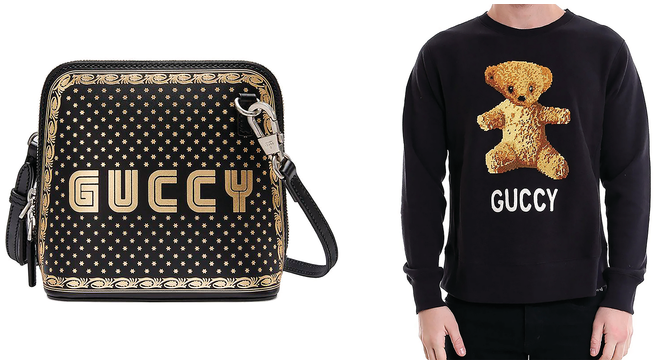
Figure 1.1 Official ‘GUCCY’ merchandise by Gucci.
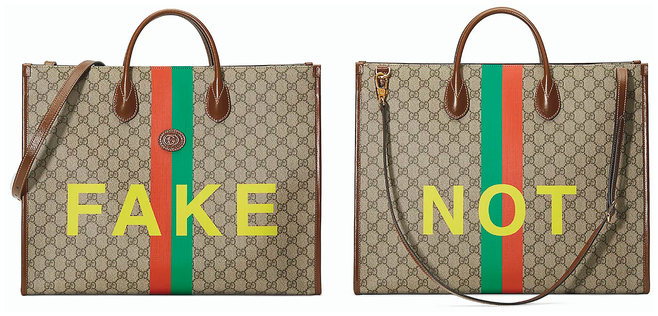
Figure 1.2 Official ‘FAKE NOT’ Gucci bag.
Fashion journalist Sarah Mower writing for Vogue called this form of brandalism – a portmanteau of brand and vandalism – ‘conscious self-parody’.Footnote 48 It was commented that:
While it arguably looks somewhat like a spelling mistake, the primitive spelling of the name [GUCCY] is an ironic jab at the momentous presence of knock-offs that are sold in droves – both from physical retailers and online – around the world. This particular spelling of the name was incredibly popular with counterfeit retailers in the 1980s.Footnote 49
On November 15, 2021, Gucci and Balenciaga engaged in a creative contamination of each other’s logos in The Hacker Project – a lucrative series of clothing, bags and accessories that feature both fashion houses playing with each other’s house codes. Emphasising that this was not officially a collaboration, press notes read: ‘Exploring ideas of authenticity and appropriation, Gucci and Balenciaga motifs merge to create new interpretations of signature pieces’Footnote 50 (Figure 1.3). Other fashion commentators noted: ‘In many ways, Balenciaga’s portion of The Hacker Project appears like counterfeits one would find on the black market or even random goods stalls in open-air bazaars. And that’s one of the main reasons why this isn’t a collaboration.’Footnote 51 This is quite unlike the official Fendi and Versace collaboration in May 2022, billed as ‘Fendace’.Footnote 52
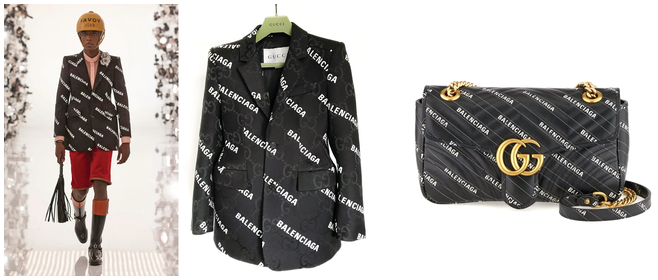
Figure 1.3 The Hacker Project by Gucci.
This ‘counterfeit chic’ movement does not remain exclusively within the domain of luxury fashion brands to re-appropriate shanzhai and counterfeit practices for themselves by designing and selling what appears to be cheap and poor copies for the usual designer premium prices. In 2018, Diesel created a pop-up store on Canal Street in SoHo New York that sold official ‘DEISEL’ clothing, with Renzo Rosso, the founder of Diesel, commenting that a brand can create its own fakes and embrace its own imitation.Footnote 53 This ‘self-hacking’ trend, while popular with customers willing to pay top dollars for fake-looking authentic products, is likely to result in problems for enforcement of intellectual property rights in the future. Some questions have already been raised:
Will high fashion’s whirlwind upside-down, inside-out, love/hate relationship with bootlegging create consumer confusion and what are the long-term repercussions? … Will Gucci to ‘Guccy’ lessen the stigma and condition shoppers to view counterfeit goods as socially acceptable?Footnote 54
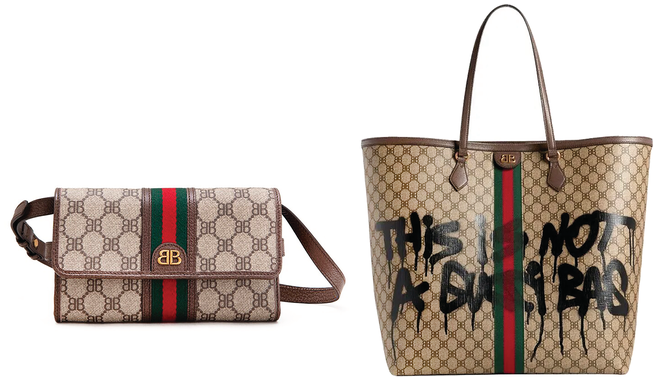
Figure 1.4 The Hacker Project by Balenciaga.
Figure 1.4Long description
The cross-body style bag on the left has a folded flap-style design with dark stripes. The logo of the Balenciaga bag is represented by a reversed letter B and an upright letter B in the center. The tote bag also has the same gray and black pattern and stripes with a graffiti-style design of the words that reads, This is not a duff bag.
1.2.2 NFTs, the Metaverse, Social Media and the Phygital
Fashion is also making big strides in the immersive environment of the metaverse and the minting of NFTs.Footnote 55 Often spoken (and frequently erroneously) in conjunction with the metaverse, NFTs are digital assets that have been verified using blockchain technology, and they can exist independently of the metaverse of games and social networking platforms or integrated into these digital worlds. By the end of 2022, most of the luxury fashion brands have jumped on the bandwagon of the metaverse (eg, ‘Gucci Vault Land’ is an experimental space where users will go on a journey through the fashion brand’s history through games and NFTs; Burberry has a capsule phygital collection with Minecraft; Polo Ralph Lauren collaborated with Fortnite where players can win items from the digital collection) and have minted non-fungible tokens, a number of which have been sold at astronomical prices (eg, Dolce & Gabbana setting a US$6 million record for fashion NFTs; Balmain partnering MINTNFT to premiere ‘The Balmain Thread’ on the eco-friendly XRP Ledger at Paris Fashion Week, becoming the first global fashion house to create a NFT-based membership program).Footnote 56
The metaverse is a new name for an existing idea, and it is a befuddling concept. It is fundamentally the combination of aspects of social media, gaming, augmented and virtual reality, and the internet that forms an immersive and interconnected digital world. In this virtual space, people from across the world may socialise, work, play, learn, shop and innovate. Despite doubts whether the version of the metaverse peddled by Mark Zuckerberg will ever happen, investment bank Morgan Stanley nevertheless has predicted that digital fashion could boost industry sales by US$50 billion by 2030.Footnote 57 There is much money to be made in the metaverse, but many legal issues are unresolved. The frequency with which brands’ trademarks were being used on the virtual goods in the Second Life ecosystem without their authorisation led to metaverse-related lawsuits. Due to swift settlements or the defendants’ failure to turn up in court, these lawsuits provided little insight into how courts would treat trademarks – and claims of trademark infringement – in the metaverse.
On January 1, 2023, the 12th edition of the Nice Classification entered into force and it had been updated to more explicitly refer to uses in what we would call the metaverse, as well as NFTs. When minting and selling NFTs that comprise its own trademarks or when using its marks in an online game, a company should register its mark in the appropriate class. These are the four most relevant classes:
Class 9: includes ‘downloadable virtual goods/digital files authenticated by non-fungible tokens [NFTs]’
Class 35: includes ‘retail store services featuring virtual goods’
Class 41: includes ‘virtual entertainment services, namely, providing online, non-downloadable virtual footwear, clothing, bags, sports equipment, art, toys and accessories for use in virtual environments; providing online virtual guided tours’
Class 42: includes ‘mining of crypto assets/cryptomining’.
Although there exists much ambiguity as to cohesive and viable business strategies regarding the metaverse and NFTs, well-known global brands are definitely registering their trademarks in these classes and commencing a spectrum of extended reality (XR) activities and issuing of NFTs. Generally, fashion brands have rushed to register a panoply of trademarks in these classes seeking to cover their bases for their future endeavours in this realm, even if they do not know exactly what those ventures will look like.Footnote 58 In particular, luxury fashion brands such as Louis Vuitton, Gucci, Balenciaga, Dolce & Gabbana and Burberry, as well as sporting apparel titan Nike, are actively exploiting the metaverse with a proliferation of online collaborations, digital experiences and NFT sales.Footnote 59 Over the past year, watch brands like Hublot, Bulgari and Panerai have also embraced the possibilities of NFTs as a way to release works by notable artists inspired by the companies’ watch designs, to serve as a mark of authentication and ownership and to enhance customer experiences.Footnote 60 Jewellery brands are similarly hopping onto the bandwagon.Footnote 61
On May 17, 2021, Gucci teamed up with Roblox, one of the most renowned gaming platforms, to exhibit Gucci handbags, hats and sunglasses on avatars, in the Gucci Garden space.Footnote 62 It ran for two weeks, allowing enthusiasts and gamers to buy collectibles and several rare Gucci accessories, and more than 20 million players visited the Garden. It followed up with a permanent space on Roblox called Gucci Town, where players can compete in games to earn GG gems, discover and create art pieces and purchase from a boutique of limited-edition virtual items from Gucci for their avatars.Footnote 63 In June 2021, Gucci offered up its first NFT, a film inspired by its Aria Fall–Winter 2021 fashion runway collection, for auction at Christie’s. The sale, titled Proof of Sovereignty: A Curated NFT Sale by Lady PheOnix, is an NFT-specific auction that features a single work from Gucci, and it realised US$25,000.Footnote 64 It later collaborated with Superplastic to launch a three-part SUPERGUCCI NFT collection. The first drop in February 2022 featured 10 unique NFTs each accompanied by a handmade Italian ceramic sculpture designed by both Gucci and Superplastic.Footnote 65
To celebrate the 200th birth anniversary of the founder of Louis Vuitton, the brand launched a mobile game known as Louis the Game in August 2021. The phone app follows the protagonist, Vivienne, through a number of different worlds, where she needs to collect 200 candles to commemorate the birthday of Louis Vuitton. One is able to customise the Vivienne character with different Louis Vuitton monogram prints and colourways. There are 30 embedded NFTs in the game; each NFT is a collectible that can only be found through playing the game and cannot be sold. The latest version in April 2022 has two additional locations and 10 new NFTs featuring Vivienne in different looks. Players who successfully collect a certain number of free NFTs in the game will stand a chance to qualify for an NFT raffle; eventual winners will be able to use these NFTs across multiple platforms like a PFP (profile NFTs that can be used on Twitter etc) that owners can wear like a badge of honour.Footnote 66
Balenciaga’s adroit commitment to exploiting business opportunities in the metaverse has been a case study at Insead.Footnote 67 In December 2021, the brand announced that the company is creating a department dedicated to the virtual world, in order to explore its marketing and commercial opportunities. Balenciaga was the first fashion house to partner with Epic Games, which is behind Fortnite, a famous multiplayer online role-playing game (MMORPG) that is increasingly attracting more players due to its VR concerts. The unique items from its vast collection are to be sold as avatars’ skins and accessories. The new gear will be available both in Fortnite’s usual in-game storefront and in the Balenciaga-themed ‘Strange Times’ Creative hub, which includes a virtual Balenciaga store. It created a digital avatar, known as Doggo, wholly dressed in a Balenciaga outfit. Users can also submit avatar photos, which are often included in billboards in the Fortnite’s town square. That animated Doggo billboard that will appear in-game and in actual cities such as Tokyo, London, Seoul and New York City.Footnote 68 Adam Sussman, president of Epic Games, said: ‘Fortnite is fashion …. The entire experience of Fortnite is centred around self expression, player agency, and the ability to live out a fantasy of portraying characters and outfits that people want to wear.’Footnote 69
In October 2021, Nike was the first apparel brand to file a number of new intent-to-use applications for its most famous trademarks in the United States for use on various virtual goods/services that foreshadowed Nike’s since-confirmed intentions to make big strides into the metaverse. Since then, it has launched ‘Nikeland’ in partnership with Roblox, launched NFTs created in conjunction with RTFKT StudiosFootnote 70 and sued online resale marketplace StockX for, inter alia, infringing its trademarks by selling NFTs tied to physical sneakers.Footnote 71 Nike acquired RTKFT, which was established in 2020 and has already posted an impressive performance, teaming up with crypto artist Fewocious in 2021 to sell 600 pairs of shoes as NFTs, amassing a total of US$3.1 million in less than seven minutes.
Last but not least, even before the COVID-19 pandemic struck, social media was integral to the promotion of fashion brands and the celebrity persona in the last half decade. It has now become a key driving force for revenues. It has been observed that brands with celebrity endorsements typically see a 4% increase in sales, but millennial shopping habits have demonstrated a shift in the efficacy of celebrity endorsements through traditional media such as print and broadcast. Younger consumers are inclining toward ‘authenticity’ – or at least, perceived authenticity – as represented by paparazzi photos and social media posts.Footnote 72 Additionally, brands have also shifted their marketing efforts to digital influencers, which are generally viewed as more authentic alternatives to their traditional celebrity counterparts in the film, music and sporting industries. Since 2018, more and more designers sought to display their collections in ‘Instagram-ready’ spaces, designed for instantaneous diffusion over social media and livestreaming. As many live fashion shows in Paris and Milan have been replaced with highly creative digital shows and arthouse mini-movies in the latter half of 2020,Footnote 73 fashion is no longer defined solely as a semiotic system of production and consumption but also a whole system of media representation governed by forms of digital performance.Footnote 74 The term ‘phygital’ – a portmanteau of physical and digital – was born.Footnote 75 Today, phygital fashion refers to the fusion of physical and digital elements in the fashion industry, such as using virtual or augmented reality technology in fashion shows and retail experiences, integrating wearable technology into clothing and accessories and blurring of lines between online and offline fashion consumption.Footnote 76
In summary, it would appear that brands will likely be able to rely on existing trademark rights (in physical products and retail services) in order to bring enforcement actions, and may not need to file new applications for virtual goods. The unauthorised minting and sale of NFTs associated with trademarks that have been the subject of high-profile lawsuits will set important legal precedents, such as Hermes suing artist Mason Rothschild for the sale of the MetaBirkins NFTsFootnote 77 and Nike claiming that online reselling platform StockX had infringed its marks by displaying and selling its Vault NFTs that are each tied to a specific pair of Nike sneakers.Footnote 78
1.2.3 Sustainability and Upcycling
Last but not least, ‘eco-design’, ‘sustainable fashion’ and ‘upcycling’ are just some of the many words in vogue today in a post-pandemic world. The LVMH group, which owns brands such as Louis Vuitton, Dior and Givenchy, for the first time, released the 2020 Social and Environmental Sustainability Report, which outlined the fashion conglomerate’s commitment to responsible growth amidst the backdrop of the global pandemic.Footnote 79 The upcycling trend – which is a creative reuse of old or unwanted materials to make new products – has witnessed artists like the MSCHF group in the United States creating mashups of Hermes Birkin bags and Birkenstock footwear; these Birkinstocks involve cutting up authentic Birkin bags and they are sold for between US$34,000 to US$76,000.Footnote 80 At a parochial level, Chanel is taking Shiver + Duke to court for using buttons bearing the interlocking CC mark from the French brand’s garments and refashioning them into jewellery.Footnote 81
The COVID-19 pandemic has given impetus to the boom in online shopping and, consequently, a proliferation of resale websites that would repurpose or refashion luxury goods in myriad ways. The luxury resale market is growing rapidly, reaching a total worth of US$25 billion in 2018, and it was expected to grow to US$36 billion in 2021. With the exception of Hamilton International Ltd v Vortic LLC,Footnote 82 where the US Second Circuit Court of Appeals found that defendant Vortic LLC did not run afoul of trademark law by selling restored and modified watches consisting of original Hamilton parts and bearing Hamilton’s branding (as Vortic’s use of the Hamilton trademark is not likely to confuse consumers), most of the upcycling cases have not provided much guidance by way of substantive decisions from the courts.Footnote 83
Fashion brands like Louis Vuitton and Chanel have actively pursued litigation against resellers such as The RealReal and What Goes Around Comes Around, but success has been limited especially where the goods are genuine and had not been altered.Footnote 84 On February 2, 2021, Louis Vuitton sued upcycler Sandra Ling Designs, Inc for selling apparel and accessories made from ‘material obtained from purportedly authentic pre-owned, disassembled, and deconstructed Louis Vuitton items’ and ‘purportedly authentic pre-owned Louis Vuitton items that have been fundamentally altered by the addition of decorations such as tassels, stones, or beading’ – all of which continue to bear Louis Vuitton’s trademarks.Footnote 85 Sandra Ling Designs counterclaimed and sought a declaration from the court that its sales of the ‘upcycled’ goods amounts to ‘fair use of LV’s trademarks, and does not constitute an infringement of LV’s trademarks’, arguing that Louis Vuitton, ‘through misrepresentation and improper use of its trademarks, sought to prevent [SLD] from making and selling upcycled goods comprising material salvaged from used and discarded but genuine and authentic LV products’. Unfortunately, the dispute was settled in October 2022.Footnote 86 MAD Paris, however, has established itself as the upcycler par excellence, customising highly covetable iconic luxury watches such as the Rolex Daytona and Audemars Piguet Royal Oak, affixing its own logo on the dial of the watches alongside the original logos and selling them at a premium over the original watches. For instance, MAD’s black matte finish version of the Rolex Datejust 41 was going for US$34,500 while a regular Rolex model in yellow gold and steel with diamond hour markers was selling for a significantly lower US$14,450.Footnote 87 MAD Paris displays the following disclaimer prominently on its website: ‘Watches displayed are second hand watches, personalised upon order, independently and with great care by craftsmen. Unless stated, MAD is not official distributor nor partners from those watches brands. Original warranties are not valid anymore, only is the one MAD offers.’Footnote 88 Nonetheless, in 2024, Chanel won its trademark infringement lawsuit in New York against a luxury online reseller What Goes Around Comes Around (WGACA) with a unanimous jury ruling in favour of Chanel and awarding $4 million in statutory damages; in February 2025, Chanel succeeded in securing a permanent injunction that restrains WGACA’s use of its marks. Similarly, in 2024, Rolex succeeded in the US Fifth Circuit Court of Appeals, in obtaining an injunction against BeckerTime for using non-genuine bezels and non-genuine dials on Rolex-branded watches.Footnote 89
While these upcycling cases do not implicate freedom of expression concerns, MSCHF, the Brooklyn collective known as ‘the Banksys of consumer culture’Footnote 90 that launched the controversial Satan Shoes (where MSCHF injected the soles of 666 pairs of Nike shoes with red ink and a single drop of human blood)Footnote 91 and Birkinstocks (Birkenstock-like footwear with an official Birkenstock cork-and-rubber sole but with a leather upper made from purposefully chopped-up Hermès Birkin bags)Footnote 92 may just be able to avail itself of a free speech defence. Daniel Greenberg, a founding team member at MSCHF, said that the MSCHF team bought four Hermes Birkin bags on resale sites for a total of US$122,500 and then disassembled the purses to use them as the material for the slip-on shoes.Footnote 93 Regrettably, the Nike lawsuit has been settled whilst the Birkinstocks are sold out without nary a squeak from either Hermes or Birkenstock.
Moving ahead, one would have to distinguish between potentially permissible expressive artistic upcycling (such as MSCHF’s Birkinstocks) and perhaps impermissible commercial recycling (Shiver + Duke’s costume jewellery using buttons bearing the Chanel CC mark). Such uses present new issues in trademark law regarding trademark exhaustion, infringement and dilution, which Martin Senftleben will discuss in depth in Chapter 8, and therefore will not be addressed further in this chapter.
1.3 Fashion, Post-postmodernism and IP Law
1.3.1 Post-postmodern Theories Can Provide an Analytical Framework
Writings that approach contemporary culture as representing a postmodern period are generally based on the notion that major changes in social practices, artistic expressions and economic developments have transformed the values, ideals and behaviours associated with the historical period identified with modernism. Postmodernity represents the period where social structures and grand ideologies have lost their authority, ‘giving rise to the expression of individual desires, self-fulfilment and self-esteem’.Footnote 94 More recent writings of an emerging and new cultural paradigm – the post-postmodern condition – can be grouped into five main categories: altermodernism, perfomatism, automodernity, digimodernism and hypermodernity.Footnote 95 While fashion is rarely addressed in these key works on post-postmodernism, Marcia Morgado has usefully extrapolated from these writings to suggest how contemporary fashion phenomena might be interpreted as expressing the post-postmodern characteristics identified in each theoretical framework.Footnote 96 However, Morgado’s examples do not include developments in the last couple of years such as NFTs and the metaverse, and this chapter will supplement these omissions.
Altermodernism is the name French curator and art critic Nicolas Bourriaud coined in describing artistic expression that resists the pressure of globalisation, commodification and standardisation and instead seeks to engage in spontaneous heterogeneous invention, productive compromise and collaboration among disparate factions.Footnote 97 In the context of contemporary fashion, two trends are exemplars of altermodernism. First, the commitment to sustainability and environmentally sensitive practices and, in particular, the reuse and recycling of fashion apparel. In his earlier work, Relational Aesthetics, which influenced his articulation of altermodernism, Bourriaud writes about how relational art invites the audience to participate in the creative process and to co-create meaning. Upcycling can be viewed as paradigmatic of altermodernism, especially where artistic craftsmanship is involved, such as when an individual repurposes a luxury brand product (eg, cuts up an old Louis Vuitton monogram bag or a vintage printed Versace dress) and combines it with new material. Second, the mass customisation practices in the fashion industry, where shoppers may participate in the design of personal items by selecting from a pre-determined set of style elements and colours (eg, shoe colours at New Balance, T-shirts at Uniqlo or tote bags at Longchamp), cohere with Bourriaud’s thesis that relational artworks come about as shared activities, rather than result from an individual’s, artist’s or brand’s effort.Footnote 98
Performatism, according to Raoul Eshelman, functions by artificially framing readers or viewers in such a way that they have no choice but to accept the external givens of a work and identify with the characters within it; its aesthetic elements include theistic plotlines and manipulated interpretations.Footnote 99 It is often used to study representations in film and art, which includes the blurring of distinctions between art and fashion, and the erasure of cultural categories such as gender and sexual orientation. However, in relation to the fashion phenomena, one can use Eshelman’s analytic frame to study how brands make use of performative works that revolve around the narrative theme of perfecting the self. Paula von Wachenfeldt postulates ‘performative luxury’ to be a ritual exercise of the wealthy. Examining the mediation of luxury brands and the high-flying lifestyles of the Rich Kids of Instagram (#rkoi), von Wachenfeldt claims that when prominent brands are displayed as part of the user’s digital storytelling, ‘that the represented world of luxurious living on Instagram and in the subsequent TV show distorts the expected or lived experience of luxury as something distinctive and unique, and turns it into a kitsch object’.Footnote 100 Morgado refers to the short film, Electric Holiday, that was a 2012 Christmas collaboration between Barneys New York and the Walt Disney Company in which Disney cartoon characters were reimagined as glamorous fashion models (such as Minnie Mouse wearing Lanvin) and high-profile fashion industry celebrities were depicted as cartoon characters.Footnote 101 For Paris Fashion Week in the fall of 2021, luxury fashion house Balenciaga helmed by Demna Gvasalia unveiled a Simpsons video with the cartoon characters modelling clothes by the fashion brand for its Spring–Summer 2022 collection.Footnote 102 By tapping into the semiotic connotations of the Simpsons, which consumers around the world would be familiar with, Gvasalia played with irony and humour to advance the Balenciaga brand narrative that he had reinvented since taking over the reins at the venerable fashion house.
Automodernity, according to Robert Samuels, is seen to be the result of an unexpected collusion of two opposing social forces of digital technology and human autonomy.Footnote 103 In 2008, Samuels argued that the interaction between digital youth, digital technologies and contemporary media has resulted in a radical restructuring of these forces, where youths in particular are experiencing technological automation as a vehicle of empowerment through which they express their independence. Today, his thesis rings with greater resonance as many individuals and consumers around the world are becoming comfortable with different aspects of the emerging metaverse and the minting and selling of NFTs. In the world of fashion, one is witnessing examples of automodernity in textiles, garments and accessories that integrate contemporary technology with wearable items (eg, smartwatches, fabrics printed with photochromic ink, yoga pants with built-in sensors to correct the users’ posture by vibrating as they move through yoga poses) or fashion designs that have a futuristic appearance.
Digimodernism is a term used by Alan Kirby to signal the exhaustion of postmodernism and its gradual replacement with new cultural and artistic forms predicated on the widespread adoption of digital technologies.Footnote 104 He approaches the impact of technology on society and culture differently from Samuels, viewing digimodernism to have the traits of evanescence, haphazardness, fluidity, boundlessness and multiple authorship. In particular, he thought social media platforms such as Facebook and Twitter, and other web-based platforms like Wikipedia and video games, or those that enable user-generated content such as blogs, to be highly facilitative of the democratisation of authorship. The proliferation of social media influencers and bloggers in the fashion world today is a testament to the post-postmodern expressions of digimodernism. Axel Bruns sees a paradigm shift in the nature of production in the digital age, coining the term ‘produser’, arguing that
within the communities which engage in the collaborative creation and extension of information and knowledge … the role of ‘consumer’ and even that of ‘end user’ have long disappeared, and the distinctions between producers and users of content have faded into comparative insignificance.Footnote 105
Using Alternate Reality Games as an illustration, Booth concludes that fans’ treatment of copyrighted works on new media ‘transgress the line between production and consumption, and more importantly, alter our interpretation of that boundary’.Footnote 106 Kirby’s observations over a decade ago may be extrapolated to the 2020s where consumers are increasingly au fait with myriad activities in the so-called metaverse – where they may purchase Balenciaga hoodies in the game Fortnite or explore the Gucci Garden Space on Roblox – or purchase NFTs featuring Burberry Blankos Block Party characters. Kirby’s description of multiple authorship in digimodernism can also be seen in the ‘novel collaborations across previously antithetical industry sectors – between upscale designer brands and downmarket retailers and between upscale and downmarket retailers’.Footnote 107 However, this fashion phenomena is viewed differently through the lens of hypermodernity.
Hypermodernity may be a more familiar term. In Hypermodern Times, Gilles Lipovetsky argues that commercial practices and the media have generated a post-postmodern ‘mania for consumption’ and the key features of a hypermodern culture are ‘galloping commercialization’ and the excessiveness of everything.Footnote 108 In a society of hyperconsumption, there is an erosion of the old institutions of class and ‘the appearance of a volatile, fragmentary and deregulated consumer’.Footnote 109 Lipovetsky in his earlier work, The Empire of Fashion, has commented that fashion has come to be the defining feature of contemporary social life, where its qualities – such as superficiality, artificiality, transience and frivolity – have become organising principles of modern collective life.Footnote 110 He notes that fashion ‘is no longer an aesthetic embellishment, a decorative accessory to collective life; it is the key to the entire edifice’.Footnote 111 Hypermodernity as a post-postmodern condition is perhaps the most relevant theory to the interdisciplinary study of fashion and intellectual property rights. The excessive consumption of fashion-related items speaks to the hedonistic impulse that Lipovetsky considers to be endemic of the contemporary ethos, and fashion has also facilitated the bourgeois market economy and consumption of ephemera, thereby bringing about the advancement of individual autonomy.Footnote 112 According to Morgado, excess, overabundance, frivolity and irrationality characterise the plethora of available products and much of the consumption behaviour in the marketplace, including apparel and accessories for animal pets.Footnote 113 The allure of Veblen brands in the hypermodern consumption of fashion is particularly prominent in how high fashion luxury brands have entered into multi-collaborations with so-called high street retailers and even household appliances (eg, Balmain x H&M, Versace x H&M, Dolce & Gabbana x Smeg), engaged in creative partnerships with one another (eg, Gucci x Balenciaga ‘The Hacker Project’, Fendi x Versace ‘Fendace’) and the perplexing shanzhai phenomenon in China (with deliberate misspellings of well-known fashion brands such as ‘CUCCI’ and ‘BANEBERRY’).Footnote 114
The constraints of this chapter unfortunately do not permit a lengthier evaluation of the five theories. However, it suffices to say that each theory offers an important perspective on contemporary trends in fashion, and the most relevant for IP laws being performativity in luxury brand narratives, multiple authorship, hyperconsumption and the rapid advancement of technologies in relation to the metaverse and NFTs. But these theoretical frameworks do not take us far enough in terms of informing IP doctrine and judicial decision-making. Because fashion is symbolic in so many ways, semiotics – the study of signs – as a methodological tool in an interdisciplinary endeavour will prove useful to courts in understanding these fashion phenomena and ensuring that IP laws strike the appropriate balance between protecting the rights owners and ensuring that other consumers, artists and entrepreneurs have the adequate breathing space to thrive.
1.3.2 Semiotics as a Methodological Tool
Semiotics is fundamentally the study of signs.Footnote 115 Semiotics seeks to understand the operation of a given system or process by observing the function of signification, expression, representation and communication.Footnote 116 Umberto Eco describes semiotics as a social science discipline that studies ‘everything that can be taken as a sign’.Footnote 117 A sign is simply a thing that stands for something else. Although it has its origins in the study of language, semiotic analysis is a trans-linguistic activityFootnote 118 that can be applied to the inquiry of ‘[a system] of structural codes … that engages with culture, consumption, and communication in the marketplace’.Footnote 119 A trademark is as symbolic as it is functional: it does much more than designate source or origin of goods. Judicial and scholarly treatments of trademark law are increasingly making reference to the semiotic nature of trademarks. In particular, the application of semiotics to assist the development of IP laws relating to logos, images and literary works has received significant scholarly attention.Footnote 120 In his critique of consumption, Jean Baudrillard contends that the consumer ‘no longer relates to a particular object in its specific utility, but to a set of objects in its total signification’.Footnote 121 Thus, increasingly, when consumers buy goods, they buy into the significations of these commodities in the construction of their self-identities. For example, Barton Beebe, in his seminal works on a semiotic account of trademark doctrine,Footnote 122 has persuasively demonstrated that ‘semiotic concepts can be applied to clarify and ameliorate fundamental areas of trademark doctrine and policy’.Footnote 123 I have also investigated the influence of semiotics on the laws relating to works of copyright,Footnote 124 famous marksFootnote 125 and the commercial appropriation of the celebrity personality in the right of publicity.Footnote 126 In her analysis of semiotic disobedience, Sonia Katyal explains that a reader might choose to adopt the preferred reading of a particular ‘text’ but also might ‘resist and modify the code to reflect his or her “own positions, experiences, and interests”’.Footnote 127 While some antibranding projects adopt an oppositional framework to a certain brand, the more complex commentaries such as Gvasalia’s, however, adopt Stuart Hall’s tactic of negotiation, perhaps ‘seeking to both decode and recode particular images in ways that subtly reveal the need for consumers to actively ‘talk back’ to the hidden codes’.Footnote 128 However, with Demna Gvasalia’s departure from Vetements in September 2019,Footnote 129 it remains to be seen if Vetements will continue to exert its disproportionate influence in the fashion world, but it seems certain that Gvasalia’s individual stardom – especially with his continuation of the Vetements aesthetic at the couture house of Balenciaga in Paris – will be a force to be reckoned with.
It has been said that famous marks or well-known brands like Louis Vuitton, Apple and Nike are alpha brands that carry significant ‘semiotic freight’, and they possess particular configurations of meanings and can ‘offer peculiarly powerful affirmations of belonging, recognition, and meaning in the midst of the lives of their [consumers]’.Footnote 130 For famous fashion marks, the brand signifier/signified relationship would have become universally codified for the consuming public; these consumers will automatically and consistently think of the coded brand meanings and values (the signified) when they are exposed to the signifiers such as the logo. Thus, the brand logo or trademark becomes a sign for a predetermined set of cultural codes and consumer experiences associated with the brand. When Gucci introduces the subverted sign ‘GUCCY’ alongside the ubiquitous well-loved ‘GUCCI’ or when it juxtaposes the ‘GG’ logo with ‘BALENCIAGA’ in The Hacker Project collection, it is drawing on the consuming public’s familiarity with the affective encoded meanings associated with Gucci and advancing a new cultural narrative that resonates better with the millennial generation evident by the increased sales. The signs are also protected by copyright law – for example, the Hermes logo, which comprises a Duc carriage attached to a horse, is also an artistic work. Like trademarks, these copyrighted works function in a similar manner as semiotic signs with connotative values,Footnote 131 and unauthorized uses are likely to be subject to a fair use analysis that evaluates the extent to which the new work ‘adds something new, with a further purpose or different character, altering the first with new expression, meaning, or message’.Footnote 132
The US Supreme Court in the twin decisions of Matal v TamFootnote 133 and Iancu v BrunettiFootnote 134 emphatically recognised that trademarks ‘have an expressive component in addition to a commercial one’.Footnote 135 In Matal v Tam, in a separate judgment by Justice Kennedy, with whom Justices Ginsburg, Sotomayor and Kagan joined, it was noted that
In the realm of trademarks, the metaphorical marketplace of ideas becomes a tangible, powerful reality …. These marks make up the expression of everyday life, as with the names of entertainment groups, broadcast networks, designer clothing, newspapers, automobiles, candy bars, toys, and so on.Footnote 136
This view of the expressive cultural symbolism of trademarks was affirmed in Iancu v Brunetti where a majority of the Supreme Court in 2019 found that the Lanham Act’s prohibitions on registration – one applying to marks that consist of or comprise immoral or scandalous matterFootnote 137 – was viewpoint-based and hence unconstitutional.Footnote 138
Although Iancu was concerned with how the public may use the communicative function of trademarks to convey ideas and Matal dealt with how the government may not censor speech by denying registration of particular categories of marks, what is important here is the unequivocal declaration by the US Supreme Court that trademarks can have an expressive purpose that triggers First Amendment protection, in addition to their traditional source-designating function. In 2023, despite declining to apply the Rogers artistic relevance test in Jack Daniel’s Properties Inc v VIP Products LLC, the Supreme Court nonetheless acknowledged that trademarks may be used ‘not to designate a work’s source, but solely to perform some other expressive function’.Footnote 139 Even the public act of ‘consuming’ a brand can in itself be a form of commentary on or critique of the coded social meanings in that brand thus rendering it an ‘expressive’ act.
For copyright-protected works, they may be imbibed with similar semiotic connotations. In his oft-cited work on the semiotic analyses of consumer cultures, Mythologies, Roland Barthes explains that ‘any semiology postulates a relation between two terms, a signifier and a signified’Footnote 140 and that a sign ‘is the associative total of the first two terms’.Footnote 141 A well-known literary or artistic work does much more than simply educate, inform or entertain, it also functions as a signifier of a set of signified meanings. The representative fictional characters from these works may function as signifiers of both individualised and a shared set of meanings. A ‘myth’ is thereby created when meaning within a semiological system is transformed into form as represented by a sign;Footnote 142 each sign becomes naturally associated with a set of meanings or ‘historical intention’,Footnote 143 which is ultimately consumed. Like famous trademarks, the copyrighted character signifier/signified relationship would have become universally codified for the audience; the audience will automatically and consistently think of the coded meanings and values (the signified) when they are exposed to the character signifiers. In other words, the fictional character becomes a sign for a predetermined set of cultural codes and audience experiences associated with the work or the author of the work.Footnote 144 Referring to Barthes’ work on modern myths, Stuart Hall has discussed the politics of significationFootnote 145 and how ideological discourses of a particular society are classified and framed through semiotic signs.Footnote 146 As Barthesian myths, cartoon characters such as Mickey Mouse, Snow White and Sleeping Beauty, well-known superhero characters such as Superman, Captain America and Wonder Woman, as well as fictional characters from popular television series like Star Trek, can contain subject positions and models for identification that are heavily coded ideologically.Footnote 147 Therefore, when Barneys New York featured Disney cartoon characters in its 2012 Electric Holiday film, and when Balenciaga tapped into the cultural connotations of The Simpsons for its Spring–Summer 2022 collection, the fashion brands were drawing on the public’s familiarity with these signs in order to advance their brand narratives.Footnote 148
1.4 Intellectual Property Rights Enforcement – Some Challenges Ahead
Due to the constraints of this short chapter, I shall only be able to highlight how the enforcement of copyright and trademark rights by fashion brands are likely to clash with the freedom of speech/expression in a post-postmodern context.
1.4.1 Copyright
Parodies abound in the world of fashion. We all love a good laugh. But we often loathe others having a laugh at our expense. Parody enjoys an exalted protected status in intellectual property jurisprudence, and courts generally are concerned that the enforcement of intellectual property rights does not have a chilling effect on free speech.Footnote 149 Besides parody, other forms of expression, ranging from political speech to pastiche, invariably receive varying degrees of protection under constitutional freedom of speech or freedom of expression guarantees in different jurisdictions around the world. In countries that do not have an open-ended fair use provision, the fluidity of ‘parody’ to morph into ‘satire’, ‘caricature’, ‘pastiche’ or other related genres may result in an infringing work losing its requisite sting to enable it to fall within the protection of the categorical fair dealing exception of criticism or review of the original work.Footnote 150 The various copyright law reform reports from Australia,Footnote 151 the UKFootnote 152 and Hong KongFootnote 153 over the last decade have all either advocated the enactment of an open-ended fair use provision like in the US or a categorical fair dealing exception broad enough to cover parody and its related genres of humour.
In the US, the Supreme Court has commented of the impact of the First Amendment on copyright law, pronouncing that ‘copyright law contains built-in First Amendment accommodations’ found in the idea-expression dichotomy and fair use doctrines that had been codified.Footnote 154 Justice Ginsburg, delivering the opinion of the Court in Golan v Holder, emphasised the ‘speech-protective purposes and safeguards embraced by copyright law’Footnote 155 and assured that the public may freely use the author’s expression ‘in certain circumstances’.Footnote 156 In the EU, the CJEU has declared parody to be an autonomous concept in European law and should be interpreted uniformly throughout the European Union.Footnote 157 In the UK, section 30A(1) to the Copyright, Designs and Patents Act 1988 states: ‘Fair dealing with a work for the purposes of caricature, parody or pastiche does not infringe copyright in the work.’Footnote 158 In 2022, Hong Kong finally inserted a provision into its Copyright Ordinance that declared: ‘Fair dealing with a work for the purpose of parody, satire, caricature or pastiche does not infringe any copyright in the work.’Footnote 159
In many cultures, humour has traditionally been given significant leeway to say and do things that would otherwise not be permitted; parody, satire, caricature and pastiche (PSCP) depend on ‘the perceived resolution of incongruities, employing non-seriousness and irony to convey complex meanings … and from the use of nonsense and illogic’.Footnote 160 The fashion trends highlighted in the earlier sections often display different degrees and combinations of PSCP evident from the hypermodern trends of logo hacking and shanzhai practices and the performatism involving myriad cartoon and comic characters.
A parody must invoke or copy a significant proportion of the original work or mark in order for the parody to be effective. While the critical message in a parody that comments directly on the original work or its author can be easily discerned, the ideas expressed in other forms of humorous works such as satire, caricature and pastiche may be more obtuse. In an oft-quoted passage, the US Supreme Court in Campbell v Acuff-Rose Music cryptically mused:
Parody needs to mimic an original to make its point, and so has some claim to use the creation of its victim’s (or collective victims’) imagination, whereas satire can stand on its own two feet and so requires justification for the very act of borrowing.Footnote 161
In the evaluation of the degree of transformativeness under the first factor of a fair use analysis, copyright law tends to make a clearer distinction between a parody (which targets the original work) and a satire (which uses the original work as a weapon to target something else). This is a complex fact-intensive inquiry, and by no means an easy feat to discern the requisite degree of transformation needed, as recent cases before the US Supreme Court and Circuit Courts of Appeals have demonstrated.Footnote 162
It appears that the fair use doctrine was designed for maximum flexibility to allow for a case-by-case analysis for the judiciary and was able to accommodate a kaleidoscope of scenarios from literary criticism to parodic entertainment, from contemporary art to uses on digital and technological platforms. In order to avail oneself of the fair use defence, the commentary on a fashion brand does not have to be direct and critical, can be commercial in nature, but should at least offer some ‘new information, new aesthetics, new insights and understandings’Footnote 163 vis-à-vis the original work. Second Circuit courts have considered a broader examination of transformation that does not require the presence of comment so long as the purpose in using the original work is ‘plainly different from the original purpose for which it was created’Footnote 164 and have ‘given weight to an artist’s own explanation of their creative rationale when conducting the fair use analysis’.Footnote 165 It should be noted that in the recent decision of Andy Warhol Foundation for the Visual Arts Inc v Goldsmith, the Second Circuit warned against a ‘celebrity-plagiarist privilege’ and clarified that ‘it does not follow, however, that any secondary work that adds a new aesthetic or new expression to its source material is necessarily transformative’.Footnote 166 The decision was affirmed on appeal to the Supreme Court, where the majority commented that a use may be justified because copying is reasonably necessary to achieve the user’s new purpose:
An independent justification like this is particularly relevant to assessing fair use where an original work and copying use share the same or highly similar purposes, or where wide dissemination of a secondary work would otherwise run the risk of substitution for the original or licensed derivatives of it.Footnote 167
In respect of the first factor, the Supreme Court was careful that one does not adopt an overly broad notion of transformativeness, and that ‘the meaning of a secondary work, as reasonably can be perceived, should be considered to the extent necessary to determine whether the purpose of the use is distinct from the original, for instance, because the use comments on, criticizes, or provides otherwise unavailable information about the original’.Footnote 168 While the Ninth Circuit has rejected a narrow requirement of commenting or criticising the original work in order to qualify as transformative use,Footnote 169 it has insisted that the ‘new expression must be accompanied by the benchmarks of transformative use’.Footnote 170
What this means for high fashion brands like Gucci, Balenciaga, Vetements and Moschino is that they do not have carte blanche to appropriate iconic copyright-protected works such as Disney characters or Marvel superheroes as part of their performative narratives. They have to clearly evince a different purpose from the original – not simply impose a different aesthetic – and judging from the US Supreme Court’s decision in Andy Warhol Foundation, some commentary or criticism or new information about the original work is required for the unauthorised use to be a fair one. Digimodernism with its notions of fluidity and multiple authorship, and hypermodernity with its attendant attributes of excessiveness and overconsumption, merit further study on how individuals as producers may be adding new information, new aesthetics, new insights and understandings that qualify as transformative uses especially in activities relating to NFTs and the metaverse (eg, creating their own avatars dressed in iconic garments that were shown by luxury fashion brands on the runways of Paris and Milan).
1.4.2 Trademarks
Trademark uses that tend to comment on or present a different way of viewing familiar iconography, societal archetypes, public obsessions and majoritarian beliefs are likely to fall within the First Amendment categories of protected speech, such as political speech, art, entertainment and matter of public interest. US courts have resorted to accommodating the First Amendment within doctrinal grounds in trademark laws, primarily in the likelihood of confusion analysis for infringement and the non-commercial use and parody exceptions for dilution actions. US courts have also applied the Rogers artistic relevance test to replace a multifactorial likelihood of confusion analysis when there is a trademark challenge to the title or content of an artistic work protected by the First Amendment.Footnote 171 In interpreting Article 2.20(2)(d) of the Benelux Convention on Intellectual Property, where a mark owner may sue for the use in the course of trade of a sign that without due cause takes unfair advantage of, or is detrimental to, the distinctive character or the repute of the trademark, the Benelux Court of Justice stated that artistic freedom – as an aspect of the artist’s right to freedom of expression – could constitute a ‘due cause’ when ‘there is an artistic expression that is the original result of a creative shaping process’.Footnote 172 Artistic freedom, which enjoys protection under Article 10 of the European Convention on Human Rights, could rise to the level of ‘due cause’, but the artistic expression must not specifically aim at harming the trademark or the proprietor of the trademark.Footnote 173
In the last two decades, luxury fashion brands, particularly Louis Vuitton, are traditionally notorious for aggressively sending cease-and-desist letters and filing claims against parodists, albeit with limited success.Footnote 174 The US First Circuit Court of Appeals described parody as ‘a humorous form of social commentary and literary criticism … [that] seeks to ridicule sacred verities and prevailing mores’Footnote 175 thus implicating First Amendment concerns. Parody may thus be seen as contributing valuable commentary and criticism to the marketplace of ideas or advancing democratic debate on matters of public interest through the use of irreverent humour. Typically, the presence of parody makes it difficult for a luxury fashion brand to succeed in both trademark and copyright infringement lawsuits.
The bars for trademark dilution by blurring and tarnishment are also high ones in US law, particularly when First Amendment free speech concerns are triggered by a parody. Regarding blurring, it appears that a parody only serves to strengthen the original famous mark. In Louis Vuitton Malletier, SA v Haute Diggity Dog LLC, where Louis Vuitton sued a dog toy manufacturer for its Chewy Vuiton product, the Fourth Circuit Court of Appeals held:
While a parody intentionally creates an association with the famous mark in order to be a parody, it also intentionally communicates, if it is successful, that it is not the famous mark, but rather a satire of the famous mark …. Indeed, by making the famous mark an object of the parody, a successful parody might actually enhance the famous mark’s distinctiveness by making it an icon. The brunt of the joke becomes yet more famous.Footnote 176
The US courts generally have found that a trademark may be tarnished when it is ‘linked to products of shoddy quality, or is portrayed in an unwholesome or unsavory context’, with the result that ‘the public will associate the lack of quality or lack of prestige in the defendant’s goods with the plaintiff’s unrelated goods’.Footnote 177 More recent cases narrowed tarnishment to comprise the sale of ‘sexual toys, videos and similar soft-core pornographic products’.Footnote 178
Indeed in Chewy Vuiton, Louis Vuitton did not take kindly to a range of fluffy dog toys that evoked its ‘LV’ and Monogram marks; other brands, such as Prada, Chanel and Tiffany & Co, which were similarly parodied, chose to do nothing about it.Footnote 179 Louis Vuitton later argued that a tongue-in-cheek reference to its covetable status as a luxury brand in My Other Bag’s canvas tote bags was not a type of recoding that should be deemed protectable parody; again, the other brand owners did not sue, and naturally Louis Vuitton did not prevail before the Second Circuit Court of Appeals.Footnote 180 The defendant My Other Bag, Inc. (MOB) sells simple canvas tote bags with the text ‘My Other Bag …’ on one side and cartoonish drawings meant to evoke iconic handbags by luxury designers, such as Louis Vuitton, Chanel, and Hermes, on the other. These drawings depict easily recognisable handbags such as the Louis Vuitton Speedy and Hermes Birkin – a reference to hypermodern consumption, performative luxury and the desire for Veblen goods. The New York District Court acknowledged the presence of cultural commentary in MOB’s totes:
Its very name—are a play on the classic ‘my other car …’ novelty bumper stickers, which can be seen on inexpensive, beat up cars across the country informing passersby—with tongue firmly in cheek—that the driver’s ‘other car’ is a Mercedes (or some other luxury car brand). The ‘my other car’ bumper stickers are, of course, a joke –a riff, if you will, on wealth, luxury brands, and the social expectations of who would be driving luxury and non-luxury cars. MOB’s totes are just as obviously a joke.Footnote 181
Louis Vuitton’s claims were all dismissed by the court. The court noted that ‘MOB markets its bags as “[e]co-friendly, sustainable tote bags playfully parodying the designer bags we love, but practical enough for everyday life”’Footnote 182 and found that the parody as ‘fair use’ defence under 15 U.S.C. § 1125(c)(3) applied. The court further held that even if MOB’s use of Louis Vuitton’s marks did not qualify as fair use under 15 U.S.C. § 1125(c)(3), the tote bags nevertheless pose no danger of impairing the distinctiveness of Louis Vuitton’s marks.Footnote 183 On appeal, the Second Circuit unanimously upheld the decision in a brief judgment that endorsed a broad definition of parody (which appears to encompass satire) in trademark law, commenting that the fact that ‘the joke on LV’s luxury image is gentle, and possibly even complimentary to LV, does not preclude it from being a parody.’Footnote 184
The US decisions have demonstrated a willingness on the part of the courts to accept a semiotic reading of trademarks as cultural signs when assessing likelihood of confusion for trademark infringement or evaluating the availability of the non-commercial use exception in a trademark dilution claim for the purposes of parody, satire or political speech. US Circuit Courts of Appeals have consistently declined to find liability against defendants who engaged in non-illegal cultural jamming: Aqua’s Barbie Girl,Footnote 185 Thomas Forsythe’s Barbie photographs,Footnote 186 Haute Diggity Dog’s Chewy Vuiton dog toyFootnote 187 and, of course, My Other Bag’s tote bags depicting drawings of Louis Vuitton bags.Footnote 188
The post-postmodern frameworks are especially important for the analysis of trademarks. By reclaiming the counterfeit in a hypermodernist manner, heritage brands today are potentially extending their trademark rights into realms where consumers hitherto may not have been confused as to the origin. More recently, we are witnessing obvious efforts by Alessandro Michele (Gucci), Demna Gvasalia (Balenciaga) and Virgil Abloh (Louis Vuitton) to self-disrupt the image that the heritage brands have meticulously cultivated over the decades. Jeanne Fromer calls this ‘trade mark ownfringement’.Footnote 189 By selling authentic merchandise with shanzhai-inspired misspellings such as ‘GUCCY’ or fake-looking logos that are different from the conventional font used to depict the word mark that consumers are accustomed to, these acts of self-disruption may result in enhancing a finding of a likelihood of confusion or actual confusion for the consumers of Gucci or Balenciaga when they are confronted with shanzhai products. If one accepts the view that the inauthenticity of shanzhai luxury fashion goods ‘strengthens the status hierarchies articulated by possession of ‘real’ luxury goods and makes those goods more desirable’,Footnote 190 then the disruption of this sumptuary code by brands like Gucci and Balenciaga will result in a blurring of the distinction.Footnote 191 Moreover, a luxury brand engaging in downmarket irony and playing with the cultural symbolism of the pedestrian logos such as Ford and DHL without a clear parodic message may expose itself to trademark infringement and dilution lawsuits. The altermodernist condition is played out in multiple upcycling efforts that have incurred the ire of mark owners like Louis Vuitton, Chanel and Rolex. Digimodernism is likely to help us understand the behaviour of artists and individuals in the social media and metaverse environments; Rothschild’s MetaBirkins will not be the last of such incursions into the alleged province of fashion marks owners.Footnote 192
1.5 Conclusions
It is not surprising that many luxury fashion brands protect their IP rights with great tenacity and rigour, and they will be expected to continue on this path.Footnote 193 With deep pockets and an army of top lawyers, brands like Hermes and Louis Vuitton will not even tolerate any parodic or satirical commentary that involve the use of their hallowed marks whether in the physical world or the metaverse, even though they are beginning to redefine their own luxury ideologies.Footnote 194 When Haute Diggity Dog and My Other Bag appropriated the LOUIS VUITTON marks to comment on a societal obsession with luxury goods and status symbols, the defendants were relying on the public’s understanding of the semiotic values of a fashion cultural icon in order to get the joke – and the critique – behind the merchandise; it is a humorous jab at our hypermodern condition of overconsumption.Footnote 195
Luxury fashion brands themselves are not immune from lawsuits too. Appropriating all sorts of styles and popular iconography, Demna Gvasalia, designing for Balenciaga and previously Vetements, has redefined the notion of fashion ‘placing it within the centre of a Venn diagram of luxury, celebrity, satire, retail, and reality itself’.Footnote 196 In his works for both brands, Gvasalia has exhibited various indicia of the post-postmodern condition: mixing of subcultural and popular codes, portraying the grotesque as a powerful alternative to beauty in the fashion system, allowing his own banal designs to be copied in turn thus undermining fashion as an elitist practice, reproducing clearly identifiable uniforms and logos to reiterate the role of fashion as a purely performative act and constantly engaging in the symbolic inversion of high culture to transgress aesthetic hegemony.Footnote 197 Therefore, when sued for reproducing a New York City Skyline artwork ubiquitously seen on tourist souvenir bags as a kitschy leather tote bag for Balenciaga priced around US$2,000,Footnote 198 and by Car-Freshner Corporation for copying its world-famous LITTLE TREES air fresheners tree design for a US$275 Balenciaga keychain,Footnote 199 Gvasalia’s entire body of carnivalesque creations that comment on the hypermodern excesses of consumer culture – and his reconstruction of Balenciaga as a fashion brand around the notion that banality and an ugly aesthetic do not compromise desirability – ought to be given significant weight when assessing copyright or trademark infringement.
One would have to carefully evaluate the zeitgeist and make important – and correct – policy choices when enforcing IP laws and balancing how the freedom of expression features in the manifestations of the post-postmodern condition, such as performativity in brand narratives, multiple authorship, and hyperconsumption. As scholars continue to explore and define new theories to make sense of the twenty-first century, and as lawyers grapple with divergent IP doctrines across jurisdictions, I hope this chapter has introduced sufficient interesting and valuable perspectives for both parties to confidently step into each other’s worlds emboldened with new vocabularies to confront the fascinating world of fashion.
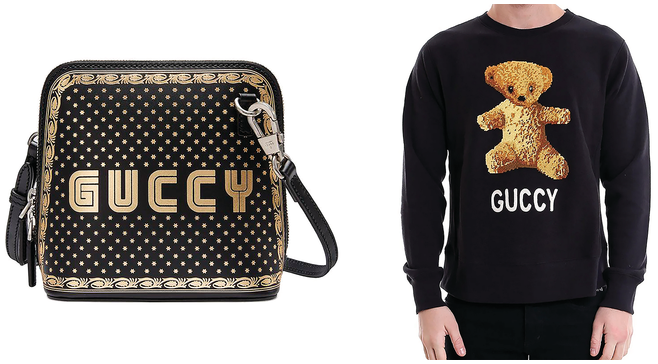
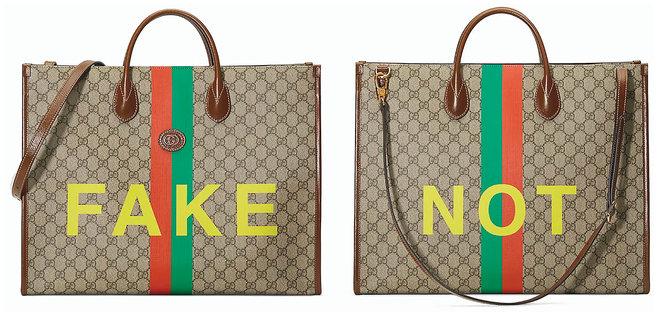
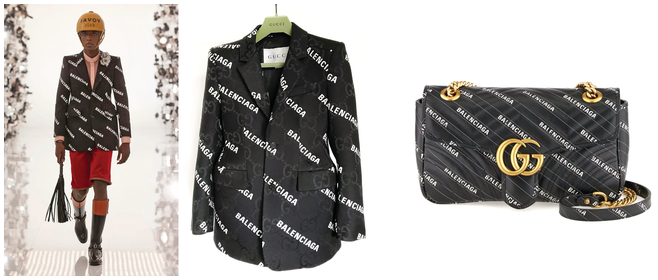
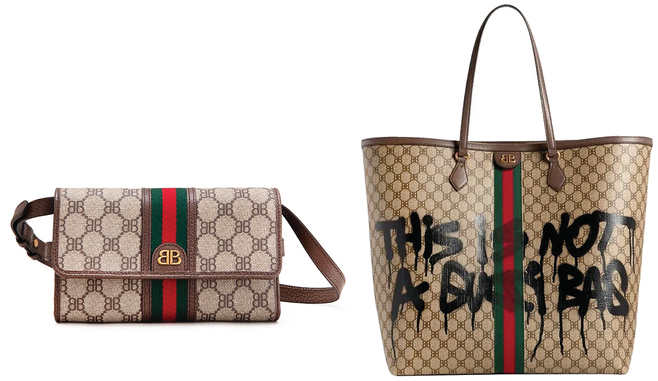

 Open access