


7.1 Introduction
This chapter asks whether the United Kingdom’s intellectual property regime is adequate to meet the needs of fashion designers. As such, it rests on two assumptions: first, that fashion designers ought to enjoy some IP protection over their creations and, second, that fashion designers benefit from having rights to enforce against third party interlopers. Neither of these assumptions is unproblematic. In relation to the first, it is notable that design protection is generally justified by reference to a standard market failure account.Footnote 1 However, if one engages with this justification seriously, one might query whether there is any meaningful danger of undersupply in the fashion industry that the law needs to guard against. This chimes with observations that fashion is characterised by a strong culture of design innovation that has not obviously been held back by widespread imitation and copying. Indeed, on at least one prominent account, the ‘low-IP equilibrium’ of the fashion industry may help spur innovation.Footnote 2 An alternative justification for IP protection might derive from appeals to distributive justice. For instance, those concerned about the under-protection of fashion often point to the position of emerging and lesser-known designers whose works are copied by larger, more powerful, industry players.Footnote 3 But this puts into focus the second assumption, in relation to enforcement: even if the content of the law was entirely fit-for-purpose, designers would gain little if they lack the resources or knowledge to seek legal redress. Indeed, attempts to strengthen rights may backfire if the practical effect of any new or ‘improved’ regime is to provide large industry players with even more capacity to pursue smaller players, while themselves continuing to copy with impunity.
If this chapter rests on questionable assumptions, why write it at all? Part of the answer is that there is an active debate about IP protection for fashion.Footnote 4 There is therefore value in doctrinal work that engages closely with the existing legal infrastructure so that we properly understand fashion’s ‘law in books’. Although some scholarship – in particular, that emanating from the United States – focuses on the lack of IP protection for fashion,Footnote 5 in the United Kingdom, there are a number of rights that are relevant to the sector. In fact, far from being an IP wasteland, the legally astute UK designer might wonder why there are so many overlapping and, by and large, cumulative regimes that might protect their creations:Footnote 6 the UK registered design system;Footnote 7 the (new, EU-derived) supplementary unregistered design right;Footnote 8 the (old, UK-created) sui generis unregistered design right;Footnote 9 copyright; and (although outside the scope of this chapter) registered trade marks and passing off. This preponderance of regimes is part of the second reason why this topic is worth exploring: that design law in the United Kingdom is in need of a wide-ranging review.Footnote 10 One way of feeding into this process is by asking how the current system might operate for one community of designers. As we note at various points, the sort of doctrinal analysis in this chapter might be helpfully supplemented by empirical work in relation to creative norms and enforcement practices in the fashion sector.
The thesis of this chapter is as follows. UK designs law is widely regarded as being highly unsatisfactory. It has been described as ‘multi-layered, complex and lacking in logic’.Footnote 11 The problems with the system have become more pronounced following the UK’s departure from the European Union. We start in Section 7.2 by summarising registered and unregistered design protection in the United Kingdom. We observe that prior to Brexit, it was often assumed that the EU’s unregistered design right offered the most appropriate form of protection for the fashion industry.Footnote 12 Protection is short, lasting a maximum of three years, but it was said that any downsides in relation to duration were of lower concern in a fast-moving sector and were offset by the benefits of avoiding the need for registration. However, there are a number of matters that may limit the relevance of the UK’s new supplementary unregistered design right (the SUD), all of which may cause designers to consider other IP options. First, a three-year term of protection may not be suitable for designs that are intended or turn out to have longer market presence. Second, infringement of the SUD requires proof of copying, in contrast with registered designs, for which liability is strict. Finally, the lack of reciprocity between the SUD and the equivalent EU regime, now known as the UEUD, means that UK designers who would previously have enjoyed unregistered design rights across the EU no longer do so, unless the rules on first disclosure are interpreted in a way that permits simultaneous publication.
There are a number of ways that the UK government could address the issues identified in relation to the SUD. However, there are political, legal and philosophical impediments to each of these options, raising the question of what UK fashion designers will do in the absence of any (meaningful) reform. One option is to pro-actively register their designs before novelty-destroying disclosures are made. However, another option – and the focus of Section 7.3 – is to rely more heavily on copyright as part of their protection strategy. The viability of this approach increased following case law from the Court of Justice of the European Union (CJEU), which suggests that the EU understanding of a ‘work’ is incredibly broad. We observe that UK judges have sought to interpret the CDPA in a way that respects this case law, while also recognising that the CJEU’s approach maps awkwardly onto (1) the closed list of subject matter in the CDPA and (2) the policy imperative, expressed in much existing UK case law, to limit the copyright protection of designs. Our concern is that if UK judges expand the ambit of an ‘original artistic work’ too far, it may not be possible to correct for the overshoot at other points in the copyright system. That is, if we agree that certain designs (especially functional ones) are not the sort of works that copyright ought to protect, the more principled and effective way to achieve that state of affairs is for such designs to be excluded by a subject matter limitation, not for courts to seek to manipulate other rules (for instance, in relation to infringement or exceptions) to bring protection within reasonable bounds.
7.2 Protected Designs in the United Kingdom
7.2.1 Overview of Legal Framework
As noted in the introduction, there are three regimes in the United Kingdom that relate specifically to designs: (1) a registered system, (2) the supplementary unregistered design right (SUD) and (3) the sui generis unregistered design right governed by the CDPA. In this sub-section, we provide a brief overview of each of these regimes.
The registered system is administered by the Designs Registry at the UK Intellectual Property Office (UKIPO).Footnote 13 The registration process is inexpensive and light-touch, in that there is no examination or opposition process but merely a review of the application. Thus, for the disgruntled competitor or designer who believes that a design ought never to have been registered,Footnote 14 the only course of action is to launch invalidity proceedings or (if they have been sued for infringement) file a counterclaim against the registered proprietor. A registered design receives an initial five-year term of protection, which can be renewed a further four times, resulting in a maximum term of 25 years.Footnote 15 During that time, the registered proprietor enjoys ‘the exclusive right to use the design and any design which does not produce on the informed user a different overall impression’.Footnote 16 This right applies not just to products mentioned in the application but to any product.Footnote 17
The authors of Intellectual Property Law suggest that ‘while registration has been popular in the electronics and furniture industries, the textile and fashion industries have tended to rely more on unregistered design right[s]’.Footnote 18 This could reflect a lack of knowledge of the existence, mechanics or benefits of the registered system or that those benefits are not perceived to outweigh the costs of applying for and maintaining registrations.Footnote 19 Importantly for this chapter, one of these benefits is that the protection conferred by a registered design is strict, in that proof of copying is not required in order to establish infringement.Footnote 20 Other commonly cited benefits to registration include the longer term of protection when compared with unregistered design rights (as noted above, up to 25 years) and the fact that registration confers priority over later designs.Footnote 21 That said, Brexit means that UK designers can no longer obtain a Registered European Union Design (REUD) that includes the United Kingdom. Designers who desire UK and Community protection must therefore register their design at both the UKIPO and the EU Intellectual Property Office (EUIPO). Such applications must be made within six months of one another to take the benefit of Paris Convention priority.Footnote 22
Second, there is the supplementary unregistered design right. The SUD was established in 2020 and is intended to ‘mirror’, in the post-Brexit landscape, what was known at the time as the unregistered Community design right (UCD).Footnote 23 To be protected, a ‘design’Footnote 24 must be ‘new’ and have ‘individual character’.Footnote 25 The SUD has a duration of three years from the date the design ‘was first made available to the public within’ the United Kingdom.Footnote 26 As will be seen, there is currently uncertainty in relation to this requirement.
The UCD – and by extension, the SUD – has been justified on the grounds that many designers will benefit more from a shorter and more limited unregistered right than a longer and fuller right that requires registration. Fashion designers have been identified as a group that will benefit in particular from an unregistered right, including because of the relatively short length of the seasonal fashion cycle and the presence of many individual designers and smaller fashion houses that lack the resources to maintain registered design portfolios.Footnote 27 However, a trade-off for those relying on the UCD (now UEUD) or SUD is that the right is qualified: to sustain an infringement action, the holder of the right must prove copying.Footnote 28 The right does not, therefore, apply to independent creation. Furthermore, in the absence of reciprocal arrangements with the EU, the SUD applies only within the United Kingdom. As mentioned in the introduction, this changes the state of play for UK designers who previously enjoyed an EU-wide unregistered right.
Finally, there is the UK’s sui generis unregistered design right. This right first appeared with the passage of the CDPA as part of efforts to provide greater intellectual coherence to the treatment of designs, such that subject matter was placed in its most appropriate IP ‘box’. The CDPA placed limits on the circumstances where a design could be protected by copyright on the basis that copyright often over-protected such subject matter.Footnote 29 It also created a new, short, unregistered right that included functional designs.Footnote 30 This sui generis right defines ‘design’ as ‘the design of … the shape or configuration … of the whole or part of an article’Footnote 31 and excludes ‘surface decoration’.Footnote 32 This limits the relevance of the sui generis right to fashion design – for instance, it will not apply to two-dimensional features such as patterns and colour combinations (these being neither shape nor configuration)Footnote 33 or ornamentation (if this is excluded as surface decoration).Footnote 34 That said, it would be an overstatement to suggest it is irrelevant to fashion.Footnote 35 Like the SUD, infringement of the sui generis right requires proof of copying.
7.2.2 Appropriateness of the UK Regime for Fashion Designers
A question for anyone considering design protection is whether to register their design, bearing in mind that registration does not preclude concurrent reliance on unregistered rights.Footnote 36 As mentioned in the introduction, prior to Brexit, it was often assumed that the EU’s unregistered design right (then known as the UCD) offered the most appropriate form of protection for the fashion industry. Protection is short, lasting a maximum of three years, but any downsides in relation to duration were thought to be of relatively little concern in a fast-moving sector and were offset by the benefits of avoiding the financial and other costs of registration.
However, it is worth pausing to reflect on the operation of the (now) UEUD and its post-Brexit ‘mirror’ right, the SUD. This analysis discusses three features that might limit the relevance of these rights to fashion designers, these being features that also differentiate the UEUD and SUD from the registered system:Footnote 37 first, their duration; second, the need to prove copying in order to establish infringement; and third, the rules for creation and the resulting post-Brexit challenges for designers who wish UK and EU protection.
Starting with duration, there is the question of whether a three-year term is too short. As mentioned above, a shorter right is said to be appropriate for fashion due to the rapid turnover of designs and collections, which suggests that consumer demand in fashion markets tends to be time-bound – bearing in mind there are exceptions, as exemplified by certain collectable luxury brand items such as the Hermès Birkin and Chanel 2.55 handbags. It is also uncontroversial that, within the fast fashion sector, there are copyists who can turn around knock-off versions within weeks of the public exposure of the original item on the fashion runways in Paris or Milan or on social media feeds. The business model of many such merchants is to satisfy the immediate public demand for a garment just like the one [X] wore or [Y] designed.Footnote 38 Thus, there is good evidence that commercial-level copying can coincide with the market for source designs and certainly occur well within the three-year term of the unregistered right.
However, when thinking about duration, the question is not just when copying occurs – after all, the fashion cycle is also characterised by the old coming back (often to the horror of those who survived acid wash jeans or ultra low-slung trousers to begin with).Footnote 39 Rather the question is the length of time for which the designer should enjoy exclusivity in their design. There are a number of matters that might inform this, including the typical commercial life of the products in question, but also the desirability of copying in order to satisfy consumer demand and support design innovation. Of course, it might be asked whether smaller and lesser-known designers – apparently key beneficiaries of an automatic right – have similar experiences to those described above. For instance, one can imagine that unlike established luxury fashion houses with celebrity designers who want to set a new trend with every runway show, emerging designers might wish to maintain consistency in their range so as to develop a clear voice or point of view as a designer. However, taken in the round, the three-year term suggests that for the UEUD and SUD, it has been decided that problematic copying – that is, that for which a legal response is appropriate – is that which occurs relatively quickly. For designers who want longer rights, there is the registered system. We can see the logic in this, although as discussed in Section 7.3, there is a fear that, on current trends, UK designers may in fact be channelled towards the turbo-charged protection offered by copyright.
Second, for both the UEUD and SUD, it is necessary to prove copying in order to establish infringement.Footnote 40 The significance of this is illustrated by Rothy’s v Giesswein Walkwaren,Footnote 41 in which the UCD claim failed because copying could not be established. In legal circles, this case has been said to illustrate not only the benefits of registrationFootnote 42 but that ‘rights holders who rely mainly on unregistered rights [should] think twice about their protection strategy’.Footnote 43
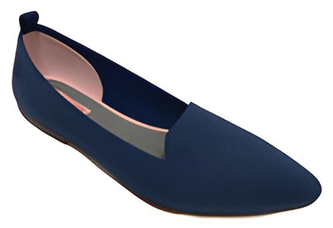
Rothy’s concerned shoe designs. The claimant was a Californian company that had registered a Community design for its ‘Pointed Loafer’ shoe. The Pointed Loafer was a ballerina shoe with a pointed toe and a protruding loafer-style tongue. Its upper components were made with a knitted yarn derived from recycled plastic. The claimant alleged that the defendant had infringed its registered Community design (RCD) and its UCD through the latter’s ‘Pointy Flat’ shoe.Footnote 44 In addition to similarities in the shapes of the shoes, the upper parts of the defendant’s shoe were made from a knitted meshwork fabric produced from recycled plastic. For images of each shoe, see Figure 7.1.
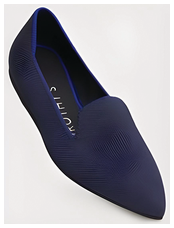
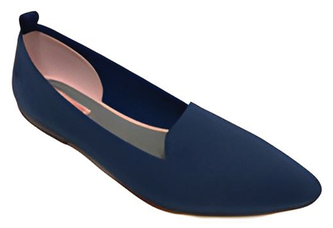
Figure 7.1 (left) The claimant’s Pointed Loafer and (right) the defendant’s Pointy Flat.
Rothy’s is important for a number of reasons. A key aspect of the claimant’s case was that the protected design included the knitted material on the upper surface of the shoe. To establish this for the RCD, it was necessary to show that the fabric was apparent in the images included in the registrationFootnote 45 (it being impermissible to look to the Pointed Loafer itself to determine what the registration means).Footnote 46 Here, HHJ Stone (sitting as a Deputy High Court Judge) was willing to zoom in on the images of the RCD in finding that the designer claimed a knitted fabric rather than a shape or textured appearance more generally.Footnote 47 Another significant aspect of the case was that HHJ Stone had little difficulty in rejecting the attack on the validity of the RCD or in finding that the RCD had been infringed. The knitted upper stood out to the ‘informed user’ (a strange individual even when judged against English law’s other fictional legal characters). It conferred both the necessary ‘individual character’ for validity and ensured that the defendant’s shoe produced the same ‘overall impression’.Footnote 48
For present purposes, however, the key thing to note is that although the registered design case succeeded, the claimant was unable to make out a case for infringement of its UCD because it could not demonstrate that the defendant had copied its Pointed Loafer. It was clear from documents disclosed by the defendant that its designers had used shoes of the claimant as inspiration for its Pointy Flat. However, amongst all those materials, there was no reference to the Pointed Loafer – and two of the designers gave evidence that they had never seen that design. The similarity in the material of the upper was explained as being the result of one of the designers viewing an article that described the claimant’s use of recycled plastic material in its shoes.
It would be going too far to claim that this case illustrates that, for the UCD (and, by implication, the UEUD and SUD), it is more difficult to prove copying or derivation than in copyright. As a general matter, the CJEU has clarified that Member States are entitled to apply national rules relating to the reversal of the burden of proof such that copying can be inferred from objective similarity alone in appropriate circumstances.Footnote 49 In essence, the defendant in Rothy’s was able to present a plausible narrative that the Pointy Flat was ‘an independent work of creation’ vis-à-vis the Pointed Loafer. The plausibility of the defendant’s account – that is, that no one had seen the Pointed Loafer – was strengthened by the fact that the Pointed Loafer was a limited-edition product that was on the claimant’s website for a short period of time.
There are, moreover, copyright cases in a similar vein. Most famously, in Mitchell v BBC,Footnote 50 the BBC was able to defend a copyright infringement action in relation to the animated characters in a children’s television programme. The claimant had pitched a show to the BBC. Subsequently, the BBC broadcast a programme featuring characters that displayed some striking similarities with the claimant’s drawings. However, the BBC prevailed as it was able to provide a convincing explanation to account for these similarities (including that characters aimed at young children tend to have certain common – and, given the idea/expression dichotomy, unprotectable – features).Footnote 51 Also important to the outcome in that case, much like in Rothy’s, was that the claimant was not able to make out a convincing case of access by the BBC animators, despite his pitch.
The point is therefore not that there is a different legal or evidential standard to be applied between copyright and designs cases but more that some combination of functional constraints, design norms and the possibility of inspiration from a common third party source in a sector where referencing and imitation are the norm mean that the requirement to prove copying acts as a much more formidable hurdle in designs law than in does in the typical copyright action.Footnote 52 As HHJ Stone observed in a designs case involving an allegation of copying of dress designs, ‘absent striking closeness between the designs in relation to features that were not well known’, a tribunal may not be willing to draw an inference of copying from other factors (such as the defendant’s ‘design process’).Footnote 53
Rothy’s therefore helps highlight the significance of the requirement for copying and raises questions about the inferences that can be drawn in the absence of unambiguous evidence of access. Lawyers responded to Rothy’s by emphasising the desirability of designers registering their designs. We might, however, ask whether the rules on infringement undermine the stated aims of the UEUD and SUD. To put it another way, if there is consensus that a short but strong unregistered design right is best for fashion designers such that we don’t want them to have to bother with registration, should the UEUD and SUD be strengthened by removing the requirement that infringement requires copying?
This would, of course, involve abandoning the view that ‘absolute’ or ‘true’ monopolies are only justified for registered forms of IP. This view is often said to rest on the proposition that liability for independent creation can be justified because the act of registration provides public notice of the existence of a right. Whether this proposition withstands close scrutiny is open to question. For instance, it ignores the fact that registered rights can often be difficult to locate, sometimes deliberately so. Moreover, it is an idea that already has no application in the trademark sphere, where liability for passing off is not conditional on proof of copying or derivation.
However, even if agreement could be reached regarding the intellectual case for removing the copying requirement in the United Kingdom, it would be necessary to contend with post-Brexit arrangements. In particular, the ability of the United Kingdom to amend the SUD is constrained by Article 247(1) of the Trade and Cooperation Agreement between the EU and UK, which provides:
Each Party shall confer on holders of an unregistered design the right to prevent the use of the unregistered design by any third party not having the holder’s consent only if the contested use results from copying the unregistered design in their respective territory.Footnote 54
Given the Brexit goal of ‘taking back control’,Footnote 55 it might have been thought that the UK government would maximise its freedom to strike out in a different direction with its domestic laws, especially vis-à-vis the EU. However, when the Trade and Cooperation Agreement (which has relatively few provisions in relation to IP) is read alongside other new trade agreements (such as the Free Trade Agreement with Ukraine),Footnote 56 we see a pattern of the United Kingdom limiting – at times significantly – its legislative freedom in the IP space. In relation to unregistered designs, while it is still open for the United Kingdom to extend the duration of the SUD,Footnote 57 changing the rules around infringement is off the table.Footnote 58
One explanation for the loss of regulatory freedom in Article 247 might have been to pave the way for reciprocal recognition of unregistered design rights. However, no such reciprocity has been established. And herein lies the issue for the UK designer who wishes to rely on unregistered rights in the UK and EU. Under Art 11(1) of the EUDR, the unregistered right comes into existence on the date the design ‘was first made available to the public within the Union’. However, the EUDR has not provided a clear resolution to the question of whether disclosures in other territories can nevertheless satisfy this requirement.Footnote 59 The position in the United Kingdom is likewise unclear: although guidance issued by the UKIPO states that a SUD ‘is established by first disclosure in the UK’,Footnote 60 the United Kingdom did not retain all the relevant provisions of the CDR on this matter.Footnote 61 Thus, it is open to question whether disclosure in the United Kingdom can establish the UEUD, and likewise whether disclosure in the EU (and indeed elsewhere) might establish the SUD.Footnote 62 Against this backdrop, well-advised parties are exploring ways to publish simultaneously in both jurisdictions. The success of such efforts is difficult to predict. Simultaneous here means truly simultaneous – there is no equivalent to the 30-day rule under the Berne Convention.Footnote 63 The obvious step of placing a design on a website accessible in both jurisdictions may not result in simultaneous publication, given the emphasis that has been placed on the need for websites to ‘target’ a jurisdiction in order for there to be a relevant connection.Footnote 64 In any event, for smaller market actors – said to be important recipients of automatic rights – it is almost inevitable that they will at times inadvertently lose their ability to access the unregistered design right system.
One practical response to all three issues is for designers to register their designs: this will give them protection for up to 25 years, means they do not have to prove copying to establish infringement and allows them to rely on the six-month priority period to register their designs in the UK and the EU. But as already mentioned, one of the main rationales for an unregistered right is that the knowledge and resources required for registration are outside the reach of large swathes of the fashion industry.
In sum, although the UK designs system is in need of reform, there are a number of matters that stand in the way of revising the SUD. In addition to the usual issues for law reform – limits in legislative bandwidth, challenges in reaching consensus amongst diverse stakeholders, etc – there is the fact that the United Kingdom is operating within a network of trade agreements in which it has agreed to certain standards for IP protections, including agreements that preserve numerous standards from EU law. For those who believe that fashion is under-protected by the SUD, one response might therefore be to bolster calls for fashion designers to rely on the registered system. However, another response might be to encourage designers to seek redress by reference to another unregistered right: copyright. We believe that this is far from obviously desirable, as reliance on copyright risks massively over-correcting for problems associated with the SUD and UEUD. We explore this in Section 7.3.
7.3 Copyright
In this section, we discuss our concerns about copyright playing a more prominent role in designs protection in the United Kingdom. We start with a brief examination of why copyright might be attractive to designers and why, in our view, copyright is an inappropriate IP ‘box’ for many designs. This includes discussion of case law from the CJEU that seems to have taken a very expansive approach to the definition of an original ‘work’ in European copyright law, such that many designs will have dual protection in copyright and designs law. We then discuss the reception of that case law in the United Kingdom and argue that UK judges should be slow to follow the approach of the CJEU, including due to the difficulties in sufficiently reining in rights, for instance, via infringement or exceptions, once subject matter has been expanded.
We start with the reasons why UK designers might be attracted to copyright, which are straightforward and can be dealt with relatively swiftly. In short, reliance on copyright not only avoids issues in relation to the SUD but also the registered design right. Copyright protection is automatic and, given the principle of national treatment that underpins the international copyright system, makes the time and place of creation (or first public exposure) less significant. To the extent that there are concerns about the short duration of the SUD, such concerns clearly do not apply to copyright, as the default rule for artistic works is that copyright subsists for the life of the author plus 70 years.Footnote 65 This is also far longer than the maximum term of the registered right. Finally, although infringement of copyright requires that the defendant copied the claimant’s work, UK judges are willing to draw inferences about this based on the level of objective similarity between and the character of the two works and the defendant’s familiarity with the claimant’s work.Footnote 66
Our concern with recourse to copyright is that copyright provides an unduly long and inappropriate form of protection over designs in a range of fields, including fashion. For avoidance of doubt, we are not saying that fashion should be excluded from copyright protection. We can imagine haute couture and avant garde creation in which the craftmanship and visual appeal are such that copyright protection is appropriate (or at least defensible). We can also imagine instances in which individual features might justifiably be protected by copyright, for instance, where the image on a T-shirt is an original drawing.Footnote 67 However, we have concerns about clothing and footwear being protected by copyright, for reasons of doctrine and policy including that (1) the creative choices in fashion design are limited by the nature of the item and the function it serves; (2) clothing and footwear are basic human needs, which only reinforces the need for restraint in the exclusive rights thrown around such creations; (3) to the extent clothing goes beyond basic needs and is a vehicle for personal expression (of the designer, wearer, or both), imitation is baked-in to an industry known for being cyclical, referential and trend-driven; and (4) the designs of younger designers may enjoy a copyright term that is 5 times as long as the maximum protection of a registered design and over 40 times as long as the unregistered design right.
Some of these concerns can be illustrated by reference to the ballerina shoe, the subject of the Rothy’s case, discussed in Section 7.2. Expert evidence was given in relation to the ‘basic anatomy’ of ballerina shoes, their design heritage, their ‘important characteristics’ (e.g., toe shape, heel height, outsole profile, vamp and trim) and the types of materials they comprise (e.g., leather, suede and canvas).Footnote 68 On the one hand, one can see the potential for creative decision-making in relation to each element. On the other hand, the product has to function as a shoe. Although the designer has choices, many relate to how the characteristics of the shoe manifest, not whether those characteristics are present to begin with. Furthermore, when thinking about each such manifestation, the designer may have to work within fairly limited parameters. For instance, the toe shape of a ballerina shoe can, according to the expert evidence in Rothy’s, be pointed, square, round or almond shaped.Footnote 69 It may be that there are infinite, minute gradations between and within these options – for instance, a pointed toe can be sharper or more rounded.Footnote 70 But ultimately, designers are using their creativity to make choices that are bounded to greater and lesser degrees by practical and technical considerations.
In Rothy’s, the elements of the claimant’s Pointed Loafer admitted by the defendant to be different from the relevant design corpus were the heel height, the material of the upper and the presence of a counterline.Footnote 71 These were held by HHJ Stone to be enough for the shoe to have a different overall impression to the informed user, meaning that the RCD (and, under the same reasoning, UCD) was valid. What might have happened if the claimant argued that the Pointed Loafer was an original work? To explore this in the European context, we consider two design-oriented judgments from the CJEU: Cofemel v G-Star RawFootnote 72 and Brompton Bicycle.Footnote 73 Those cases concerned the definition of a work under the Information Society Directive (ISD). To understand the significance of those cases, it is useful to understand the legal backdrop when they were handed down.
Prior to Cofemel, there had been a long line of CJEU case law stating that, to be protected, a work must be original in terms of being its ‘author’s own intellectual creation’.Footnote 74 In applying this standard, relevant questions included whether the author was able to make ‘free and creative choices’Footnote 75 or had, through their choices, put their ‘personal touch’ on the work.Footnote 76 In Levola Hengelo,Footnote 77 handed down ten months prior to Cofemel, it was held that ‘two cumulative conditions must be satisfied for subject matter to be classified as a “work”’:Footnote 78 first, that it passes the European originality standard and, second, that it is ‘the expression of the author’s own intellectual creation’,Footnote 79 being an expression that is ‘identifiable with sufficient precision and objectivity.’Footnote 80 Applying this test, it was held that the taste of a food product – in that case, a spreadable cheese dip – was not a work as it ‘cannot … be pinned down with precision and objectivity’.Footnote 81
Levola Hengelo generated numerous questions about the European approach to the meaning of ‘work’.Footnote 82 On the one hand, the CJEU recognised that, as a party to the WCT, the European Community must comply with Articles 1 to 21 of Berne.Footnote 83 It referred to the definition of ‘literary and artistic works’ in BerneFootnote 84 and statements in the WCT and TRIPS that copyright may be granted to expression but not to ideas.Footnote 85 However, in considering the significance of the international copyright framework, the CJEU focused on the need for the claimed expression to be objectivity identifiable, not the nature of the expression to begin with. That is, the problem with the taste of food was not that it was outside the subject matter in Article 2 but that it was not sufficiently certain: people experience taste very subjectively, and there is currently no technology by which a machine can make that assessment objectively.Footnote 86
Our concern with this approach is that, if taken seriously, it suggests the only thing standing in the way of tastes being ‘works’ is the lack of technology to objectively measure them – that there was no separate reason, coming from doctrine or policy, for them to be excluded from copyright protection. In his Opinion in Levola Hengelo, AG Wathelet discussed three additional reasons why tastes of foodstuffs are not works: (1) all the illustrative subject matter in Berne Article 2 are works that are perceived visually or aurally;Footnote 87 (2) no multilateral treaties have been made or revised to confer copyright protection on tastes (as has occurred for other contentious subject matter, such as computer programs);Footnote 88 and (3) the recipe as such of a foodstuff is not protectable, being an idea.Footnote 89 However, the Grand Chamber focused mainly on another proposition discussed by AG Wathelet: (4) that the expression needs to be sufficiently precise.Footnote 90 It also seemed to depart from AG Wathelet’s observation that originality should be considered in addition to whether the subject matter is a work, that is, that they are distinct concepts and should not be conflated.Footnote 91
This brings us to Cofemel, where the relevant legal uncertainty related to whether Member States could include additional requirements for subject matter to be a protected ‘work’ or otherwise have their own gloss on that question. G-Star had instituted proceedings in Portugal alleging that, inter alia, Cofemel had infringed its copyright in its ARC design for jeans and ROWDY design for sweatshirts and T-shirts. The Portuguese copyright statute only protected works of applied art and design ‘which constitute an artistic creation’.Footnote 92 The Supreme Court of Portugal referred to the CJEU two questions in relation to the permitted content of local subsistence rules: was it compatible with the ISD for a Member State to protect designs that ‘create their own visual and distinctive effect from an aesthetic point of view’ or to require that designs be ‘artistic creation[s]’ or ‘work[s] of art’.
The CJEU repeated the two-limb definition of work set out in Levola Hengelo.Footnote 93 In doing so, it observed that there will be no originality where ‘the realisation of a subject matter has been dictated by technical considerations, rules or other constraints, which have left no room for creative freedom’.Footnote 94 We pause here to note that if this is intended as exhaustive of the situations in which technical imperatives oust originality, and is read literally, it would seem to operate in very narrow circumstances. To return to the ballerina shoe in Rothy’s, it would be going too far to suggest that matters such as the shape of the toe or the height of the heel are dictated solely by technical considerations: there may be a range of choices that all result in functional shoes, and aesthetic matters might help mediate the choice between them. The CJEU also observed that if the two limbs in Levola Hengelo are met, the work ‘must, as such, qualify for copyright protection’.Footnote 95 This suggests that additional requirements are not permitted, for instance, that a work be an ‘artistic creation’. Finally, the case suggests that Member States should take care in adding their own gloss by rewriting or reimagining European requirements. In the latter stages of the judgment, the CJEU observed that the Berne-compatible approach in Europe was that copyright and designs give separate and cumulative protection, albeit that concurrent protection ‘can be envisaged only in certain situations’.Footnote 96 However, it said that copyright protection may not be linked to the ‘aesthetic effects’ produced by a design as (1) such effects produce intrinsically subjective internal experiences and (2) just because a design generates an aesthetic effect does not mean that it constitutes its author’s own intellectual creation.Footnote 97
Taken to its logical conclusion, the approach in Cofemel suggests that any requirement that a work be ‘artistic’ is straight-out incompatible with European copyright law, unless a convincing way can be found to distinguish artistic nature from an aesthetic effect. Furthermore, the CJEU’s two-limb approach suggests that, under European copyright law, a work is an objectively certain expression that is the result of an intellectual process in which free and creative choices are made. In such a world, it is not obvious that the design of a Pointed Loafer is outside the scope of copyright protection as being the wrong sort of expression. Furthermore, the CJEU stated that the degree of protection afforded a work ‘does not depend on the degree of creative freedom exercised by its author’ – that is, works involving fewer creative choices do not get ‘inferior’ protection.Footnote 98
As noted above, originality may provide some handbrake to the protection of functional and utilitarian items. However, this will depend on the circumstances in which courts find that technical considerations oust creative choices. This was considered by the CJEU in the Brompton Bicycle case. Brompton bicycles are marketed by an English company and contain a mechanism that allows them to exist in three different positions: folded, unfolded and on stand-by. Because of their compact size, they are attractive for those who need to take their bicycles onto England’s excellent public transport system as part of their commute. The question was whether Brompton could bring an action in copyright against a competitor who produced its own folding bike that resembled Brompton bicycles. The CJEU clarified that a work may be original despite its realisation being ‘dictated by technical considerations’, so long as these considerations have not ‘prevented the author from reflecting his personality in that subject matter, as an expression of free and creative choices’.Footnote 99 It stated that the existence of other shapes that achieve the same technical result is not decisive.Footnote 100 The CJEU left it to the national court to apply this guidance to the facts. The clear lesson is that copyright can protect functional shapes.
The approach in Cofemel and Brompton Bicycle conflicts with UK law in a number of ways. First, it sits awkwardly – although not necessarily irreconcilably – with the UK’s closed list of protected subject matter.Footnote 101 We say ‘not necessarily’ because a closed list might nevertheless permit expansive definitions that end up including all the subject matter that meets the CJEU two-limb test. However, when we look at the drafting of the UK closed list and interpretations developed by judges, we struggle to see a principled and intellectually compelling way that the UK approach can be completely aligned with that in Europe without the CDPA being amended.
In the CDPA, artistic work is defined exhaustively – it means ‘(a) a graphic work, photograph, sculpture or collage, irrespective of artistic quality, (b) a work of architecture being a building or a model for a building, or (c) a work of artistic craftsmanship’.Footnote 102 A conflict can immediately be seen between the European approach and the category works of artistic craftsmanship, unless the word ‘artistic’ – which in the UK has traditionally required some visual or aesthetic appealFootnote 103 – is interpreted to refer to the nature of the work, for instance, that the relevant expression has a visual rather than a semiotic function. A further conflict arises when one considers interpretations in the case law. As mentioned earlier, the UK struggled for many decades with the boundary between copyright and designs. One cause was case law in which plaintiffs were able to successfully claim copyright in utilitarian objects such as the moulds for the heating plates of a sandwich toaster.Footnote 104 These cases seemed to take very seriously the qualification that things like sculptures and engravings are protected ‘irrespective of artistic quality’, such that the focus was almost exclusively on the method of creation.
There was pushback against this trend, including because it was allowing the development of a definition of ‘sculpture’ that was entirely divorced from the ordinary meaning of the term and causing a significant expansion in the subject matter protected by copyright.Footnote 105 Judges therefore sought to read some limiting principles into words like ‘sculpture’, for instance, by agreeing that a sculpture is not any work made through sculpting but one that is ‘made by an artist’s hand’.Footnote 106 The meaning of sculpture was considered by the UK Supreme Court in 2011 in Lucasfilm v Ainsworth, which concerned the copyright status of Stormtrooper helmets and other artefacts made for the Star Wars movies.Footnote 107 A key principle affirmed by the Supreme Court was that while judges should not assess artistic quality (this being precluded by the text of the CDPA), it was entirely acceptable to consider artistic purpose.Footnote 108 The Supreme Court therefore endorsed the legal analysis of the trial judge, Mann J, who developed a list of factors relevant to the meaning of sculpture, the key elements of which were that (1) the ordinary usage of sculpture is relevant but not determinative, (2) artistic worth is not relevant and (3) the essence of a sculpture is that it is intended to have visual appeal (although it may also have other purposes).Footnote 109 The Supreme Court observed that this definition was supported as a matter of policy:
It is possible to recognise an emerging legislative purpose (though the process has been slow and laborious) of protecting three-dimensional objects in a graduated way …. Different periods of protection are accorded to different classes of work. Artistic works of art (sculpture and works of artistic craftsmanship) have the fullest protection …. Although the periods of protection accorded to the less privileged types have been progressively extended, copyright protection has always been much more generous. There are good policy reasons for the differences in the periods of protection, and the Court should not, in our view, encourage the boundaries of full copyright protection to creep outwards.Footnote 110
The Court stated that it would ‘not accord with the normal use of language’ to describe a helmet used in the making of a film as a ‘sculpture’ and that the Stormtrooper helmet ‘was utilitarian in the sense that it was an element in the process of production of the film’.Footnote 111 As such, the Court was not prepared to disturb the conclusions of the trial judge that the artefacts were not sculptures, as that term is used in the CDPA.Footnote 112
UK courts have now begun to explore the question of how the two-limb test in Cofemel maps onto the closed-list approach in the CDPA and the meaning of categories such as sculpture and works of artistic craftsmanship. For instance, in Response Clothing v Edinburgh Woollen Mill, which was handed down during the Brexit transition period, it was held that a wave fabric pattern constituted a work of artistic craftsmanship irrespective of whether the relevant test was the British one or the European test in Cofemel.Footnote 113 HHJ Hacon did not, therefore, need to determine what would happen if the fabric was a work under Cofemel but not a work of artistic craftsmanship as traditionally understood in the United Kingdom. That said, he expressed the view that the task of the British judge is not to determine whether the ISD has removed all gaps in protection; rather, the judge must ask whether it is possible to interpret the CDPA in conformity with the ISD. This would seem to reflect the view that there are limits to the Marleasing principle, under which national courts must seek to interpret national law in conformity with EU directives.Footnote 114 If it is simply not possible to interpret a local statute in accordance with EU law (bearing in mind the looser rules for statutory construction that govern that process), it is for the legislature to fix the situation.Footnote 115 Thinking about this in the context of copyright subsistence, it is one thing for UK judges to define the protected categories of work as broadly as possible but another for them to abandon the closed list entirely or push the boundaries of the statutory language in such a dramatic way that it amounts to much the same thing.
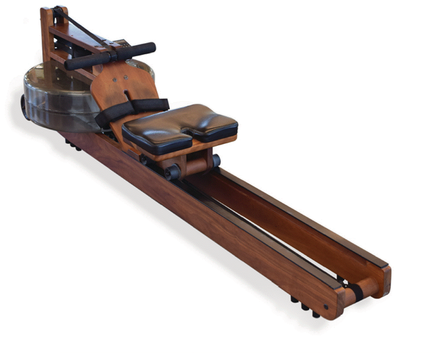
The position has now been further clarified by the decision in WaterRower v Liking,Footnote 116 which also considered the meaning of work of artistic craftsmanship. It was held that a series of water resistance rowing machines (an example of which appears in Figure 7.2) were not protected as original artistic works under the CDPA, meaning that the claimant’s action for copyright infringement failed. However, in the course of the reasoning, HHJ Forsyth concluded that each of the WaterRower iterations was a work under the European test.
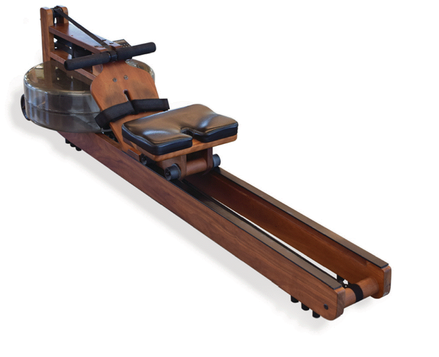
Figure 7.2 A WaterRower machine.
This meant that unlike Response Clothing, it was necessary for HHJ Forsyth to reach a view on the potential conflict between European and UK copyright law. On the European approach – which remained relevant as cases such as Cofemel and Brompton Bicycle form part of assimilated CJEU case law – HHJ Forsyth was not prepared to find that the technical constraints inherent in the device (for instance, that it needs runners, a seat with padding, footrests, and so forth) left no room for creative freedom, applying statements from Brompton.Footnote 117 In contrast, on the UK approach, he indicated that the device failed to qualify as a work of artistic craftsmanship within the meaning of s.4(1)(c) of the CDPA. HHJ Forsyth considered indications from a number of authorities, including Hensher and Response Clothing, in reaching this conclusion. The problem for the claimant was that even though Mr Duke, the creator of the WaterRower, had constructed the prototype with the requisite craftsmanship and with care and consideration as to its appearance, it would be going too far to suggest he was ever acting an artist-craftsman. To qualify as a work of artistic craftsmanship, the work has to have an ‘an artistic justification’ and not merely a commercial rationale.Footnote 118 With the prototopye held not to be protected, the modified WaterRowers fared no better as none of the changes were driven by any artistic rationale.
At first sight, the decision in WaterRower might seem to lessen the danger of copyright coming to play a major role in protecting fashion design. It now seems clear that, despite CJEU case law to the contrary, it will still be necessary for the work to be of an artist’s hand or have some artistic quality or appeal.
On further reflection, however, the position may not be as clear cut. One question, on which we shall not dwell, is whether a higher court might take a different approach to HHJ Forsyth in how to deal with case law such as Cofemel, being one which does much more to read away the language of the CDPA’s closed list. HHJ Forsyth attempted to find a way forward that both recognised the case law from the CJEU and paid respect to the UK drafting environment. If the goal was to achieve genuine reconciliation, his solution clearly fell short. However, we see merit in his choice to respect the words of the UK statute and to present a decision-making framework that centres the EU test.
However, even if future judges are likewise disinclined to ignore the language and interpretations of the CDPA, the decisions in Response Clothing and WaterRower are consistent with other cases that have applied a relatively lax definition of works of artistic craftsmanship. For instance, in Bonz Group, Tipping J held that handmade woollen sweaters and cardigans were works of artistic craftsmanship.Footnote 119 Mrs Rodwell, the principal designer of the garments, was said to have ‘brought sufficient artistry to the task’, such that the designs have ‘more than sufficient aesthetic appeal’ and Mrs Rodwell could ‘fairly be described as an artist’.Footnote 120 In the Australian case, Coogi Australia v Hysport International,Footnote 121 it was held that brightly-coloured knitted fabric was also a work of artistic craftsmanship. The outcomes in these cases can be contrasted with that in Equisafety and Woof Wear,Footnote 122 in which it was held that high-visibility equestrian products, including a waistcoat, were not protected works of artistic craftsmanship. Focusing on the waistcoast, although the designer had choices in where to apply new elements to an existing waistcoat design, those elements did not ‘reflect the author’s personality as required [by Cofemel].’Footnote 123 This meant that the new features did not themselves comprise a work in the EU sense, and it was further held that they were not protected under the ‘older’ UK law either, as they were not the product of a craftsman.Footnote 124 Given the particular facts of this case, and the brevity of the reasoning, it would be unwise to suggest it has moved the dial on the copyright status of clothing in general.Footnote 125
The upshot of the foregoing analysis is that anyone who can demonstrate that aesthetic considerations were a significant consideration throughout the creative process will be in a relatively strong position to claim copyright in their creations. In the context of fashion, the fact that a garment has some functional elements will not preclude it being protected, although the simpler the design and/or the more it is dictated by function, the less likely this will be the outcome. In that regard, we agree with the result in Equisafety, and indeed believe that judges should take great care before concluding that everyday items of clothing are protected by copyright.
Of course, even if a designer can establish copyright subsistence, this is not the end of the matter in relation to enforcement, as the claimant still needs to establish infringement and the defendant may point to an exception. However, we have concerns about relying on infringement and exceptions to deal with the inevitable overshoots in protection that will arise from a broad, European-inspired approach. One set of concerns relate to the suitability of infringement principles for functional works. For instance, in a world of ubiquitous online availability, there may be plenty of evidence to suggest access, meaning that much will turn on similarity and substantial part. We wonder whether differences that may be highly significant as a technical matter might result in works that remain highly similar as a visual matter. Another set of concerns relate to whether the current suite of exceptions will provide adequate breathing space for design innovation. For instance, the CJEU’s approach to the quotation exception suggests that it may be inapplicable in most designs cases, as the Court has defined quotation to relate to uses to illustrate a point or enter into a dialogue with the source work.Footnote 126 This sort of intellectual engagement is likely to be lacking in most fashion design.
Finally, the more fundamental point is that if we agree that certain designs (especially functional ones) are not the sort of works that copyright ought to protect, the more principled and effective way to achieve that state of affairs is for such designs to be excluded by a subject matter limitation, not for courts to seek to manipulate other rules to bring protection within reasonable bounds. If we were to suggest any reform to the CDPA, it would be to re-instate the schema that was set up in 1988, for instance, by reviewing the decision to repeal section 52.
7.4 Conclusion
We wish to conclude our chapter with some brief remarks on post-Brexit lawmaking in the United Kingdom. The analysis presented in this chapter is far from uplifting. Designs law in the United Kingdom is in need of reform and fashion designers are one community that might benefit from a root-and-branch review of the current legislative framework (at least if one accepts the two premises set out in the introduction). However, as with much IP policymaking, we fear that positive reform is a distant prospect. The process of withdrawing from the EU saw the UK agree to limit its policy freedom, such that radical reform is no longer on the cards – but at the same time, Brexit has produced genuine friction and difficulties for creative communities. There is scope for good faith disagreement about the relative importance of policy freedom versus frictionless trade, but in the IP field at least, this trade-off has proven to be largely illusory. The terms on which the UK left the EU are such that the space for meaningful reform is limited, but the costs of the exclusion from EU-wide arrangements are real.
The irony is that in the design field, the costs of divergence are likely to provide a further reason for pushing designers towards reliance on copyright. This creates a conundrum for judges, who will have to decide whether to diverge from CJEU case law on copyright subsistence. Considered in isolation, divergence might seem an attractive option as the CJEU has taken EU copyright law in a strange and difficult to justify direction. At the same time, it is hard to imagine that a judge would not be conscious of the fact that the UK’s relationship with the EU remains far from settled and that divergence now would be undesirable as long as closer trade relations remains a real possibility.

 Open access