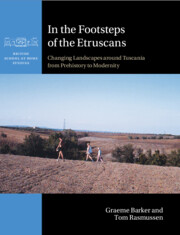

In the Footsteps of the Etruscans describes the archaeology of the countryside within a ten km radius of the small town of Tuscania near Rome, throwing light on the unrecorded lives of the generations of farmers and shepherds who have lived there. What was the character of prehistoric settlement prior to Etruscan urbanization? How did urbanization shape the lives of the 'ordinary Etruscans' working the land, hardly ever addressed in Etruscan archaeology? What was the impact on these people of being absorbed into the expanding Roman empire and its globalised economic structures? How did the empire's collapse and the subsequent emergence of the nucleated medieval village affect Tuscania's rural population? The project's 7500-year 'archaeological history', from the first farmers to those grappling with globalisation today, contributes eloquently to our understanding of how Mediterranean peoples have constantly shaped their landscape, and been shaped by it.
‘[A] true benchmark in terms of methodological rigor and intellectual honesty.’
Elena Pontelli Source: Bryn Mawr Classical Review
Loading metrics...
* Views captured on Cambridge Core between #date#. This data will be updated every 24 hours.
Usage data cannot currently be displayed.
This section outlines the accessibility features of this content - including support for screen readers, full keyboard navigation and high-contrast display options. This may not be relevant for you.
Accessibility compliance for the PDF of this book is currently unknown and may be updated in the future.