
Skip to main content Accessibility help
×
  • Cited by 6
    • Show more authors
    • You may already have access via personal or institutional login
    • Select format
    • Publisher:
      Cambridge University Press
      Publication date:
      April 2022
      May 2022
      ISBN:
      9781009109246
      9781009100120
      Dimensions:
      (229 x 152 mm)
      Weight & Pages:
      0.55kg, 246 Pages
      Dimensions:
      Weight & Pages:
    You may already have access via personal or institutional login
  • Selected: Digital
    Add to cart View cart Buy from Cambridge.org

    Book description

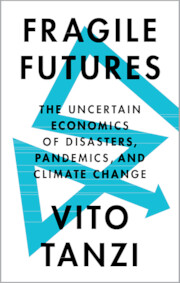
    This book revisits a distinction introduced in 1921 by economists Frank Knight and John Maynard Keynes: that between statistically predictable future events ('risks') and statistically unpredictable, uncertain events ('uncertainties'). Governments have generally ignored the latter, perceiving phenomena such as pandemics, natural disasters and climate change as uncontrollable Acts of God. As a result, there has been little if any preparation for future catastrophes. Our modern society is more interconnected and more globalized than ever. Dealing with uncertain future events requires a stronger and more globally coordinated government response. This book suggests a larger, more global government role in dealing with these disasters and keeping economic inequalities low. Major institutional changes, such as regulating the private sector for the common good and dealing with special harms, risks and crises, especially those concerning climate change and pandemics, are necessary in order to achieve any semblance of future progress for humankind.

    Reviews

    'This is the most thorough and intelligent review of the western world's economic development, corresponding intellectual debates, and lines of thoughts in economics and public policy from the end of World War I to the present that I have seen.'

    Hans-Werner Sinn - University of Munich

    'A fascinating discussion of why governments may sometimes aggravate the problems they set to solve. Read it if you want to reflect upon the role of the public sector in modern economics.'

    Alberto Alesina - Harvard University

    ‘In the light of the Covid-19 pandemic, this ambitious book examines the challenges our modern society and our economies have faced historically as a result of natural disasters such as plagues and pandemics. It then considers how, given the future challenges humanity faces with climate change, tax and fiscal policy should be deployed. Policymaking under extreme uncertainty is of great current interest in the 21st Century. This book from an experienced economist provides some fascinating insights.’

    Sir Anton Muscatelli - University of Glasgow

    ‘This book provides an excellent and original analysis about the role of government during unexpected events and exceptional situations, including pandemics and major disasters, such as climate changes. In times of the COVID-19 pandemic, it offers a timely and stimulating discussion about how and why uncertain and future events should be included into policy decisions. The author, an outstanding expert of public finance, competently guides the readers through the understanding of our complex real world.’

    Paola Profeta - Bocconi University

    ‘Vito Tanzi has written an important book on a set of main challenges of our time: how to anticipate and manage pandemics, earthquakes, famines, nuclear accidents, climate change and ecological destabilization. The book identifies the difficulties posed by intractable uncertainty, missing markets, short-termism of governments, denial and neglect for finding adequate responses to shocks and processes that can have a high toll both on human lives and the planet. Tanzi's writing is balanced, wise, elegant and well informed by theory and a wealth of historical episodes relevant for the world of today and tomorrow. Strongly recommended!’

    Andrés Solimano - University of Oxford

    'In different ways, the pandemic and climate change force us to recognise the inescapable reality of uncertainty. Vito Tanzi, former head of the fiscal affairs department of the International Monetary Fund, brings out some crucial implications. One is that we can and should use fiscal policy much better in response to shocks: in the case of Covid-19, for example, we should have imposed a temporary tax on the rich. More fundamentally, our interconnected world needs both more and better global governance.'

    Martin Wolf Source: Financial Times

    ‘… an enjoyable read …’

    Christopher L. Atkinson Source: Public Organization Review

    ‘The book adds considerable value and provides striking insights …’

    R. M. Whaples Source: Choice

    Refine List

    Actions for selected content:

    Select all | Deselect all
    • View selected items
    • Export citations
    • Download PDF (zip)
    • Save to Kindle
    • Save to Dropbox
    • Save to Google Drive

    Save Search

    You can save your searches here and later view and run them again in "My saved searches".

    Please provide a title, maximum of 40 characters.
    ×

    Contents

    Metrics

    Altmetric attention score

    Full text views

    Total number of HTML views: 0
    Total number of PDF views: 0 *
    Loading metrics...

    Book summary page views

    Total views: 0 *
    Loading metrics...

    * Views captured on Cambridge Core between #date#. This data will be updated every 24 hours.

    Usage data cannot currently be displayed.

    Accessibility standard: Unknown

    Why this information is here

    This section outlines the accessibility features of this content - including support for screen readers, full keyboard navigation and high-contrast display options. This may not be relevant for you.

    Accessibility Information

    Accessibility compliance for the PDF of this book is currently unknown and may be updated in the future.