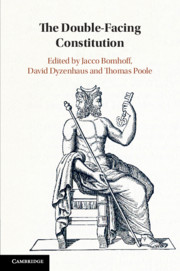

This collection explores some of the many ways in which constitutional orders engage with, and are shaped by, their exteriors. Constitutional and legal theory often marginalize 'foreign' elements, such as norms originating in other legal systems, the movement of individuals across borders, or the application of domestic law to foreign affairs. In The Double-Facing Constitution, these instances of boundary crossing lie at the heart of an alternative understanding of constitutions as permeable membranes, through which norms can and sometimes must travel. Constitutional orders are facing both inwards and outwards - and the outside world influences their interiors just as much as their internal orders help shape their surroundings. Different essays discuss the theoretical and historical foundations of this view (grounded in Kelsen, Hobbes, Locke, Rousseau and others), and its contemporary relevance for areas as diverse as migration law, the conflict of laws, and foreign relations law.
Loading metrics...
* Views captured on Cambridge Core between #date#. This data will be updated every 24 hours.
Usage data cannot currently be displayed.
This section outlines the accessibility features of this content - including support for screen readers, full keyboard navigation and high-contrast display options. This may not be relevant for you.
Accessibility compliance for the PDF of this book is currently unknown and may be updated in the future.